
Maintaining compressed air quality is critical in industrial environments. Atlas Copco air dryers remove moisture from compressed air systems, preventing equipment damage and ensuring consistent performance. When your air dryer malfunctions, downtime can be costly and disruptive. This comprehensive troubleshooting guide helps you identify common issues, perform routine checks, and apply effective solutions to restore optimal operation.
Common Symptoms of Air Dryer Malfunction
Recognizing early warning signs prevents minor issues from escalating into major failures. Monitor your Atlas Copco air dryer for these indicators:
- Increased moisture in downstream air lines – Dew point readings higher than expected
- Pressure drops across the system – Inconsistent airflow affecting pneumatic tools
- Overheating of internal components – Tripped thermal protectors or shutdowns
- Unusual noises or vibrations – Rattling, humming, or grinding sounds
- Failure to start or unexpected shutdowns – Control panel errors or power interruptions
Early detection through regular monitoring significantly reduces repair costs and extends equipment lifespan. A systematic approach to diagnosing issues ensures you address root causes rather than temporary symptoms. For more on this, see our guide on best refrigerated air dryer.
Step-by-Step Troubleshooting Process
1. Verify Power Supply and Connectivity
Power-related issues are among the most common causes of air dryer failure. Follow these steps:
- Confirm the dryer is receiving proper voltage (check electrical connections)
- Inspect circuit breakers and fuses for tripped or blown components
- Examine power cables for physical damage or loose connections
- Test outlet voltage using a calibrated multimeter
Voltage fluctuations or unstable power supply can cause erratic behavior. If readings fall outside acceptable tolerances, consult a qualified electrician before proceeding with other diagnostics.
2. Inspect for Leaks and Blockages
Air leaks reduce system efficiency and compromise drying performance:
| Inspection Area | Recommended Action |
|---|---|
| Hissing sounds near fittings | Apply soapy water to detect escaping air |
| Air inlet and outlet ports | Remove obstructions and debris buildup |
| Hoses and pneumatic connections | Tighten clamps and replace cracked tubing |
| Filters and separators | Clean or replace according to maintenance schedule |
Regular leak detection should be part of preventive maintenance routines. Even small leaks cumulatively waste energy and strain system components. For more on this, see our guide on best air dryer for painting.
3. Examine Filtration and Drainage Systems
Contaminated airflow restricts heat exchange and reduces drying capacity:
- Check coalescer filter condition – replace when differential pressure exceeds manufacturer limits
- Monitor drain valve operation – automatic drains should cycle regularly without manual intervention
- Inspect condescension separators – clean baffles and remove accumulated water
Blocked filtration leads to increased pressure drop and reduced throughput. Replace consumable elements proactively based on operating hours or contamination indicators.
4. Evaluate Refrigeration Circuit Performance
Refrigerant-based dryers require special attention to thermodynamic components:
- Measure condenser and evaporator pressures using gauges
- Check refrigerant charge levels against nameplate specifications
- Observe compressor run times – excessively short cycles suggest low load or refrigerant deficiency
- Feel suction line temperature – proper superheat indicates adequate refrigerant flow
Improper refrigerant management affects dew point control directly. Only certified technicians should service sealed refrigeration circuits.

Internal components of an Atlas Copco refrigerated air dryer showing heat exchanger and compressor assembly.
Routine Maintenance Best Practices
Preventive maintenance prevents unexpected breakdowns and maintains peak efficiency. Implement this schedule:
Weekly Checks
- Visual inspection of unit exterior for damage or corrosion
- Monitor operating pressures and temperatures
- Verify drain valve functionality
Monthly Tasks
- Clean external surfaces and ventilation grilles
- Check electrical connections for tightness
- Test emergency shutdown mechanisms
Quarterly Service Intervals
- Replace or clean inlet filtration elements
- Inspect and calibrate sensors and controls
- Document performance metrics compared to baseline data
Annual Comprehensive Reviews
- Conduct full thermal imaging survey
- Review historical performance trends
- Schedule professional calibration if required
Following structured maintenance increases Mean Time Between Failures (MTBF) and ensures compliance with ISO 8573 air quality standards.
Addressing Specific Component Issues
Compressor Integration Challenges
When integrating Atlas Copco dryers with existing compressor setups, compatibility issues may arise:
- Align pressure settings so dryer inlet matches compressor discharge pressure
- Ensure electrical interlocks function correctly for auto-start capabilities
- Validate communication protocols support remote monitoring features
Mismatched configurations often manifest as intermittent operation or premature component wear. Refer to troubleshooting diagnostic codes for precise fault identification.
Purge Valve Dysfunction
Purge valves regulate regenerative desiccant dryers by expelling moisture-laden air:
- Listen for continuous blowing – indicates stuck-open valve
- Check timing controls – verify purge duration matches design parameters
- Measure downstream pressure – abnormal fluctuations signal valve sealing problems
Leaking purge valves waste compressed air and elevate operating costs. Replace faulty actuators promptly with OEM-specified replacements.
Regenerative desiccant purge valve mechanism requiring periodic maintenance.
When Professional Assistance Becomes Necessary
Certain situations demand expert intervention beyond basic troubleshooting:
Immediate Technician Dispatch Criteria
- Electrical arcing or burning odors inside control panels
- Refrigerant leaks detected visually or via electronic leak detectors
- Critical component failures such as burner ruptures in heated drying systems
- Error codes pointing to complex control logic faults
Attempting advanced repairs without proper training risks injury and voiding warranties. Certified technicians possess necessary tools and safety equipment for high-voltage and pressurized systems.
Regulatory and Environmental Considerations
Commercial facilities must comply with environmental regulations regarding refrigerant handling and disposal:
- EPA Section 608 certification required for refrigerant work
- Proper documentation of maintenance activities for audit purposes
- Adherence to local noise ordinances and energy efficiency mandates
Engaging licensed service providers ensures regulatory compliance while protecting personnel welfare.
Frequently Asked Questions
What causes frequent cycling of the refrigeration compressor?
Common triggers include:
- Oversized dryer relative to compressor capacity
- Excessive ambient temperatures reducing condensing efficiency
- Internal refrigerant restrictions from contamination or overcharging
How often should filters be replaced?
Replace particulate and coalescing filters every three to six months under normal conditions. Harsh environments with elevated dust levels necessitate more frequent changes.
Why does dew point fluctuate during startup?
Initial warm-up periods temporarily increase moisture content until steady-state operation resumes. Allow 15–30 minutes after startup for stabilized performance.
Can I clean the condenser myself?
Yes, but follow lockout/tagout procedures first. Use compressed air (minimum 30 PSI) to blow debris from fins. Avoid water washing unless specifically rated for wash-down duty.
What maintenance records are essential?
Document filter change dates, pressure readings, electrical measurements, and any corrective actions taken. These logs support warranty claims and trend analysis for predictive maintenance strategies.
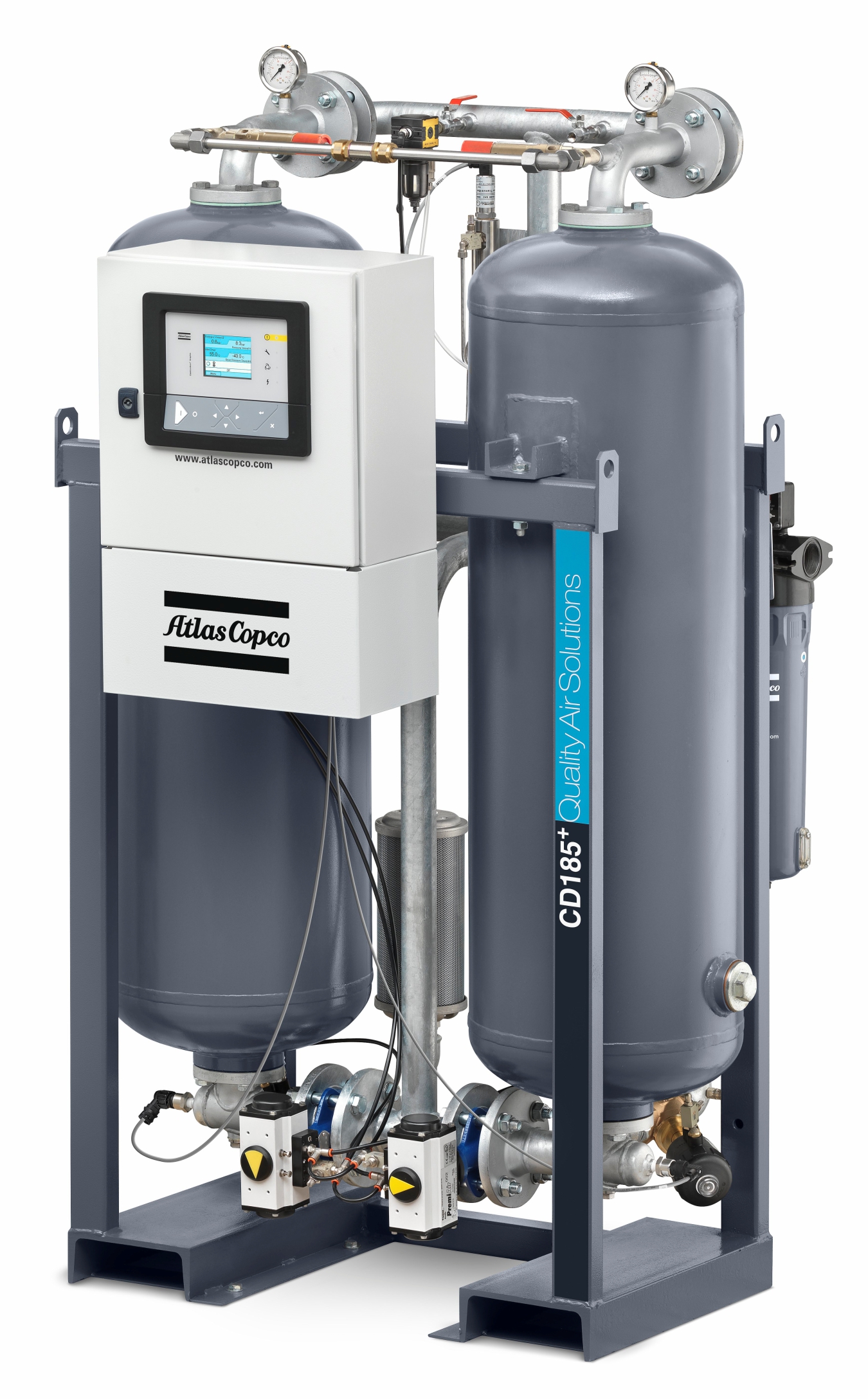
Atlas Copco CD Series desiccant air dryer showcasing modular construction for scalable installations.
Conclusion
Effective troubleshooting of Atlas Copco air dryers combines methodical inspection techniques with targeted corrective measures. Routine maintenance remains the best defense against unplanned downtime and costly repairs. While many adjustments fall within general maintenance skill sets, complex issues like refrigeration system faults or electronic control malfunctions benefit from experienced technician involvement. Keeping this guide accessible during routine inspections empowers operators to maintain reliable compressed air quality aligned with ISO 8573-1 standards.
For additional guidance on related compressed air system components, refer to our comprehensive dryer troubleshooting resources. Proactive care today safeguards tomorrow’s productivity.