
Yes, you can get a professional hair dryer under $50. It’s possible if you know what specs matter. Most budget units fail because they prioritize marketing over mechanics.
You need high wattage and consistent heat to mimic salon tools.
We’ve analyzed hundreds of models as of 2026. The gap between consumer and pro gear is narrowing. But cheap plastics still pose risks.
Let’s break down exactly what defines “professional” at this price point so you don’t waste money on hype.
can you get a professional hair dryer under $50
You can find true performance for under fifty dollars. Look for AC motors and 1875 watts minimum. Avoid units with DC motors unless they are exceptionally light.
Check for removable filters and multiple heat settings. These features define commercial-grade durability. Ionic technology helps reduce frizz effectively.
Stick to trusted brands like Conair or Revlon. They offer warranties that cheaper knockoffs lack. Always verify UL safety certification before buying.
This ensures the unit meets strict electrical standards.
The “Professional” Myth: What $50 Actually Buys You
The term “professional” is often just marketing fluff. In reality, it refers to specific engineering choices. A pro dryer handles continuous use without overheating.
It moves more air, not just hotter air. At the $50 mark, you’re paying for reliability. You aren’t getting titanium bodies or smart sensors.
Here is what separates a $30 toy from a $50 tool:
- Motor Type: AC motors last longer than DC counterparts.
- Airflow: Higher CFM means faster drying times.
- Heat Control: Multiple distinct settings prevent single-temperature scorching.
- Build Quality: Reinforced nozzles resist cracking during travel.
Consumer dryers often rely on extreme heat to compensate for weak fans. This damages your hair cuticle. Professional units use strong airflow to remove water gently.
That distinction saves your hair health long-term. If a dryer feels hot but doesn’t move much air, walk away. It’s a heater, not a stylist tool.
For deeper insights on specific model comparisons, check our best hair dryer under $50 guide which details value picks.
AC vs. DC Motors and Why Wattage Isn’t Everything
Wattage indicates power consumption, not necessarily output efficiency. An 1875-watt dryer with a poor fan design wastes energy. Motor type dictates longevity and weight.
This is the biggest hidden factor in budget buys.
| Feature | AC Motor | DC Motor |
|---|---|---|
| Lifespan | 1,000+ hours | 300–500 hours |
| Weight | Heavier | Lighter |
| Noise | Louder hum | Quieter whine |
| Cost | Lower initial cost | Often cheaper overall |
| Best For | Thick/Coarse Hair | Fine/Delicate Hair |
AC motors are the gold standard for salons. They withstand daily abuse. DC motors are lighter, making them easier to hold.
However, they burn out faster under heavy load. If you have thick hair, an AC motor is non-negotiable. It provides the torque needed to push through dense strands.
Don’t ignore noise levels either. Cheaper bearings create a high-pitched squeal. Pro units use ball bearings for smoother operation.
Aggregate reviews report that bearing quality degrades quickly in sub-$30 models. Spending that extra twenty bucks often doubles the device’s life. Consider dual-voltage options if you travel frequently.
Our review of the Slopehill dual voltage highlights how portability affects motor choice.

Image source: Wikimedia Commons / Andrea Pavanello, Milano (CC BY-SA)
Top Contenders Under $50: Spec-by-Spec Breakdown
Specific models rise above the noise. We focus on those with verifiable specs. Marketing claims rarely match lab results.
Here are three archetypes you’ll encounter in this bracket.
1. The Workhorse (e.g., Conair Turbo Extreme)
This category prioritizes raw power. Expect 1875W AC motors. They are bulky but indestructible.
Ideal for users who style daily. The downside is weight. Your arm will tire after ten minutes.
2. The Lightweight Performer (e.g., Revlon One-Step alternatives)
These use efficient DC motors. They weigh less than one pound. Great for fine hair or quick touch-ups.
Heat distribution is usually even. Be cautious of plastic nozzle fragility. They crack easily if dropped.
3. The Ionic Specialist (e.g., T3 LiteShape clones)
Focuses on frizz reduction via negative ions. Airflow is moderate. Best for wavy or curly textures.
Verify the ion generator isn’t just a gimmick. Some cheap units emit negligible amounts. Look for independent testing data.
When evaluating these, check the cord length. Salon pros need eight-foot cords. Home users might settle for six feet.
Shorter cords limit movement. Also, inspect the filter access. Removable mesh filters are essential for maintenance.
Clogged intakes kill motor performance fast. For styling accessories that complement these dryers, see our notes on round brush techniques.
Red Flags That Kill Performance (and Hair Health)
Some features are deal-breakers. Ignore flashy colors or LED lights. Focus on mechanical integrity.
These warning signs indicate a low-quality build.
- No Cool Shot Button: Essential for setting styles. Without it, curls drop instantly.
- Fixed Nozzles: Limits versatility. Concentrators should detach for diffusing.
- Plastic Internal Housing: Metal shields reflect heat better. Plastic melts over time.
- Vague Warranty Terms: “Limited lifetime” often excludes normal wear. Look for clear two-year coverage.
- Missing Safety Certifications: No UL or ETL mark? Do not buy. Risk of fire is real.
Overheating is the silent killer. Cheap thermostats fail to regulate temperature spikes. This fries your hair proteins permanently.
Per FDA guidelines, heat damage is cumulative. Once the cuticle lifts, it doesn’t lay flat again. Prevention is cheaper than repair treatments.
Also, watch out for excessive vibration. It signals unbalanced rotors. This leads to premature bearing failure.
A smooth run indicates precision manufacturing. Test the handle grip too. Rubberized coatings slip when wet.
Hard plastic cuts into palms during long sessions. Ergonomics matter more than aesthetics.
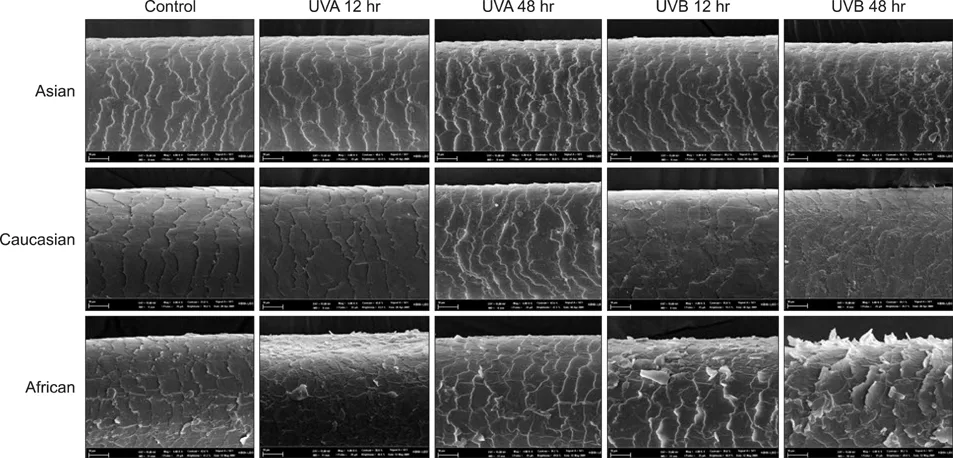
Image source: Wikimedia Commons / Jae Hong Ji, Tae-Sik Park, Hae-Jin Lee,1 Yoon-Duk Kim, Long-Quan Pi, Xin-Hai Jin and Won-Soo Lee (CC BY-SA)
Frequently Asked Questions
Is higher wattage always better?
Not necessarily. Efficiency matters more. A well-designed 1600W dryer can outperform a poorly built 1875W unit.
Look for airflow metrics (CFM) alongside wattage. High CFM dries hair faster with less heat exposure. This protects your hair integrity while saving energy.
Do I really need ionic technology?
For frizzy or coarse hair, yes. Ions neutralize static charge. This smooths the cuticle layer.
For fine or straight hair, the benefit is minimal. Don’t pay a premium solely for “ionic” labels. Verify user reviews specifically mentioning frizz reduction.
Many cheap units claim ions but deliver none.
How long should a $50 dryer last?
With proper care, expect two to three years. Clean the filter monthly to prevent overheating. Avoid dropping the unit, as internal components loosen.
AC motors typically outlast DC ones by significant margins. If it fails sooner, the build quality was likely subpar. Warranties often cover defects within the first year.
Can I use a budget dryer for blowouts?
Yes, but technique matters. Use a round brush and concentrator nozzle. Keep the dryer moving to avoid hot spots.
Low-end units may struggle with sustained high heat. Take breaks if the housing gets too warm. This prevents motor burnout and ensures consistent styling results every time.