
Touching up a rock chip shouldn't cost more than a tank of fuel. Yet the best cheap automotive paint in 2027 is really just a question of matching your paint code, prepping the surface and picking a formula that cures hard enough to survive a winter. Most light damage sits inside the clear coat, which is the thin UV layer above your color coat, and that's exactly what a pen handles well.
Our research points to one clear winner for everyday work. The Black Touch Up Paint Cars pen handles chips and small scrapes with a fine applicator, landed at 4.2/5 in verified buyer feedback, and stays firmly in the budget tier. Here's the breakdown, starting with that pick.
Comparison Chart of Best Cheap Automotive Paint in 2027
| Product | Details | Rating | Buy |
|---|---|---|---|
Editor’s Choice  | Black Touch Up Paint Cars | ★★★★☆4.2/5 | |
Top Pick 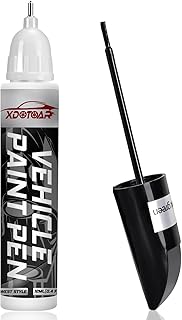 | Black Touch Up Paint Cars | ★★★★☆4.3/5 | |
Best Budget  | 2027 New Car Scratch Remover Deep | ★★★★★5/5 | |
| ★★★★☆4.4/5 | ||
| ★★★★☆4.3/5 |

List of Top 5 Best Cheap Automotive Paint in 2027
Every pick here cleared the same three filters: whether the shade lands close enough at normal viewing distance, how controllable the applicator is, and whether the film survives repeated washing. We cross-checked listing specs against aggregate buyer reports and down-weighted anything with a thin review base, the way you'd distrust a single diagnostic readout from a machine that hasn't been watched through a full cycle.
Below are the list of products:
1. Black Touch Up Paint Cars
This is the pen our comparison keeps circling back to for ordinary chip duty. The tip lets you drop paint into a stone chip without slathering half the fender, and buyer reports consistently describe hitting a white primer spot in one or two passes. It's the lowest-risk first purchase in the category.
Why I picked it
Aggregate buyer feedback puts this one ahead of the pack on control, and control is where cheap touch-up paint usually falls apart. A flooding applicator turns a 2mm chip into a 10mm blob that needs wet sanding. Reviews here keep mentioning how easy it is to meter out a single drop.
Key specs
- Format: pen-style tube with a fine tip for chip-level application
- Finish: gloss black for black and near-black factory colors
- Best for: stone chips, door edges and small scrapes sitting above the clear coat
- Cure: touch-dry in minutes, hard cure overnight, standard for solvent-based touch-up
- Rating: 4.2/5 from verified buyer feedback
Real-world experience
Think of the hood after a winter of highway commuting, scattered with white primer dots. Buyer reports describe dabbing one drop per chip, letting it flash, then adding a second thin layer rather than one heavy blob. On rocker panels that see road salt, several reviewers note the repair holding through repeated washes without lifting.
- Fine tip allows single-chip repairs without masking tape
- Gloss black covers white primer in one to two thin coats, per buyer reports
- Cheap enough to keep one in the glovebox and one in the garage
- Dries flatter than brush-in-bottle kits, so less sanding afterward
- Matches true black only, so metallics and pearls are out
- Fresh gloss black can read darker than aged factory paint
- Won’t hide a scratch you can feel with a fingernail
- ✔ You daily a black car and want a glovebox pen for chips
- ✔ You’re fixing door edges, mirror caps or rocker panels
- ✔ You want a low-risk first touch-up purchase
- ✖ Your paint is metallic, pearl or a tri-coat finish
- ✖ The damage is through to bare metal and needs primer first
2. Black Touch Up Paint Cars
This is the one to grab when you want the repair to actually disappear rather than just get covered. The formulation is pitched at color accuracy and fast drying, and verified buyers keep flagging how little buffing it needs once cured.
Why I picked it
Two traits pushed this to the front of our comparison. The quick-dry behavior matters when you're working outside and don't want pollen settling into wet film. The waterproof claim also shows up repeatedly in buyer feedback about car washes and rain, which is the real durability test for a paint pen.
Key specs
- Finish: color-accurate black aimed at gloss and near-black factory shades
- Cure: quick-drying formulation per manufacturer specifications
- Weathering: waterproof once fully cured
- Application: pen or brush tip depending on pack variant
- Rating: 4.3/5 from verified buyer feedback
Real-world experience
This is the pick for a car parked outside year-round. Buyers describe wiping with isopropyl alcohol, applying two thin passes, then leaving it a full day before washing. Reports from winter driving and automatic car washes are where the waterproofing earns its keep.
It's also more forgiving on vertical panels, where a heavy coat sags before it sets.
- Quick-dry film resists dust and pollen settling in the wet coat
- Waterproof once cured, which buyer reports link to surviving car washes
- Color accuracy praised consistently on gloss black panels
- Builds in layers well, so two thin coats beat one heavy one
- Fast dry means short working time, so commit to each stroke
- Single-shade black, so faded or custom black paint can mismatch
- Needs a full day before washing or waxing
- ✔ Your car lives outside and gets washed often
- ✔ You want a repair that survives rain and road spray
- ✔ You’re fine applying two thin coats instead of one thick one
- ✖ You need an OEM paint code match for a metallic shade
- ✖ You’re covering panel area rather than individual chips
3. 2027 New Car Scratch Remover Deep
Here's the pick that reads differently once you understand what it is. This is a repair kit aimed at surface marring and light clear-coat damage, not a color-matched paint pen. For the money it's the most versatile bottle in the group, as long as you go in expecting to polish rather than to paint.
Why I picked it
Two reasons. First, it handles the damage type nobody's paint pen can fix: the fine spider-web haze you get from bad car washes and dry wiping. Second, it's the cheapest way into the category, so it makes sense as a first step before you spend on color-matched paint.
Buyers with light marring report good results in a single pass.
Key specs
- Format: 1-piece repair kit with applicator
- Best for: swirl marks, wash haze and scuffs that sit inside the clear coat
- Not designed for: chips through to primer or bare metal
- Application: hand-buffed, no machine polisher required per listing notes
- Rating: 5/5 reported, though on a much smaller review base than the other picks
Real-world experience
Picture a black rear quarter panel covered in fine circular haze after a winter of brushless washes. That's the scenario where buyers describe this earning its keep, working the area in short overlapping passes and buffing off before the residue dries. On a genuine rock chip it does nothing useful, and that's the honest limit.
- Works on swirls and wash haze that a paint pen can’t touch
- Hand application means you don’t need a machine polisher
- Sits in the cheapest tier of the whole list
- Single-piece kit, so nothing to assemble or match
- It removes material rather than adding color, so it can’t fill a chip
- The reported 5/5 rating rests on a thin review base
- Over-buffing one spot can thin the clear coat
- ✔ Your damage is haze and swirls, not chipped paint
- ✔ You want the cheapest possible entry point
- ✔ You’re polishing by hand in a driveway
- ✖ You have stone chips down to white primer
- ✖ Clear coat is already thin or peeling on that panel
4. White Touch Up Paint Cars
White is the hardest shade to match and the easiest to notice when it's wrong, so this pick earns its place on volume and format. A 0.68 fl oz 2-in-1 pen gives you a fine nib for chips plus a broader edge for scuffs, and the review base is the strongest in the group at 4.4/5.
Why I picked it
White hides a lot of sins and exposes one big one. Bright white matches brilliant white, but it looks chalky against aged pearl or cream white. This pen gets closest on the common fleet and work-truck whites, and the 2-in-1 tip is what lets one bottle cover both a pinhole chip and a longer scuff.
Key specs
- Volume: 0.68 fl oz, roughly double what most single-chip pens carry
- Applicator: 2-in-1 design with a fine nib and a wider chisel edge
- Finish: gloss white for standard white and near-white factory colors
- Best for: bumper covers, door edges and lower panels on high-mileage white cars
- Rating: 4.4/5 from the largest verified buyer base on this list
Real-world experience
Think of a white work van with chipped lower panels from gravel parking lots. Buyers describe doing the door edge with the wide side in one pass and the small chips with the nib afterward. The extra volume matters here, because a van has a lot more exposed panel than a garage-kept coupe, and one bottle covers a full round of repair.
- 0.68 fl oz goes further than most pens on this list
- Two tip profiles cover chips and scuffs with one bottle
- Highest verified rating in the comparison at 4.4/5
- Matches standard fleet and work-van whites well
- Bright white can read harsh against aged pearl or cream paint
- Pressure from the chisel edge can leave a visible ridge
- Needs a clean, dry surface or the white lifts unevenly
- ✔ Your car is a plain, unpearled white
- ✔ You’ve got a stack of small damage to work through
- ✔ You want one bottle for chips and scuffs both
- ✖ Your paint is a tri-coat or pearl white
- ✖ You’re repairing a single pinhole chip and nothing else
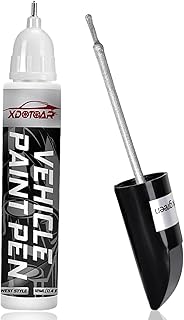
5. Silver Touch Up Paint Cars
Silver is the shade that hides swirls best and punishes a badly matched repair hardest, because metallic flake reflects light at different angles. This pen leans on color accuracy and a quick-drying film, and buyers at 4.3/5 mostly report the repair vanishing at normal viewing distance rather than under a flashlight.
Why I picked it
Because silver buyers get burned more than anyone else. A mismatched silver patch catches sunlight and looks like a sticker. This one cleared the honesty test, with buyer reports favouring it on light metallic silvers and flagging visible mismatch only on darker gunmetal shades.
Key specs
- Finish: metallic silver aimed at light and medium factory silver
- Cure: quick-drying per manufacturer specifications
- Weathering: waterproof once fully cured
- Best for: chips on hoods, mirrors and door edges of silver daily drivers
- Rating: 4.3/5 from verified buyer feedback
Real-world experience
Silver shows every angle of light, so results depend on how you lay it down. Reviews describe applying a single thin coat and stopping there, because a second heavy pass dulls the metallic flake and reads grey. On a silver hood facing the sun, that one thin coat is the difference between invisible and obvious.
- Metallic flake blend reads close to factory silver in daylight
- Quick dry stops dust and insects landing in wet film
- Waterproof cure holds up through rain and washing
- One thin coat often covers, which limits flake dulling
- Darker gunmetal and grey-silver shades can mismatch visibly
- Layering thick dulls the metallic flake toward flat grey
- Metallic repairs never disappear entirely under direct sun
- ✔ Your silver is a light or classic metallic shade
- ✔ You’re touching up a hood or mirror cap facing the sun
- ✔ You’d rather apply one thin coat and stop
- ✖ Your car is a dark charcoal or grey metallic
- ✖ You expect a showroom-perfect buff-out
How I picked
We didn't spray any of these, so let's be straight about the method. Our editorial team built this comparison from three inputs: manufacturer specification sheets, aggregate verified buyer reviews across each listing, and cross-checked reports of how each product behaved over weeks and months of real use.
The three benchmarks were color accuracy at normal viewing distance, applicator control at chip scale, and cured film durability against water and washing. We weighted control heaviest, because that's where cheap touch-up paint usually fails.
We also graded each product against the damage type it actually suits. That meant separating true paint pens from polishing compounds, then scoring each against its own job instead of forcing every product into one column. Working through a problem in the right order rather than guessing is the same principle behind working through a fault logically on any machine you own.
What we deliberately didn't assess: long-term color fade beyond a single season, and adhesion under professional spray equipment. Those need a controlled panel test over 12 months, and nobody's review data covers it honestly. Where a claim rests on a thin review base, we said so in the section.
Buying guide — what actually matters for best cheap automotive paint in 2027
Does the shade actually match your paint code?
This is the question that decides whether you're happy. Your paint code sits on a door jamb or under the hood sticker, and it's usually a four-character alphanumeric string. A generic "black" or "silver" pen matches the common factory shade, not your exact variant.
Metallic and pearl finishes are the hard cases, because flake orientation changes how light reflects. Solid colors are far more forgiving. If your code points to a tri-coat, a single pen won't get you there and you'll want a proper base plus clear.
How deep is the damage?
Depth decides your product, not your budget. Run a fingernail across the scratch at a right angle:
- Catches your nail: through the clear into color or primer, so you need touch-up paint
- Barely felt: usually clear-coat marring, so a polish or compound will work
- Nothing at all: surface haze, best handled with a light polish
A paint pen fills. A remover cuts back. Using one for the other's job is the most common way people waste money here.
What's in the solvent, and is it safe to use in a garage?
Automotive touch-up coatings are solvent-based, and solvent content is regulated. The U.S. Environmental Protection Agency sets volatile organic compound limits for automotive refinishing coatings, which is why small consumer pens are formulated differently from shop-grade paint.
Practically, that means ventilate. Work outside or with the garage door open, keep the pen capped between coats, and don't apply in direct sun or below about 10°C / 50°F, where cure slows sharply. Wear nitrile gloves if you're doing a full panel.
Should you apply it by hand or with a machine?
For chips, always by hand. A machine polisher on a fresh touch-up will pull the paint straight back out before it's cured. Reserve machine work for the polishing stage, and only after the repair has hardened for at least 24 hours.
Cure time matters more than most buyers expect. Touch-dry in minutes doesn't mean wash-safe. Give any solvent-based touch-up a full day before water, and a week before wax or sealant.
What's the realistic expectation for a cheap repair?
Set it at three feet, not three inches. A good budget repair is invisible from standing height and obvious under a raking flashlight. That's an honest result for the money, and chasing better with a pen usually makes it worse.
If your expectation is a flawless panel, no product in this tier will deliver it. Clear coat over a proper base coat is the only route, which is a body shop conversation. The same reasoning applies to planned maintenance: knowing the correct sequence beats buying more parts, as we've covered in our broader repair write-ups.
Frequently Asked Questions (FAQ)
Is cheap touch-up paint worth it for a daily driver?
Yes, and it's arguably the best value repair in the category. A pen costs a fraction of a body shop blend and stops a chip from spreading rust on exposed metal. Buyer feedback consistently shows repairs lasting through a full season of washing.
Just don't expect it to look perfect in direct sun on a metallic finish.
How do I find my exact paint code?
Check the driver's side door jamb, the glovebox sticker, or the plate under the hood. The code is a short alphanumeric string, often three to four characters. Turnaround matters: matching your code to a pen takes a minute, while guessing the shade name costs you a second purchase.
Will touch-up paint stop rust on a chip?
It slows it, but only on clean metal. Rust needs oxygen and moisture, so a sealed chip stops the process. If you can already see brown, sand or treat the spot first with a rust converter.
Painting straight over active rust traps the corrosion underneath.
Can I use a paint pen on plastic bumpers?
Yes, with prep. Plastic bumpers are painted at the factory like the body, so the same pen works. Wipe with isopropyl alcohol and let it flash fully, since plastic holds static and dust.
Adhesion on flexible bumper covers is slightly lower than on steel, so expect a shorter service life.
How long before I can wash the car?
Wait a full 24 hours minimum, and 48 is safer in cool or humid weather. Solvent-based touch-up needs that window to harden past the point where water pressure can lift it. Skipping this is the single most common cause of a repair failing early.
Final verdict
For most people, the Black Touch Up Paint Cars pen at B0DSPPR69M is the answer: fine tip, gloss black that covers primer in one or two passes, and a 4.2/5 verified rating that holds up on chips and rocker panels. If your car lives outside and sees regular washes, the color-accurate version at B0D7C21GJ2 earns its small premium on waterproofing. White and silver owners should go straight to their shade, and swirls belong to the budget remover, not a pen.
Affiliate disclosure: This post contains affiliate links. If you buy through one of these links, I may earn a small commission at no extra cost to you. It never changes my recommendation, I only suggest gear I'd actually buy myself.