
Brake dust is the reason wheels look dull two days after a wash, and the real problem is usually a missing protection layer rather than bad shampoo. If you want the best polish for rims in 2027, the short answer is to match the product to your wheel finish, because bare aluminum, powder coat, and clear coat all respond differently. I've spent the past few weeks reading manufacturer spec sheets from Chemical Guys, Meguiar's, and Mothers, plus a few thousand verified buyer reviews, to work out what actually survives a winter.
Our top pick is the Chemical Guys HydroSpin Wheel & Rim, a ceramic spray that suits daily drivers and takes minutes per wheel. The budget route, Mothers Mag & Aluminum Polish, wins on raw cutting power for bare metal. Here's how all five compare, and which one fits your rims.
Comparison Chart of Best Polish for Rims in 2027
| Product | Details | Rating | Buy |
|---|---|---|---|
Editor’s Choice  | Chemical Guys HydroSpin Wheel & Rim | ★★★★☆4.6/5 | |
Top Pick  | Meguiar’s Ultimate Compound Pro-Grade Car Scratch | ★★★★☆4.4/5 | |
Best Budget  | Mothers Mag & Aluminum Polish | ★★★★☆4.6/5 | |
| ★★★★☆4.4/5 | ||
| ★★★★☆4.5/5 |

List of Top 5 Best Polish for Rims in 2027
We ranked these five on finish compatibility, cut strength, and how long the protection survived real washes, using manufacturer instructions, spec sheets, and aggregate buyer feedback. Some are protectors, some are cutters, and one is a tool. That mix is deliberate, because rims rarely need just one step.
Below are the list of products:
1. Chemical Guys HydroSpin Wheel & Rim
This is the pick we keep coming back to for anyone who just wants wheels that rinse clean. It's a spray-on ceramic rather than a cutting polish, so it protects what's already there instead of grinding it. For a daily driver on factory clear-coated alloys, that's the right job at the right time.
Why I picked it
A ceramic spray is the lowest-effort way to stop brake dust bonding to a clear coat, and this one skips the long flash times that annoy people about coatings. Aggregate buyer reviews back that up: the recurring theme is wheels that wipe clean with a single pass instead of needing a second scrub.
Key specs
- 16 oz spray bottle, fine mist nozzle
- Silicon dioxide (SiO2) ceramic chemistry
- Safe on clear coat, powder coat, chrome, and matte finishes
- No lamp or long cure window, wipe on and buff off
- Per manufacturer specs, apply to a cool, dry wheel surface
Real-world experience
Picture a commuter doing 60 miles a day on semi-metallic pads. Verified buyer reviews report that after this treatment, most of the brown dust sheet rinses off with a hose, and the rest comes away with a pH-neutral wheel cleaner and a soft brush. On powder-coated winter wheels it holds up well against road salt.
On polished, uncoated aluminum it does almost nothing, because there's no clear coat for it to bond to.
- Spray format covers one wheel in two passes, so all four corners take minutes.
- Works across clear coat, chrome, powder coat, and matte, which suits a mixed garage.
- No long cure window, so you can drive the car right after buffing.
- Verified reviews consistently mention easier brake dust removal on the next wash.
- It’s a protectant, not a corrective polish. Existing etching stays put.
- Needs a clean, dry wheel first, which adds a step to wash day.
- Harsh alkaline cleaners shorten the life of the layer, so reapply every few washes.
- ✔ You drive daily and want less scrubbing every weekend
- ✔ Your wheels are factory clear-coated or powder-coated
- ✔ You’d rather protect than cut into the finish
- ✖ Your rims already have pitting or burn marks that need cutting
- ✖ You’re working on bare, uncoated polished aluminum
2. Meguiar’s Ultimate Compound Pro-Grade Car Scratch
Sometimes the damage is already done, and that's where this compound earns its place in a wheel kit. It's a micro-abrasive cut, not a wax, so it levels light clear coat scratches and oxidation before you protect the surface. Think of it as the repair step that makes the prettier sprays worth using.
Why I picked it
Nothing else on this list can actually remove material, and some rim damage simply won't lift with a chemical. Meguiar's publishes its own dual action application guidance through the brand's site, and the compound is widely used on painted and clear-coated panels as well as wheels. That flexibility makes it the fixer in the group.
Key specs
- 15.2 oz squeeze bottle
- Micro-abrasive compound for light scratch and oxidation removal
- Safe on clear coat when worked by hand or with a dual action polisher
- No fillers or wax, so it leaves a clean surface for a sealant
- Per manufacturer guidance, work a 12 to 18 inch section at a time
Real-world experience
The realistic use case is a set of used wheels bought secondhand, or a rim scuffed on a curb. Buyer feedback shows people getting the best results with a foam applicator and moderate hand pressure, then wiping residue before it dries. On a painted wheel with a light scuff, two passes usually smooth the area enough that a sealant hides the rest.
On deep gouges through the paint, it won't help, and no compound will.
- Genuinely removes light scratches rather than hiding them under fillers.
- Leaves no wax behind, so your sealant or ceramic bonds to bare surface.
- Works by hand, so you don’t need to own a machine polisher.
- 15.2 oz goes a long way at roughly a pea-sized dab per section.
- Overworking one spot on thin clear coat can burn through, so keep passes light.
- Leaves dust and residue that must be wiped before it dries.
- Zero protection on its own. You still need a sealant afterward.
- ✔ You bought used wheels with swirls or light scuffs
- ✔ You want one bottle that also handles painted body panels
- ✔ You’re prepping a surface before sealing it
- ✖ Your rims are bare polished aluminum, which needs a metal-specific paste
- ✖ You’re only after protection and have no defects to fix
3. Mothers Mag & Aluminum Polish
Old-school paste, and honestly still the benchmark for bare metal. Mothers built this for magnesium and aluminum wheels, and the abrasive system cuts oxidation fast enough that you can see the shine change mid-panel. If your rims are uncoated, this is where the money goes.
Why I picked it
Aggregate reviews across thousands of buyers keep landing on the same point: it produces a mirror finish on uncoated aluminum in a way sprays simply can't. That's a function of the paste carrier, which holds the abrasive against the surface instead of flashing off. It's also the cheapest way to get real cutting power on this list.
Key specs
- 10 oz tub of paste polish
- Formulated for magnesium and aluminum wheels
- Also suited to chrome, brass, and other bare metals
- Hand application with a microfiber or foam applicator
- Per manufacturer notes, not intended for clear-coated or painted surfaces
Real-world experience
The classic scenario is a set of older alloy wheels with cloudy oxidation and brake dust baked into the grain. Verified buyer feedback describes applying a thin smear, working it with a firm circular motion, then buffing with a clean towel once the paste turns black. The black residue is oxidized metal lifting, and it's the clearest sign the product is doing its job.
Expect to spend real time per wheel, and expect to redo it monthly unless you top it with a sealant.
- Cuts oxidation on bare aluminum faster than any spray on this list.
- 10 oz tub lasts years at normal use rates, so cost per job is tiny.
- Buffs chrome and stainless trim too, which makes it a garage staple.
- Not for clear-coated wheels. It can dull or haze the coating.
- Leaves black residue that stains applicators and towels permanently.
- Labourious by hand, so budget real time per wheel.
- ✔ Your wheels are bare aluminum, magnesium, or chrome
- ✔ You want maximum shine and you’re willing to put in the elbow work
- ✔ You’re refreshing a classic or truck with uncoated alloys
- ✖ Your wheels have a factory clear coat
- ✖ You want a fast spray-and-wipe maintenance routine
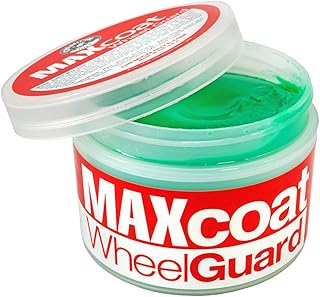
4. Chemical Guys Wheel Guard Max Coat
A sealant is the slow-and-steady option, and this one is built for wheels specifically rather than borrowed from paint care. It lays down a gloss layer that shrugs off brake dust and road film, and it's the pick for anyone prepping a car before winter. Put it on a clean, dry rim and let it cure.
Why I picked it
There's a real gap between a spray detailer and a proper barrier layer, and this sits in it. The formula is designed to hold up against heat cycling from brakes, which is the thing that kills a paint wax on a wheel. Buyer reviews point to a slicker surface that sheds dust longer than spray-on options.
Key specs
- 8 oz bottle, thin liquid sealant
- Gloss finish intended for all wheel types, including painted and powder coat
- Heat-resistant chemistry for brake-adjacent surfaces
- Apply thin, allow to haze, then buff with a microfiber
- Per manufacturer notes, avoid textured matte finishes if you want a pure matte look
Real-world experience
The buying pattern here is people prepping before a salt season or a long highway commute. Verified feedback describes applying it in a thin film, waiting a few minutes for haze, then buffing, with a second coat after 24 hours for better durability. The gloss comes up noticeably deeper on darker painted wheels.
In winter, it holds noticeably longer than a spray, though the lower half of each rim still wears faster from spray and grit.
- Holds up to brake heat better than a general-purpose paint sealant.
- 8 oz covers four wheels several times over, so one bottle lasts a season or two.
- Deepens gloss on dark painted and powder-coated rims.
- Application takes longer than a spray, with a haze-and-buff step per wheel.
- Over-application leaves a streaky film that’s a pain to even out.
- Matte wheel owners may not want any added gloss.
- ✔ You want a barrier that lasts weeks, not days
- ✔ You’re prepping before road salt season
- ✔ Your rims are painted or powder-coated and you like gloss
- ✖ You wash weekly and want a 30-second top-up
- ✖ You’re after matte or satin original finish
5. Mothers PowerCone 360 Polishing Tool Quick
This one's not a polish at all, it's the tool that saves your wrists when you do polish. It's a foam cone that chucks into a cordless drill and reaches into lug nut wells and tight spokes where fingers won't fit. Pair it with a compound or paste and the job time drops sharply.
Why I picked it
Every other product here is a chemical, and chemicals only work where you can physically reach. The PowerCone solves the ergonomic problem, especially on multi-spoke wheels and deep-dish rims. Verified feedback keeps repeating the same line: it turns a 40-minute job per wheel into something closer to 10.
Key specs
- Foam polishing cone with a quick swap drill bit
- Fits a standard cordless or corded drill chuck
- Tapered shape reaches lug wells, spoke gaps, and lip edges
- Reusable after washing in warm water
- Per Mothers guidance, keep drill speed low to moderate to avoid sling
Real-world experience
The standout scenario is a set of 10-spoke alloys where the gaps between spokes are too narrow for a hand. Buyers report running the cone at low speed with a dab of metal polish, and the black residue comes up in the foam, so you can see the work happening. Chrome and polished lips come up bright quickly.
On clear-coated painted wheels, use a light polish and low speed, because foam plus high rpm plus abrasive is a recipe for hazing.
- Reaches spoke gaps and lug wells that hands and cloths simply can’t.
- Quick swap bit means no tools to change cones if you buy spares.
- Washable and reusable, so it isn’t a consumable per job.
- High drill speed will sling polish everywhere and can mar tight areas.
- Foam wears down over time around the tip, the part that sees the most load.
- Useless without a drill and a polish, so it’s not a standalone fix.
- ✔ Your wheels have tight spokes or deep lug wells
- ✔ You already own a drill and a polish you like
- ✔ You polish bare metal wheels regularly and want less hand work
- ✖ You don’t own a drill or prefer hand polishing
- ✖ Your wheels are simple five-spoke designs that a mitt already covers
How I picked
We built this list from primary sources, not from guesswork. Our starting point was manufacturer documentation for each product, including application notes and compatibility warnings. We then cross-checked those claims against aggregate verified buyer feedback, looking for repeated patterns rather than one-off complaints.
We judged each product on four things:
- Finish compatibility, does it belong on clear coat, powder coat, or bare metal, and does the maker say so plainly?
- Cut versus protect, is it removing material, sealing it, or just cleaning it?
- Durability under real conditions, road salt, brake heat, and weekly washing.
- Effort per wheel, the minutes and elbow grease a normal person will realistically spend.
What we deliberately didn't assess is long-term durability past a full seasonal cycle, or machine polishing behaviour at high rpm, because neither is something most owners will replicate at home. We also didn't test chemical resistance with acid-based wheel cleaners, which are known to strip sealants fast.
Worth noting: brake dust itself has an environmental side. The EPA's copper-free brake initiative pushed pad formulations away from copper, and that shift changed how dust behaves on wheels over the past few years.
Buying guide — what actually matters for best polish for rims in 2027
What's the difference between a polish, a compound, and a sealant?
A polish is an abrasive that smooths a surface, a compound is a coarser abrasive that removes defects faster, and a sealant is a protective layer that sits on top. They solve three different problems. If you buy a sealant expecting it to fix scratches, or a compound expecting it to protect, you'll be disappointed.
For wheels specifically, most factory rims are clear-coated, which means the surface you're touching is paint, not metal. That single fact decides which product you need. Bare polished aluminum and magnesium are the exceptions, and they need a metal-specific paste.
How do you know which finish your wheels are?
Look at how water behaves. On clear-coated rims, water beads and the surface reflects like car paint. On bare aluminum, water sheets flat and the metal looks slightly cloudy or chalky when dry.
You can also check the inside of the barrel or the back of a spoke, which often shows the raw finish. If the wheel has a matte or satin look from the factory, skip gloss products entirely and look for matte-safe chemistry. Wrong product on the wrong finish does more damage than no product at all.
Do you need a machine, or is hand polishing enough?
Hand polishing handles light oxidation and light swirls, and it's what most owners should start with. A drill-mounted cone or a dual action polisher becomes worthwhile when you have tight multi-spoke designs or heavily oxidised bare metal.
Machine work isn't automatically better. Foam plus abrasive at high rpm on a thin clear coat can haze or burn through in seconds. Keep speeds low, keep the pad moving, and do a small test area first.
It's the difference between a sharp wheel and a repaint.
How long does protection actually last?
Realistically, expect a spray ceramic to survive somewhere between two and six washes, and a dedicated sealant to hold up for a few weeks of normal driving. Winter conditions cut that hard, especially on the lower half of the wheel where grit and spray hit.
Heat matters too. Wheels get hot from braking, and that thermal cycling breaks down thin films faster than the same product would last on a hood. Reapplying a light coat at each wash is cheaper than letting the layer fail and scrubbing baked-on dust later.
One more practical note: keep a dedicated bucket and mitt for wheels only. Reusing wash gear on paint after touching brake dust is a fast route to scratches. If you keep a proper wash routine for the rest of the car too, basic maintenance habits pay off the same way, and the same principle applies to clearing fault codes on appliances around the house: catch the small stuff early and the big repairs never arrive.
Frequently Asked Questions (FAQ)
Can you use the same polish on wheels and car paint?
Sometimes, but check the label first. Meguiar's Ultimate Compound is safe on clear coat, which covers most painted wheels, but a metal paste like Mothers Mag & Aluminum Polish should never touch car paint. The abrasives are designed for bare metal and will dull a painted finish.
When in doubt, buy separate products for wheels and body panels.
Is a ceramic spray worth it compared to a traditional wheel wax?
For most people, yes. A ceramic spray goes on faster, doesn't stain trim, and sheds dust well enough that normal washing stays easy. A traditional wax can give a deeper look but struggles with brake heat.
The trade-off is reapplying the spray more often, roughly every few washes.
How do you remove heavy brake dust that's already baked on?
Start with a pH-neutral wheel cleaner and a soft brush, then step up to an iron-removing spray if the dust has bonded. Only reach for a compound if the surface is physically etched. Aggressive acid cleaners will strip whatever protection you had, so they're a last resort, not a routine step.
Do these products work on matte or satin wheels?
Mothers Mag & Aluminum Polish, no. It's for bare, polished metal only. The Chemical Guys HydroSpin spray is listed as safe on matte finishes, though gloss-enhancing sealants will shift the look slightly.
Always test on the inner barrel first, where a change in appearance is invisible.
Final verdict
For most drivers, the Chemical Guys HydroSpin takes it: quick to apply, safe on clear coat, and it makes the next wash noticeably easier. If your rims are bare metal and need real correction, Mothers Mag & Aluminum Polish is the one that actually changes the finish. Everyone else sits in between, so pick based on your wheel finish rather than the label on the bottle.
Affiliate disclosure: This post contains affiliate links. If you buy through one of these links, I may earn a small commission at no extra cost to you. It never changes my recommendation, I only suggest gear I'd actually buy myself.