
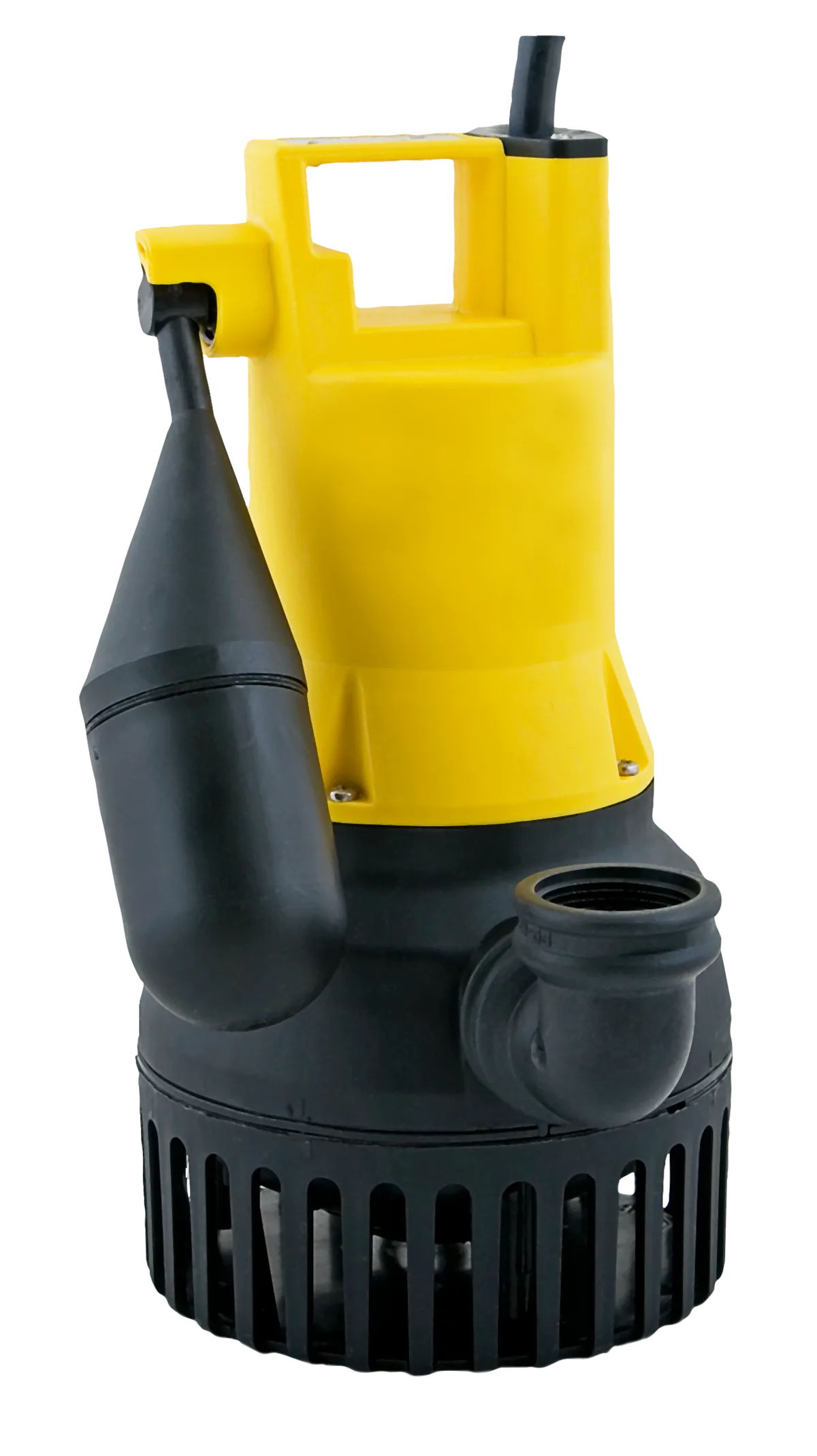
Image source: Wikimedia Commons / PumpExpert (CC BY-SA)
how much electricity does a sump pump use
A typical sump pump draws 0.5 to 1.2 kilowatts while running.
Most pumps run for short bursts of 5 to 15 minutes per activation.
On average, you pay $5 to $20 per month in electricity for a sump pump.
Actual costs depend on your local kWh rate and how often the pump cycles.
Sump pumps work on a simple principle: they remove accumulated water from a sump basin before it overflows. The electricity question really has two parts, how much power the motor pulls while running, and how often it runs. That second part is where people get surprised by their bills.
In our research of manufacturer nameplate data and utility calculators, we found that a 1/3 HP submersible pump typically draws around 800 to 1,000 watts during operation, while a larger 3/4 HP model can pull 1,500 to 2,000 watts. The motor also demands a brief startup surge that can double that draw for a few seconds, which is why the circuit feeding your pump matters as much as the monthly cost.
Sump Pump Electricity Usage Basics
Most residential sump pumps operate at 120 volts and fall within three common horsepower ratings. Here's what you'll typically see on nameplates across the market:
| Horsepower | Running Watts | Starting Watts | Estimated Monthly Cost (at $0.15/kWh) |
|---|---|---|---|
| 1/3 HP | 800–1,000W | 1,200–1,500W | $5–$10 |
| 1/2 HP | 1,000–1,300W | 1,500–2,000W | $10–$15 |
| 3/4 HP | 1,500–2,000W | 2,200–3,000W | $15–$30 |
The key number for billing is the running wattage multiplied by actual runtime, not the brief startup spike. A pump that runs 10 minutes per day at 1,000 watts uses about 0.17 kWh per day, or roughly 5 kWh per month. At the national average rate of $0.15 per kWh, that's under a dollar, but that's only if your pump rarely activates.
Real-World Running Costs and What You Will See on Your Bill
Your actual bill depends heavily on rainfall, groundwater levels, and how often your pump cycles each day. In dry seasons, many pumps sit idle for weeks, drawing zero watts except during brief self-checks. But during heavy rain or snowmelt, that same pump might run every 10 minutes continuously, pushing your monthly cost to $30 or more.
Weather patterns matter more than pump size. A home in a flood-prone area in Minnesota or along the Gulf Coast can see monthly electricity costs triple during spring runoff or hurricane season. As of 2026, utility rates in high-cost regions like California or parts of New England push those numbers even higher, especially if your pump runs hourly instead of every few hours.
For backup planning, most homeowners should expect their primary pump to add $10 to $25 monthly to their electricity bill under normal conditions. If you're seeing significantly more, check whether your discharge pipe is restricting flow. A clogged or too-narrow pipe forces the motor to work harder, drawing more current for longer periods.
You can find troubleshooting steps for persistent pumping issues in our guide on how to diagnose sump pump problems.
Sizing Safety: Circuits, Backup Power, and What Can Go Wrong
The startup surge is where things get dangerous. Even though a 1/2 HP pump runs at 1,200 watts, it can briefly pull 1,800 to 2,000 watts the instant it kicks on. If your circuit is rated at 15 amps (1,800 watts at 120V), that leaves almost no margin for error, especially if other devices share the same line.
That's why electrical codes require sump pumps to be on dedicated circuits. Manufacturer specs for major brands like Zoeller and Liberty Pumps all specify minimum circuit capacities that account for both running and starting loads. Install a 20-amp breaker whenever possible, and never daisy-chain your pump through an extension cord.
Low-voltage cords cause voltage drops that force motors to draw more current to maintain torque, creating a dangerous feedback loop.
When sizing backup power, most portable generators understate their real-world capacity. A generator rated at 2,000 watts peak might only sustain 1,600 watts continuously, enough for a small pump but not much else. For reliable emergency operation, match your pump's locked rotor amps (LRA) from the nameplate against your generator's starting capacity.
Check our reference on generator sizing for essential appliances if you need help calculating total household loads.
Image source: Wikimedia Commons / Shawn from Airdrie, Canada (CC BY-SA)
Common Questions About Sump Pump Energy Use
Does running my sump pump constantly mean it is using too much electricity?
Constant operation usually indicates a drainage problem rather than an energy efficiency issue. Most pumps are designed for intermittent duty and overheat quickly under continuous loads. If your pump never stops, you likely need to check your discharge routing or consider a higher-capacity model.
Can I save money by upgrading to a variable-speed sump pump?
Variable-speed pumps use 40 to 60 percent less energy by adjusting motor RPM to demand. However, the upfront cost typically takes three to five years to pay back through lower electric bills. They also run more frequently at lower speeds, which can wear components faster in certain applications.
Will a backup battery pump use significantly more electricity?
Battery backup pumps consume minimal power while idle but draw substantial current from your charger when actively pumping. A fully charged backup system adds roughly $2 to $5 monthly to your electricity bill. The real cost comes from keeping the battery topped up during extended outages, which can increase your bill noticeably.