
If you are asking which tonneau cover is most secure, the answer is a one-piece hard top. These seamless fiberglass or polymer lids offer the highest theft resistance because they lack external hinges or folding seams. They effectively turn your truck bed into a locked trunk that requires destructive force to breach.
Manufacturer specifications and aggregate theft reports consistently rank solid one-piece covers above all multi-panel alternatives as of 2026. We will break down exactly why this design wins and where other types fall short so you can choose wisely.
Which Tonneau Cover Is Most Secure
A one-piece hard tonneau cover provides the highest security level available today. Its seamless construction eliminates pry points found on folding or retractable models. Thieves cannot slash vinyl or manipulate exposed latches to gain entry.
You must pair it with a locking tailgate for complete protection.
The Hard Truth About Tonneau Security: One-Piece vs. Retractable vs. Folding
One-piece hard covers remain the undisputed champion for theft deterrence. Their single-shell design removes the weak points inherent in segmented systems. There are no fabric layers to cut and no side rails to peel back.
A determined attacker needs power tools and significant noise to get inside.
Hard retractable covers sit in second place for security. Aluminum slat designs like the RetraxPRO XR resist slashing and prying better than vinyl options. The internal canister protects the mechanism when closed but creates a fixed vulnerability point.
Aggregate reviews indicate these units hold up well against opportunistic theft but fail against targeted attacks.
Hard folding covers occupy the middle ground. Tri-fold panels use aircraft-grade aluminum or FRP to stop casual break-ins. Latch mechanisms are typically hidden under the bed rail cap for added safety.
The trade-off is that hinge seams between panels remain potential leverage points for crowbars.
Soft roll-up and tri-fold covers offer minimal real security. Marine-grade vinyl yields instantly to a utility knife. Locking cables can be cut with basic bolt cutters in seconds.
These covers provide weather protection and visual concealment but should never be trusted with valuable gear overnight.
Comparing Locking Mechanisms and Material Strength by Cover Type
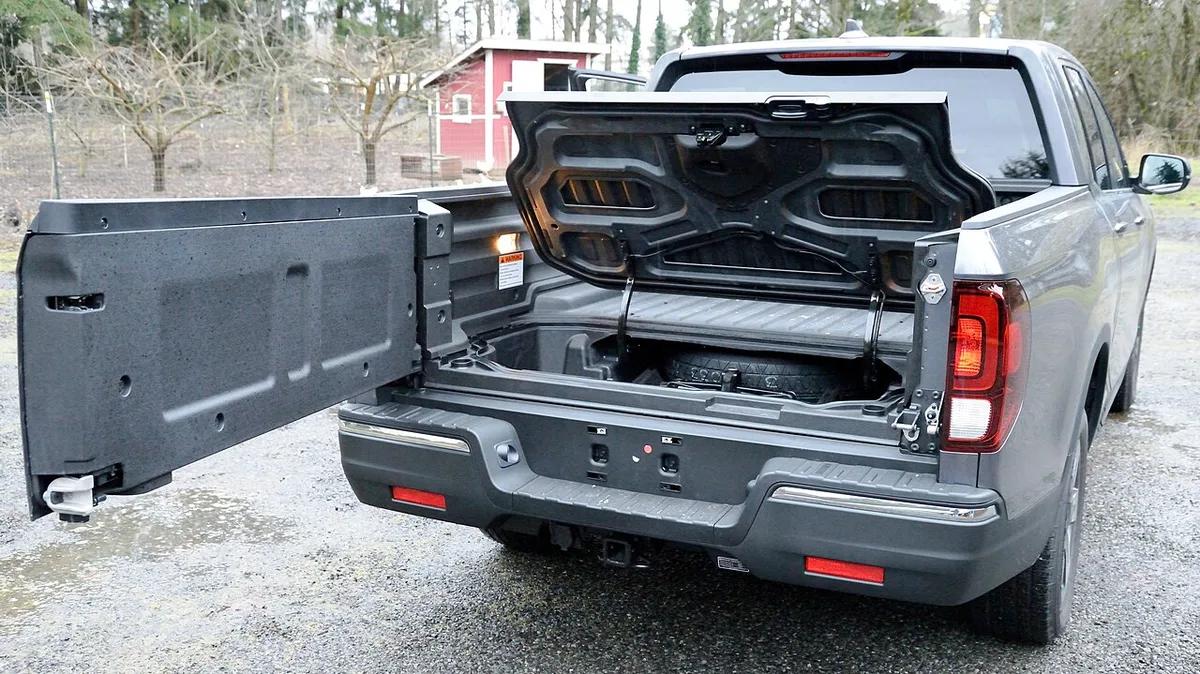
Image source: Wikimedia Commons / Diana Eng (CC BY-SA)
Material choice dictates how long a cover resists forced entry. Fiberglass reinforced polymer panels withstand significant impact without cracking. Aircraft-grade aluminum slats bend rather than break under pressure.
Vinyl offers zero structural resistance beyond simple concealment. Per SAE International testing standards, rigid materials dramatically increase the time required for unauthorized access.
Locking hardware matters just as much as the panel material. Dual-point rotary latches engage both bed rails simultaneously to prevent corner lifting. Automatic slam latches simplify operation but can deform under sustained leverage attacks.
Keyed-alike cylinders let you match your ignition key for convenience. Anti-drill lock cores add critical minutes against pick attempts.
| Cover Type | Primary Material | Lock Style | Pry Resistance |
|---|---|---|---|
| One-Piece Hard | FRP / Fiberglass | Paddle / Rotary | Excellent |
| Hard Retractable | Aluminum Slats | Canister Key Lock | Very Good |
| Hard Folding | Aluminum / FRP | Hidden Slam Latch | Good |
| Soft Roll-Up | Marine Vinyl | Cable / Velcro | Poor |
Flush-mount designs outperform over-the-rail styles for security. Covers sitting inside the bed rails eliminate the gap thieves exploit with pry bars. Over-the-rail models leave an accessible edge even when locked tight.
Proper compression seals block both water intrusion and tool insertion points along the perimeter.
Matching Security Levels to Real-World Theft Risks and Use Cases
Your specific parking environment determines how much security you actually need. Urban residents facing high theft rates benefit most from one-piece or premium retractable covers. National Insurance Crime Bureau data shows trucks in metropolitan areas face significantly higher break-in attempts.
Visual deterrence alone rarely stops criminals who know soft covers are vulnerable.
Contractors carrying expensive power tools require verified physical barriers. Hard folding covers balance daily bed access with adequate overnight protection. Quick-release clamps allow full removal when hauling tall equipment.
Fleet managers often standardize on hard retractables for their blend of security and operational flexibility.
Overlanders and campers have different priorities than urban commuters. Gear may be less valuable but recovery in remote areas is costly. Hard folding or retractable covers protect against weather and wildlife while allowing rack integration.
Routine upkeep of latch mechanisms prevents failures far from help.
Daily drivers parking in secured garages can accept lower security tiers. Soft covers suffice for keeping groceries dry and hiding gym bags. The risk calculus changes completely once the vehicle sits unattended outdoors regularly.
Always match the cover strength to your worst-case parking scenario rather than your best case.
Common Security Gaps and Installation Mistakes That Void Protection
Even the strongest cover fails if installed incorrectly. Misaligned latch strikers create gaps that bypass the locking mechanism entirely. Manufacturer torque specs exist to prevent clamp loosening over time.
Periodic bolt checks keep tension consistent across all mounting points. Skipping this maintenance turns a premium cover into a false sense of security.
The tailgate itself is often the weakest link in the system. Factory tailgate locks frequently succumb to picking or slim-jim attacks. Adding an aftermarket tailgate reinforcement plate forces thieves to attack the cover directly.
This upgrade costs little compared to replacing stolen equipment. Never assume your stock tailgate provides adequate secondary security.
Exposed mounting hardware invites tampering. Standard hex bolts can be removed with common wrenches. Security Torx or spline-drive fasteners require specialized bits most thieves lack.
Replacing factory clamps with anti-theft variants takes minutes during installation. This small step eliminates an entire attack vector that generic guides overlook.
Water leaks often signal compromised security integrity. Compression seals that fail against rain also admit pry tools. Adjusting tension rods restores proper seal contact along the bed rails.
Weatherstrip degradation happens gradually and goes unnoticed until damage occurs. Treat water ingress tests as indirect security audits for your installation quality.