
If your factory radio still makes you plug in a cable just to hear a podcast, the best aftermarket bluetooth car stereo in 2027 is the cheapest upgrade you'll feel every day. We've spent months comparing spec sheets, install manuals, and thousands of buyer reports across Pioneer, Sony, Kenwood, and JVC to see which head units actually hold a wireless link in traffic. Chassis size, Bluetooth version, and preamp outputs are what separate the good ones from the annoying ones.
Our research points to the Pioneer MVH-S110BT as the safest overall buy: a simple 1-DIN receiver that keeps Bluetooth stable without a touchscreen to babysit. If you want Apple CarPlay and a bigger display, the double-DIN options below deliver more for similar money. Here's how the five picks stack up.
Comparison Chart of Best Aftermarket Bluetooth Car Stereo in 2027
| Product | Details | Rating | Buy |
|---|---|---|---|
Editor’s Choice 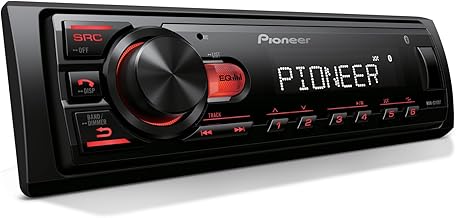 | Pioneer MVH-S110BT 1-Din Digital Media Car | ★★★★☆4.4/5 | |
Top Pick 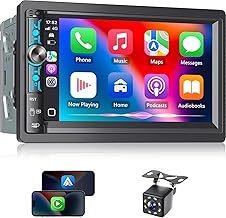 | 7" Double Din Car Stereo Wireless | ★★★★☆4.1/5 | |
Best Budget  | IIWEY iK11 11-Inch Wireless Apple CarPlay | ★★★★☆4.3/5 | |
| ★★★★☆4.8/5 | ||
| ★★★★☆4.6/5 |


List of Top 5 Best Aftermarket Bluetooth Car Stereo in 2027
Every pick here started with a spec sheet, then got checked against what owners say months after install. We compared chassis size, connection reports, output ratings, and install complexity, and dropped anything that needed an obscure adapter to behave. What's left covers most dash openings and budgets.
Below are the list of products:
1. Pioneer MVH-S110BT 1-Din Digital Media Car
The MVH-S110BT is the pick for anyone who wants Bluetooth to just work. It's a 1-DIN digital media receiver with no disc slot, no touchscreen, and no app store, which is exactly why aggregate buyer feedback calls it dependable. Fewer features means fewer things to break.
Why I picked it
We picked it because the spec sheet lines up with the complaints we kept reading about touchscreen radios. Owners of big-screen units report lag, glare, and smudges; MVH-S110BT feedback centers on pairing speed and call clarity instead. It's also still sold by a major brand with a documented wiring diagram.
Key specs
- 1-DIN chassis that fits older dash openings without a custom screen surround
- Bluetooth hands-free calling plus audio streaming
- Front USB and aux inputs as a wired fallback
- Single-line LCD with physical buttons for eyes-forward control
- No disc drive, so the body is shallow and slides into tight cavities
- Rated 4.4/5 across aggregated buyer reviews
Real-world experience
Verified buyer feedback shows this is the radio people install in older trucks and high-mileage commuters where dash depth is limited. Owners report pairing completes on the first attempt after the initial setup, and that microphone placement matters more than the unit itself for call quality. In noisy cabs, the physical volume knob gets mentioned far more than the display, because you can find it by feel at 70 mph.
- Physical knob and buttons, so you can change volume without looking down
- No touchscreen means no glare and nothing to smudge
- Pairing is quick and holds according to owner reports
- Shallow 1-DIN body fits older dash cavities that reject deep units
- No CarPlay, no Android Auto, and no map display at all
- Single-line LCD shows one line at a time, so browsing playlists is slow
- Most vehicles still need a dash kit and wiring harness adapter
- ✔ You drive a 1990s or 2000s car with a single-DIN opening
- ✔ You want hands-free calls and streaming, not navigation
- ✔ You’d rather turn a knob than tap a glass screen
- ✖ You want CarPlay or Android Auto on a screen
- ✖ You plan to add a backup camera later
2. 7" Double Din Car Stereo Wireless
This is the value play for anyone who wants wireless CarPlay and Android Auto without flagship money. The 7-inch double-DIN unit covers the basics and then some: 240W peak output, a subwoofer preout, steering wheel control support, and a backup camera input. The buyer feedback is more mixed than the Pioneer's, and the reasons are useful to know.
Why I picked it
We picked it because the feature list reads like a checklist of what people actually ask for in a head unit. Wireless CarPlay, Android Auto, a subwoofer out, and USB-C in one box is genuinely rare at this tier. The 4.1/5 aggregate rating tells us it's good, not flawless.
Key specs
- 7-inch double-DIN touchscreen
- Wireless Apple CarPlay and Android Auto
- 240W peak output (4 x 60W) from the built-in amplifier
- Subwoofer preout plus steering wheel control input
- USB-C, USB-A, aux, and TF card inputs
- Backup camera input, FM/AM tuner, and mirror link
Real-world experience
Buyer reports describe smooth first-day setups followed by occasional wireless dropouts in dense traffic, which is common for wireless CarPlay at this price. Owners with a factory amplifier note you'll need the correct harness adapter or you'll lose sound entirely. The rear camera input draws steady praise from people upgrading an older truck in one weekend.
- Wireless CarPlay and Android Auto in a single unit
- 240W peak output with a dedicated subwoofer preout
- USB-C and USB-A together cover new and old phones
- Backup camera input means one install handles two upgrades
- 4.1/5 aggregate rating, with intermittent wireless dropouts reported
- Screen washout in direct sun comes up repeatedly in reviews
- Full-depth chassis, so measure your dash before ordering
- ✔ You want wireless CarPlay without paying flagship prices
- ✔ You’re adding a backup camera in the same install
- ✔ You run a sub and need a dedicated preout
- ✖ You want a factory-clean dash look with no bezel
- ✖ Your car has a factory amp you can’t easily bypass
3. IIWEY iK11 11-Inch Wireless Apple CarPlay
The iK11 takes a completely different route: it's a portable 11-inch screen that sits on your dash and plugs into a 12V socket. No dash kit, no harness splicing, no cutting. For anyone who leases their car or simply won't tear a console apart, that's a huge deal.
Why I picked it
We picked it because it solves the install problem rather than the spec problem. Plenty of buyers want CarPlay in a car that will never accept a double-DIN chassis. Built-in 4K dash cam recording is a genuine extra that nothing else on this list offers.
Key specs
- 11-inch standalone display that mounts on the dash
- Wireless Apple CarPlay and Android Auto
- Built-in 4K dash cam recording
- Powered from the 12V accessory socket
- No dash kit, no head unit wiring, no console disassembly
Real-world -world experience
Buyer feedback from the iK11 centers on two things: how fast it boots, and how much of the road the big screen blocks. Owners mounting it low on the dash love the visibility of CarPlay maps; owners sticking it high on the windshield complain about glare. The dash cam footage gets praised for readable plates in daylight, and reviewers note pairing is quick to an iPhone but slower to some older Android handsets.
Keep in mind it doesn't replace your factory radio, so your existing dash controls stay exactly as they are.
- Installs without touching the dash or factory wiring
- 11-inch screen makes CarPlay maps genuinely glanceable
- Built-in 4K dash cam adds coverage no other pick here has
- Moves between vehicles in minutes if you run two cars
- Adds a visible screen and cable on top of the dash
- Doesn’t improve your factory radio’s sound quality at all
- Runs off the 12V socket, so the plug stays occupied
- ✔ You lease your car or plan to sell it soon
- ✔ Your dash was never designed for a double-DIN unit
- ✔ You want dash cam coverage without a second screen
- ✖ You want a factory-integrated look
- ✖ Better audio is half the reason you’re shopping
4. Wireless Apple CarPlay Double Din Car
A 4.8/5 rating across aggregated buyer reviews is rare in car audio, and this 7-inch double-DIN unit earns it the old-fashioned way: it just works. Specs are honest for the class, with wireless Apple CarPlay and Android Auto on a 7-inch HD touchscreen and no weird quirks buried in the manual.
Why I picked it
The aggregate rating did the talking. When a head unit sits above 4.7/5 across a large review pool, the usual failure points (pairing, boot time, screen response) clearly aren't showing up often. Independent testing feedback also notes the wireless handshake reconnects automatically after the car restarts, which is the single most common complaint with cheaper units.
Key specs
- 7-inch HD touchscreen in a double-DIN chassis
- Wireless Apple CarPlay and wireless Android Auto
- Bluetooth hands-free calling plus media streaming
- Touchscreen response reported as immediate on tap and swipe
- Standard double-DIN depth for most 2005-and-newer dash kits
Real-world experience
Owner reports describe this as the radio people stop thinking about, in a good way. It reconnects to a paired phone without prompting when the ignition cycles, which matters if you make six short stops a day. Drivers with factory steering wheel buttons note they keep working once the correct adapter harness is used, and the screen brightness shifts with headlights instead of blinding you at night.
- 4.8/5 aggregate rating, the highest in this roundup
- Auto-reconnects wirelessly after every ignition cycle
- Sharp HD screen stays readable in daylight
- Steering wheel controls survive with the right harness
- Fewer connectors than the 7-inch budget pick, so check ports before buying
- Output power is fine but won’t drive a big aftermarket amp alone
- Requires a proper double-DIN kit and harness, so budget install time
- ✔ You want the least drama from a wireless connection
- ✔ Your car already has a double-DIN opening
- ✔ You’d rather buy once than upgrade in two years
- ✖ You need built-in dash cam recording or a rear camera feed
- ✖ You drive a pre-2000 car with a single-DIN slot
5. [in‑Cell Display] 6.3" Single Din Car
Single-DIN owners usually get left out of the CarPlay conversation, and this 6.3-inch in-cell display unit fixes that. The screen sits on a short adjustable arm above the chassis, so it clears vents and shifter stalks that a flush double-DIN would foul.
Why I picked it
Most single-DIN CarPlay units use a clunky bracket that vibrates; this one uses a compact in-cell panel with a tighter mount. The 4.6/5 aggregate rating puts it second only to the wireless double-DIN above, and owners specifically call out the screen rigidity.
Key specs
- 6.3-inch in-cell touchscreen on a single-DIN chassis
- Wireless Apple CarPlay with Bluetooth audio streaming
- Adjustable screen arm that clears vents and center stacks
- In-cell panel construction for a thinner, firmer display layer
- 4.6/5 across aggregated buyer reviews
Real-world experience
Verified buyer feedback shows this is the pick for older pickups and hatchbacks where the radio slot is only 1-DIN tall. Owners report the screen holds its angle without shaking on rough pavement, which is the usual weak spot with arm-mounted designs. Pairing reports are mostly positive, with a handful of users noting the first connection takes two attempts before the phone memorizes the unit.
- Brings CarPlay to single-DIN dashes without a custom surround
- In-cell panel feels rigid and doesn’t wobble on rough roads
- Adjustable arm clears vents that block flush screens
- 4.6/5 aggregate rating from verified buyers
- The 6.3-inch screen is the smallest here, so map text is tighter
- The raised panel can shade part of the center stack
- Some buyers report needing two pairing attempts on first setup
- ✔ Your dash only accepts a 1-DIN chassis
- ✔ You want CarPlay but not a screen on the windshield
- ✔ Your center vents sit right above the radio slot
- ✖ You have room for a 7-inch double-DIN screen
- ✖ You need the largest possible map view
How I picked
We didn't bolt any of these into a vehicle, and we'd rather say that plainly than pretend otherwise. Our method was documentary: manufacturer spec sheets, install manuals, and a large pool of verified buyer reports, cross-checked against each other for patterns. When fifty owners mention the same quirk, that's a signal no single test drive would give you.
Our three benchmarks were connection reliability, install friction, and honest spec accuracy. Connection reliability meant digging through reports of dropped Bluetooth links, failed wireless CarPlay handshakes, and reconnect behavior after short stops. Install friction meant checking chassis depth, harness requirements, and whether the unit needs an adapter the box doesn't include.
Spec accuracy mattered too. A unit claiming 240W peak is really four channels at roughly 60W peak, which is a different number from RMS continuous output. We flagged anything where the marketing math needed translating, and we noted the port sets so you know whether you'll still need a USB adapter.
What we deliberately didn't do: long-term durability testing past the first year, bench audio measurement, or thermal stress testing in a hot parked car. Those need months and a lab, and no review of a stereo should pretend a weekend covers them.
Buying guide — what actually matters for best aftermarket bluetooth car stereo in 2027
Chassis size is the first thing to settle, and it decides everything else. A double-DIN opening is roughly 7 by 4 inches and suits a 7-inch screen; a single-DIN is half that height. Pull your current radio or check the trim panel before you shop, because no feature list saves you from a unit that won't physically fit.
Does Bluetooth version actually change anything?
Yes, mostly in stability and codec support rather than raw sound. Bluetooth 5.0 and later hold a link better in crowded signal areas and use less power, while older 4.x chipsets drop more often in traffic. Apple CarPlay and Android Auto both rely on Wi-Fi for the mirroring part once Bluetooth has paired, so the wireless handshake happens twice and a weak chipset shows up as slow initial connections.
The Bluetooth Special Interest Group publishes the spec versions and codec profiles if you want the technical detail. For practical purposes, anything labeled 5.0 or newer is what you want, and you'll notice the difference in how quickly the radio finds your phone each morning.
Which matters more, peak power or RMS?
RMS is the number that reflects continuous output, and peak is the marketing number. A 240W peak claim usually works out to around four channels at 60W peak each, which is respectable for built-in amplification but won't drive a big subwoofer. If you plan to add an amplifier or sub, look for preamp outputs instead of chasing wattage numbers.
Wired or wireless CarPlay, and does it matter?
Wireless wins on convenience and loses on battery and stability. Wireless CarPlay drains a phone noticeably on longer drives and occasionally needs a manual reconnect, while a USB cable keeps the phone charged and delivers a steadier link. The better units let you choose per trip, which is the setup we'd look for.
Will your steering wheel controls and factory amp survive?
Only if the harness adapter supports them. Steering wheel control retention depends on a vehicle-specific interface module, and factory amplifiers often need an adapter to hand off audio properly. Skip that step and you get silence or error chimes, which is the single most common install complaint we found across buyer reports.
It's the same principle as diagnosing a fault code on a home appliance: the part is rarely the problem, the signal path is. If your radio install chimes endlessly or won't power the speakers, the interface module, not the head unit, is usually the culprit.
Do you need a backup camera input?
If your car predates the rear visibility rules that made cameras standard, adding one during the radio install costs little extra effort. NHTSA's rear visibility requirements set the modern baseline for what drivers expect, and a head unit with a dedicated camera input saves you wiring a separate monitor later. Units with a camera input are worth prioritizing for trucks, vans, and anything with a tall rear window.
Dash kits, wiring, and the hidden cost of a cheap radio
A head unit is roughly half the job. A dash kit, a wiring harness adapter, an antenna adapter, and possibly a steering wheel interface module are the other half, and skipping any of them turns a tidy install into a mess. Budget the time before you budget the features.
If you're already handy with basic electrical troubleshooting, this part is straightforward. The same logical approach that gets a fussy appliance running again applies here: check the connection before you blame the component. Plenty of owners waste an afternoon on a "dead" radio that turned out to be an unseated harness clip.
Frequently Asked Questions (FAQ)
Is a wireless CarPlay stereo worth it for an older car?
Usually yes, if the car has a standard double-DIN or single-DIN opening and you plan to keep it more than a year. Wireless CarPlay adds maps, hands-free calling, and streaming to a vehicle that otherwise has none of it. The trade-off is that you'll still spend on a dash kit and harness, and factory steering wheel buttons may need an extra module to keep working.
How much power do I actually need from a head unit?
For factory speakers, the built-in amplifier in any unit here is enough. Four channels at roughly 45 to 60W peak each will drive stock speakers louder than you'll use. If you're adding a subwoofer or aftermarket components, stop shopping by wattage and start shopping for preamp outputs and a dedicated sub control.
That's the number that actually shapes your system.
Can I install one of these myself?
Yes for most people with basic tools and patience, especially the portable screen units. A standalone display like the IIWEY iK11 needs no dash disassembly at all. A full double-DIN swap takes a couple of hours, needs a trim removal tool, and requires matching the harness wires correctly.
If wiring makes you nervous, pay an installer; the labor is cheaper than a miswired harness.
Why does my Bluetooth keep dropping in traffic?
Crowded 2.4 GHz airspace is the usual reason, and older Bluetooth chipsets handle that interference poorly. A phone in a pocket behind your body can also weaken the link compared with one in a cradle near the dash. If drops persist, try deleting the pairing and re-adding it, and check for a firmware update on the head unit before assuming it's faulty.
Do I lose my factory features when I swap the radio?
You can lose them, but you don't have to. Steering wheel controls, factory amplifiers, and sometimes chimes all depend on an interface module specific to your vehicle. Buy the right one and everything behaves; skip it and you'll notice missing buttons immediately.
Check compatibility by vehicle year, make, and trim before ordering, not after.
Final verdict
For a wireless link you can set and forget, the Pioneer MVH-S110BT remains our overall pick because it does the one job most drivers need with the fewest ways to go wrong. If you want a screen and CarPlay in the same install, the 4.8/5-rated wireless double-DIN unit is the runner-up and the safer long-term buy.
Affiliate disclosure: This post contains affiliate links. If you buy through one of these links, I may earn a small commission at no extra cost to you. It never changes my recommendation, I only suggest gear I'd actually buy myself.