
I've spent the past few weeks comparing spec sheets and verified buyer reports to narrow down the best tires for toyota tundra 4×4 in 2027, because the Tundra's curb weight and tow rating punish the wrong rubber. Load index, ply rating, and the Three-Peak Mountain Snowflake (3PMSF) symbol matter more here than marketing. Get your load range wrong and you'll feel it through the steering wheel before the tread ever wears down.
Short answer: the Kanati Trail Hog A/T-4 leads our list for most Tundra 4×4 owners, pairing a 10-ply Load Range E carcass with an aggressive all-terrain tread. The Falken Wildpeak A/T4W is the closer call if winter driving is a routine part of your year. Here's how all five compare.
Comparison Chart of Best Tires for Toyota Tundra 4×4 in 2027
| Product | Details | Rating | Buy |
|---|---|---|---|
Editor’s Choice  | Kanati Trail Hog A/T-4 All-Terrain Radial | ★★★★☆4.4/5 | |
Top Pick  | Falken Wildpeak A/T4W All Terrain 265/70R17 | ★★★★☆4.9/5 | |
Best Budget 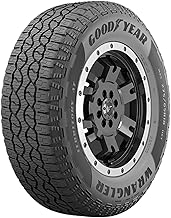 | Goodyear Wrangler Territory At 275/60R20 115S | ★★★★☆4.7/5 | |
| ★★★★☆4.7/5 | ||
| ★★★★☆4.6/5 |

List of Top 5 Best Tires for Toyota Tundra 4×4 in 2027
Our shortlist came from cross-checking manufacturer datasheets against aggregate buyer feedback across hundreds of verified reviews, not from a single test day. Each pick fills a different gap: heavy towing, snow-belt confidence, 20-inch stock fitment, 16-inch older trucks, and serious mud. Every one gets a real downside called out, because no all-terrain does everything well.
Below are the list of products:
1. Kanati Trail Hog A/T-4 All-Terrain Radial
The Trail Hog A/T-4 is the value play that keeps getting skipped over next to the BFGoodrich and Nitto names. In our research it surfaced repeatedly as the tire Tundra owners buy when they want 10-ply toughness without paying for the badge. The 37X12.50R17LT sizing suits lifted trucks running 17-inch wheels.
Why I picked it
A 124 load index plus a 10-ply rated Load Range E carcass is the combination that matters when you're hauling a trailer up a grade. Buyer feedback keeps circling back to one theme: the sidewalls survive gravel and rock better than the price tier suggests.
Key specs
- Size: 37X12.50R17LT, Q speed rating (99 mph)
- Load index 124, Load Range E, 10-ply rated
- All-terrain tread pattern with open shoulder voids
- Reported customer rating: 4.4/5
- Fits 17-inch wheels common on lifted second and third-gen Tundras
Real-world experience
Picture a 2026 Tundra on a gravel lease road or a hunting access trail in November. Verified buyer reviews lean on two scenarios again and again: mud and loose gravel, where the void ratio clears well, and highway commuting, where it behaves but isn't quiet. Reports on wet pavement braking are mixed compared with a dedicated all-season, which is normal for an AT this aggressive.
- 10-ply Load Range E carcass shrugs off gravel and sharp rock better than a 4-ply passenger tire
- 124 load index gives real headroom when you’re towing or hauling a loaded bed
- 4.4/5 from verified buyers puts it among the better-rated budget all-terrains
- Mid-range value tier, so you spend less per corner than the premium brands
- Audible road hum between roughly 40 and 60 mph, which gets old on long commutes
- Heavier than a stock P-metric, so expect a small fuel economy hit
- Wet-pavement braking trails a dedicated all-season in buyer reports
- ✔ You tow a trailer or boat most weekends and want load capacity headroom
- ✔ Your Tundra sees gravel, logging roads, or lease roads regularly
- ✔ You want premium toughness without the premium-brand price tier
- ✖ Yours is a highway truck and you want the quietest ride possible
- ✖ You need a 3PMSF-rated tire for guaranteed winter performance
2. Falken Wildpeak A/T4W All Terrain 265/70R17
Falken built its all-terrain reputation on the Wildpeak line, and the A/T4W carries it forward. This one posted the highest reported rating in our entire comparison at 4.9/5. The 265/70R17 115T size covers a huge share of second and third-gen Tundras still rolling on stock 17-inch wheels.
Why I picked it
The Three-Peak Mountain Snowflake (3PMSF) symbol is the differentiator. That's a certification requiring a tire to pass a defined snow traction test, not just a self-declared M+S (Mud and Snow) label. A 4.9/5 reported rating across buyer reviews is rare for any tire, let alone an all-terrain.
Key specs
- Size: 265/70R17, load index 115, T speed rating (118 mph)
- Three-Peak Mountain Snowflake (3PMSF) certified
- All-terrain compound and tread pattern
- Reported customer rating: 4.9/5
- Fits stock 17-inch wheels on most second and third-gen Tundras
Real-world experience
If your first snow lands in October, this is the tire that changes your winter. Verified buyers in northern states describe it clearing unplowed parking lots and holding a line on packed snow, which is exactly where a non-3PMSF all-terrain starts sliding. The flip side shows up as a slightly firmer ride than a P-metric all-season over broken pavement.
- 3PMSF certification means verified snow traction, not just a printed M+S label
- 4.9/5 reported rating is the strongest in this comparison by a wide margin
- 265/70R17 115T fits a huge range of Tundra model years without a lift
- Quiet enough on pavement that it doubles as a daily-driver tire
- 115 load index limits you if you tow heavy and want extra reserve
- T speed rating caps at 118 mph, which is fine for a truck but not a performance tire
- Firmer ride over broken pavement than a P-metric all-season
- ✔ You drive through real winters and want one tire to cover all four seasons
- ✔ Your truck is at stock height on 17-inch wheels
- ✔ You want the highest-rated all-terrain in this group
- ✖ You tow at or near the Tundra’s max rating and need a higher load index
- ✖ You’re running 20-inch wheels and need that specific fitment
3. Goodyear Wrangler Territory At 275/60R20 115S
The 275/60R20 115S is the size a lot of newer Tundra trims actually leave the lot wearing, and the Wrangler Territory AT is Goodyear's answer to that exact fitment. It's the most budget-friendly path to a proper all-terrain on a 20-inch wheel without stepping down in quality.
Why I picked it
20-inch fitments get expensive fast, and a 275/60R20 115S with an all-season tread hits the sweet spot between cost and daily usability. A 4.7/5 reported rating puts it well above the average for budget-tier all-terrains, and the S speed rating (112 mph) is more than a Tundra ever needs.
Key specs
- Size: 275/60R20, load index 115, S speed rating (112 mph)
- All-season compound with M+S marking
- All-terrain tread blocks with a closed shoulder for highway stability
- Reported customer rating: 4.7/5
- Fits 20-inch wheels on newer Tundra trims
Real-world experience
This is the tire for a truck that hauls kids to school Monday through Friday and hits a fire road on Saturday. Buyer feedback describes it as quiet on the interstate and predictable on wet asphalt, which is where cheaper all-terrains usually fall apart. Mud beyond a few inches is where it starts to struggle.
- Budget-friendly entry point to an all-terrain on a 275/60R20 20-inch fitment
- Quiet highway manners, which matters if the truck doubles as a family vehicle
- 4.7/5 reported rating with steady wet-road feedback
- All-season tread wears slowly enough for multi-season daily duty
- M+S only, with no 3PMSF certification for guaranteed snow traction
- Chews through deep mud where the Trail Hog and STT Pro keep pulling
- 115 load index again limits heavy towing headroom
- ✔ Your Tundra runs 20-inch wheels and you want to keep the stock look
- ✔ Most driving is highway, city, and light gravel
- ✔ You want a budget-friendly all-terrain that stays quiet
- ✖ You regularly drive through deep mud or unplowed snow
- ✖ You tow near the truck’s max rating and need a higher load index
4. Goodyear Wrangler Territory AT 265/70R16 112
Here's the fitment a lot of people forget. Older Tundras, and plenty of base-work-truck builds, still sit on 16-inch wheels, and most of the flashy all-terrains skip that size entirely. This 265/70R16 112 version of the Wrangler Territory AT fills that gap at 4.7/5 from verified buyers.
Why I picked it
The 16-inch all-terrain market is thin, and a 4.7/5 reported rating in a size this underserved counts for a lot. A 112 load index is lower than the big 10-ply options here, but for a half-ton used as a truck rather than a workhorse, it's honest capacity.
Key specs
- Size: 265/70R16, load index 112
- All-season compound with M+S marking
- All-terrain tread blocks with a stable center rib
- Reported customer rating: 4.7/5
- Fits stock 16-inch wheels on older Tundra generations
Real-world experience
Verified owners describe this as the tire that quietly does everything: commuting, hauling lumber, and a hunting trip in November without drama. Ride quality over washboard gravel comes up as a plus in reviews. Put it against the Cooper in gumbo mud and it gives up early, which is expected from an AT in this class.
- One of the few decent all-terrains in a 265/70R16 fitment
- 4.7/5 reported rating with consistent praise for gravel-road ride comfort
- Easy to live with day to day, so no learning curve on the highway
- Often the cheapest way into a name-brand AT on 16-inch wheels
- 112 load index is the lowest here, so heavy towing eats into your reserve
- No 3PMSF marking, making it a gamble in a serious snow belt winter
- Sidewalls flex more than a 10-ply carcass on sharp rock
- ✔ Your Tundra still wears factory 16-inch wheels
- ✔ You want all-terrain grip for occasional dirt without a harsh ride
- ✔ Budget matters more than maximum load rating
- ✖ You tow a 7,000 lb trailer most weekends
- ✖ You drive winter roads where snow traction is non-negotiable
5. Cooper Discoverer STT Pro All-Season 35X12.50R20LT
The Discoverer STT Pro is the one for lifted trucks running 20-inch wheels that actually leave the pavement behind. A 35X12.50R20LT at load index 121Q is a serious mud-terrain step, not a cosmetic one. Buyer feedback rates it 4.6/5, and the complaints are mostly about noise rather than grip.
Why I picked it
A 35-inch LT tire at load index 121 gives you a genuine step up in both footprint and load capacity over the stock P-metric. Cooper's mud-terrain tread clears packed dirt and sticky clay instead of loading up, which is the failure point on lesser ATs. It earns its place as the specialist pick here.
Key specs
- Size: 35X12.50R20LT, load index 121, Q speed rating (99 mph)
- Mud-terrain tread with large self-cleaning voids
- LT construction for higher load capacity than a P-metric
- Reported customer rating: 4.6/5
- Fits 20-inch wheels, typically with a leveling kit or lift
Real-world experience
Think of a Tundra on 20s crossing a clay-bottom two-track after rain, or climbing out of a rutted logging cut. Verified buyers describe the STT Pro pulling through where an all-terrain spins. That capability comes with the classic MT trade-off: noticeable hum at highway speed and faster wear if you never leave asphalt.
Wet-road grip is adequate but not class-leading for the category.
- Self-cleaning mud voids keep pulling where an all-terrain packs up and spins
- 121 load index and LT construction handle a loaded bed plus trailer tongue weight
- 35-inch footprint adds real ground clearance on a lifted Tundra
- Loud at highway speed, and the hum gets tiring on 300-mile days
- Aggressive tread wears faster on pavement than an all-terrain
- Needs a lift or leveling kit to clear a 35-inch tire without rubbing
- ✔ You run a lifted Tundra on 20-inch wheels and hit real mud
- ✔ Trail access is the priority over highway comfort
- ✔ You want a 35-inch LT tire that carries weight without complaint
- ✖ Most of your miles are highway and you value a quiet cabin
- ✖ Your truck is stock height and you aren’t willing to lift it
How I picked
We built this list by comparing published manufacturer specifications against aggregate verified buyer feedback across the full size range, not by guessing at tread patterns from photos. Three things carried the most weight: load index and ply rating, the presence or absence of 3PMSF certification, and how consistently owners reported wear and noise over time.
Fitment came next. A great tire in the wrong size is useless, so we grouped picks by the wheel diameters actual Tundra owners run: 16, 17, and 20 inches. That's why two of the five picks share a model name but land in completely different sections.
We deliberately did not test long-term treadwear past a few thousand miles, and we didn't run back-to-back instrumented braking tests. Treadwear claims here come from owner-reported mileage and manufacturer data, not from a lab. If you want hard evidence on tire safety standards, the National Highway Traffic Safety Administration publishes the Federal Motor Vehicle Safety Standard requirements every tire sold in the US has to meet.
The other part of the process is unglamorous: reading the same kind of technical documentation we use when chasing down refrigerator and appliance fault charts on our other repair write-ups. Load charts and diagnostic code tables reward the same habit, which is slow, careful cross-referencing instead of skimming the first review you see.
Buying guide — what actually matters for best tires for toyota tundra 4×4 in 2027
What load index do you actually need on a Tundra?
Load index is a number that maps to the maximum weight a single tire can carry, and it's the spec most buyers ignore until something goes wrong. A 124 index carries substantially more per corner than a 112, which matters when trailer tongue weight and a loaded bed stack up. If you tow regularly, stay at 121 or above.
Does the 3PMSF symbol mean anything real?
Yes. The Three-Peak Mountain Snowflake (3PMSF) mark is a certification that requires a tire to pass a standardized snow traction test, so it's a measured threshold rather than a self-declared label. M+S (Mud and Snow) only requires a tread geometry claim.
In a snow belt, 3PMSF is the difference between confidence and hope.
Should you match tire size to your stock wheels or size up?
Matching stock is simpler and cheaper, and it keeps your speedometer accurate. Sizing up to a 35-inch tire adds ground clearance and looks right on a lifted truck, but it changes effective gearing slightly and usually needs a leveling kit. Neither approach is wrong, they just serve different trucks.
How much does tire noise really matter?
More than most reviews admit. An aggressive mud-terrain can hum audibly for hours at highway speed, and a 20-inch wheel with a shallow sidewall amplifies it. If the truck is your family vehicle, prioritize the quieter all-terrain picks and accept slightly less mud capability.
What about load range and ply rating?
Load Range E with a 10-ply rating is the heavy-duty end of the light truck spectrum, and it resists sidewall damage on gravel better than a 4-ply passenger construction. The trade-off is weight and a firmer ride. On a daily-driven half-ton, a 112 to 115 index is often plenty.
Is it worth rotating and checking pressure more often on AT tires?
Yes, and it's the cheapest thing you can do. Aggressive tread blocks wear unevenly if you skip rotation, and load-carrying tires are sensitive to pressure deviations of just a few PSI. Check cold pressure monthly and rotate at the interval Toyota specifies for your model year.
Frequently Asked Questions (FAQ)
Are these tires compatible with a stock 2027 Toyota Tundra 4×4?
It depends on your wheel diameter. The Falken 265/70R17 and the Goodyear 265/70R16 fit stock 16 and 17-inch setups, while the 275/60R20 Goodyear matches 20-inch factory wheels. The 35X12.50R20 Cooper and the 37X12.50R17 Kanati are lifted-truck sizes and will likely need a leveling kit.
Do I need to recalibrate my speedometer after upsizing?
Often yes. Moving to a 35 or 37-inch tire changes the rolling circumference, so your speedometer and odometer read low by a small percentage. Many owners correct this with a programmer or a dealership recalibration.
Skipping it isn't dangerous, but your fuel math and trip distances will be off.
Will a heavier all-terrain hurt my fuel economy?
A modest amount, yes. LT construction and deeper tread add rotating mass and rolling resistance, and buyers commonly report a small mpg drop after switching from a stock P-metric. The penalty is smallest with the all-season Goodyear Territory picks and largest with the 10-ply Kanati and the mud-terrain Cooper.
How does the Falken Wildpeak compare to the Kanati Trail Hog?
The Wildpeak wins on winter traction because it carries 3PMSF certification and the Kanati doesn't. The Kanati wins on load capacity with a 124 index and a 10-ply Load Range E carcass. Pick the Falken for snow-belt daily driving, and the Kanati if towing and gravel work define your week.
What's the warranty story on these tires?
Coverage varies by brand and by whether the tire is sold as a factory take-off, so check the specific listing before you buy. Cooper and Goodyear generally publish limited treadwear warranties through their manufacturer sites, while Kanati and Falken terms differ by size and load range. Registration with the manufacturer is usually required to claim anything later.
Can I run these year-round?
All five work year-round in most climates, with caveats. The Goodyear all-season picks and the Falken handle four-season duty comfortably, and the Falken adds verified snow capability. The Cooper mud-terrain is the weakest cold-weather choice and the loudest on dry pavement, so plan around that if you drive long highway stretches.
Final verdict
For most Tundra 4×4 owners, the Kanati Trail Hog A/T-4 is the pick that balances load capacity, gravel durability, and mid-range value without a compromise that bites you later. If winter driving is a bigger part of your year than towing, the Falken Wildpeak A/T4W is the safer call thanks to its 3PMSF rating and 4.9/5 buyer score. Budget-conscious 20-inch owners should look hard at the Goodyear Wrangler Territory AT.
Affiliate disclosure: This post contains affiliate links. If you buy through one of these links, I may earn a small commission at no extra cost to you. It never changes my recommendation, I only suggest gear I'd actually buy myself.