
If you are asking if a washing machine can drain into a sump pump, the answer is almost always no. Connecting laundry waste directly to a standard groundwater sump system violates plumbing codes and creates serious health hazards. You need a dedicated sewage ejector pump for sanitary waste instead.
The International Plumbing Code requires washing machines to discharge into an approved sanitary drainage system with a proper trap and vent. Standard sump pumps lack the solids handling capacity and seal integrity needed for greywater. Understanding this distinction prevents costly fines and keeps your home safe as of 2026.
Can a washing machine drain into a sump pump
A washing machine cannot legally drain into a standard sump pump. Sump pumps handle clean groundwater only. Laundry waste requires a sanitary sewer connection.
Direct discharge violates plumbing codes everywhere. Use a sewage ejector pump instead.
Sewage Ejector vs. Sump Pump: The Critical Difference for Basement Laundry
These two pumps serve completely different purposes in your home. A sump pump removes clear groundwater that enters the pit from the perimeter drain tile or foundation. It is not designed to handle lint, soap suds, or organic debris found in laundry discharge.
Manufacturer specifications confirm that running greywater through these units voids warranties and causes premature failure.
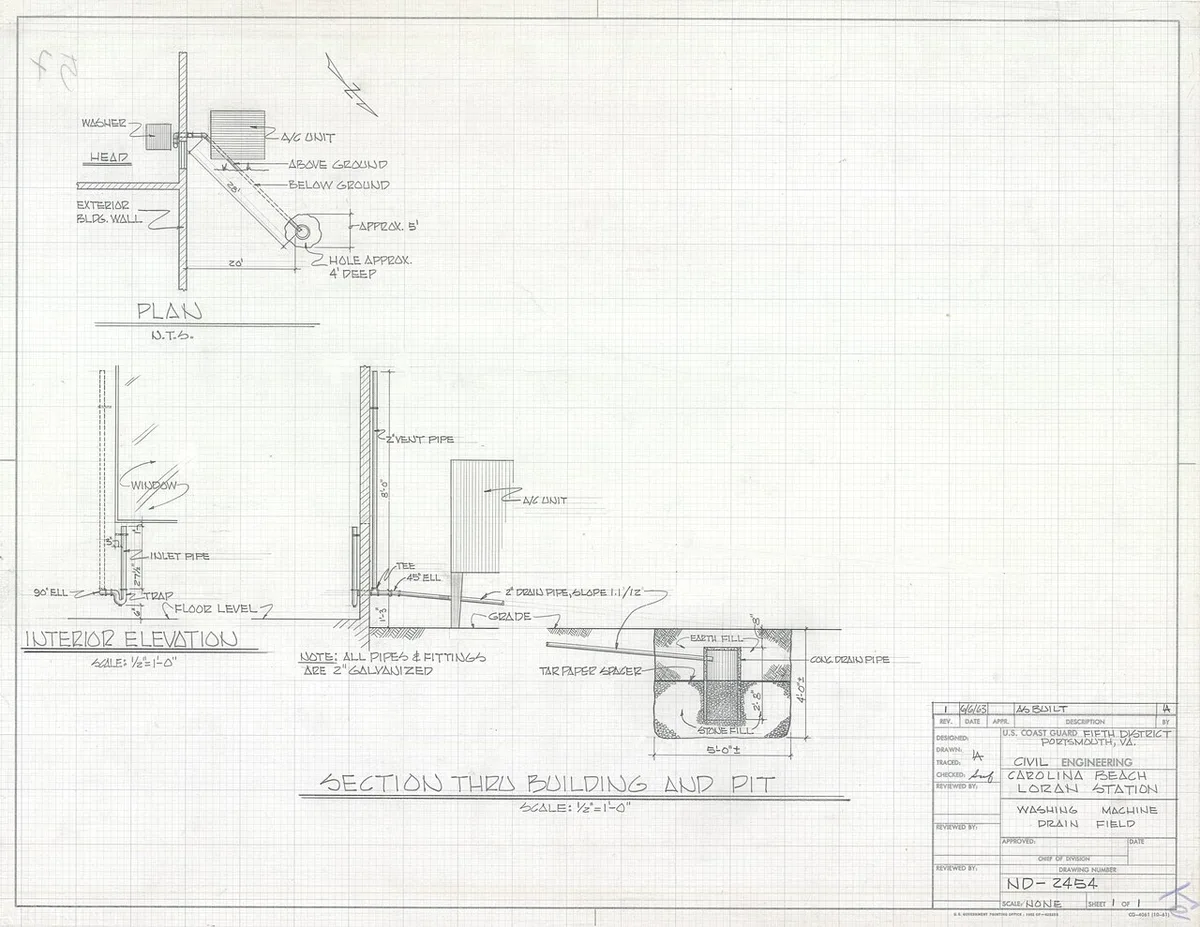
Image source: Wikimedia Commons / Department of Transportation. U.S. Coast Guard. Fifth Coast Guard District. 4/1/1967-3/1/2003
A sewage ejector pump is specifically engineered for sanitary waste from basement fixtures. It features a larger discharge port and can pass small solids without clogging. The basin is sealed and vented to prevent sewer gas from escaping into your living space.
This critical safety feature is entirely absent in standard sump basins.
Image source: Wikimedia Commons / Collywolly (CC BY-SA)
| Feature | Sump Pump | Sewage Ejector Pump |
|---|---|---|
| Fluid Type | Clear Groundwater | Sanitary Waste / Greywater |
| Solids Handling | None | Up to 2 inches typically |
| Basin Seal | Open or Loose Cover | Gasketed and Vented |
| Discharge Size | 1.5 inch typical | 2 inch minimum |
| Code Compliance | Stormwater Only | Sanitary Drainage Approved |
You might confuse them because they look similar physically. Checking the manufacturer label or installation context clarifies which unit you actually have. Proper appliance maintenance starts with understanding these fundamental infrastructure differences.
Legal Risks and Safety Hazards of Improper Drain Connections
Connecting laundry waste to a storm drain system is illegal in virtually every jurisdiction. Municipalities strictly prohibit discharging greywater into systems designed for rainwater. These violations can result in significant fines and mandatory remediation costs.
Local building departments enforce these rules to protect public water supplies and treatment facilities.
Image source: Wikimedia Commons / U.S. Army Corps of Engineers from USA (CC BY)
Health risks are equally concerning when systems are cross-connected improperly. Unsealed sump pits allow dangerous sewer gases like methane and hydrogen sulfide to enter your home. Detergent chemicals and bacteria can also contaminate local groundwater aquifers.
The EPA Water Reuse Guidelines outline strict standards for preventing such environmental contamination.
Insurance claims related to water damage may be denied if inspectors find illegal plumbing. Adjusters routinely check drainage configurations during basement flood assessments. An unpermitted connection gives them grounds to reject coverage entirely.
Always verify compliance before modifying any drainage system.
Understanding these stakes helps explain why professional installation matters so much. Cutting corners here creates liability that far exceeds initial savings. Your home’s safety and resale value depend on correct infrastructure.
Frequently Asked Questions About Washing Machine Drainage
Can I use a utility sink as an indirect drain receptor?
Yes, draining into a utility sink is often code-compliant for basement laundry setups. The sink acts as an air gap preventing backflow into the washer. Ensure the sink drain connects to a proper sanitary line with a trap.
This method avoids direct connection issues while maintaining safety standards.
What size pipe does a washing machine drain require?
Current plumbing codes mandate a minimum 2-inch diameter standpipe for washing machines. Older 1.5-inch pipes frequently clog under modern high-efficiency discharge rates. The standpipe must extend at least 18 inches above the trap weir.
Verify local amendments since some jurisdictions now require larger sizing.
Does a basement laundry drain need a separate vent?
Every fixture trap requires proper venting to function correctly and safely. Without adequate airflow, suction can empty the trap seal allowing gas entry. Wet venting may be permitted depending on fixture unit counts and layout.
Consult a licensed plumber to confirm your specific configuration meets code.
How do I know if my existing pump handles greywater?
Check the manufacturer nameplate for "effluent" or "sewage" designation explicitly. Standard sump pumps will list "clear water" or "groundwater" applications only. Inspect the basin cover for a gasketed seal and vent pipe connection.
If unsure, assume it is unsuitable until verified by a professional.