
Does a sump pump pit need to be vented? The answer depends entirely on your home’s radon risk and drainage setup. Most modern basements actually require a sealed pit rather than an open vent.
Unsealed pits often act as direct entry points for dangerous soil gases. You must verify local codes before making changes.
The EPA recommends mitigation if radon levels exceed 4.0 pCi/L, and unsealed sumps are a primary failure point in testing. ASTM E2121 standards specifically outline sealing protocols to prevent this intrusion. Understanding these safety requirements helps you choose the right configuration for your basement.
Let’s look at how to make that determination safely.
does a sump pump pit need to be vented
A sump pump pit needs venting only if connected to sanitary sewers. Most residential pits should be sealed airtight instead. Open vents allow radon and soil gas into living spaces.
Sealed lids with gaskets are the current safety standard. Always test radon levels before leaving any pit open.
Why Venting Matters for Radon and Sewer Gas Safety
Soil gas intrusion is the main reason we seal sump pits today. Radon is a colorless radioactive gas that enters through foundation openings. An open sump basin acts like a chimney for this gas.
Stack effect pulls it directly from the soil into your basement. This creates significant long-term health risks for occupants.
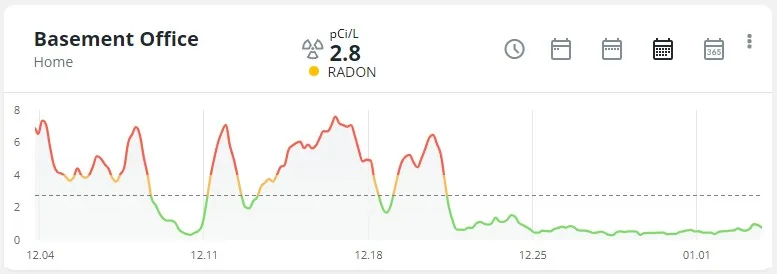
Image source: Wikimedia Commons / AlwaysRight79 (CC BY-SA)
Sewer gas presents a different but equally serious hazard. Some older drain tile systems connect directly to sanitary lines. These setups absolutely require proper venting to prevent methane buildup.
Without a vent trap or mechanical exhaust, explosive gases accumulate. You can identify these systems by checking your home diagnostic codes or plumbing blueprints.
Active sub-slab depressurization changes the venting equation completely. These mitigation systems use fans to create negative pressure under the slab. The sump pit becomes part of that vacuum field.
A leaky lid compromises the entire system’s effectiveness. Per EPA protocols, all penetrations must be caulked and gasketed when mitigation is active.
Moisture control also drives the shift toward sealed systems. Open pits release gallons of water vapor daily. This humidity fuels mold growth and damages finished walls.
Sealing the basin keeps conditioned air inside your home. It also prevents pests from using the pit as an entry point.
How to Properly Seal and Vent Your Sump Pit
Start by testing your basement for radon before modifying anything. Short-term kits give quick snapshots but long-term tests are better. Results above 4.0 pCi/L demand professional mitigation consultation.
Even lower readings warrant sealing as a preventive measure. Never assume your pit is safe without data.
Select a gas-tight cover rated for radon mitigation. Standard plastic lids rarely provide adequate seals against soil gas. Look for models with neoprene gaskets and bolt-down clamps.
Manufacturer specifications confirm these create the necessary air barrier. Measure your basin diameter carefully before ordering replacement parts.
Install the sealed lid according to ASTM E2121 guidelines. Clean the rim thoroughly to ensure full gasket contact. Apply silicone caulk around cord and pipe penetrations.
Tighten bolts in a star pattern to compress the seal evenly. Smoke pencil testing reveals hidden leaks after installation.
Connect existing radon fans to the sealed pit if applicable. The suction point should tie into the sub-slab piping network. Use 3-inch or 4-inch PVC for all vent connections.
Maintain positive drainage slope toward the exterior discharge. Verify fan operation with a manometer reading post-installation.
| Component | Specification | Purpose |
|---|---|---|
| Lid Gasket | Neoprene or foam | Creates airtight seal |
| Vent Pipe | 3" or 4" PVC | Transports soil gas safely |
| Sealant | Polyurethane caulk | Fills rim joist gaps |
| Fasteners | Stainless steel bolts | Maintains compression |
Check valve installation prevents backflow and air leakage. Place it vertically on the discharge line above the lid. Ensure the weep hole faces downward toward the basin.
This small detail stops pressurized water from escaping. Regular inspection keeps this critical component functioning correctly.
Common Mistakes That Create Health Hazards
Venting to interior space is never acceptable under code. Some homeowners mistakenly route pipes into attics or crawlspaces. This simply relocates the contamination problem indoors.
All exhaust must terminate above the roofline. Exterior termination prevents re-entry through windows or soffits.
Ignoring rim joist sealing undermines your sump work entirely. Soil gas enters through countless tiny gaps along the perimeter. Caulking these areas is just as vital as sealing the pit.
Our research shows unsealed rim joists account for major failures. Treat the entire basement envelope as one system.
Using non-rated covers provides false security against gas intrusion. Decorative lids lack the compression needed for true containment. They may stop debris but not microscopic radon molecules.
Only certified mitigation components meet safety thresholds. Cheap alternatives cost more in failed tests later.
Neglecting maintenance leads to gradual system degradation. Gaskets dry out and crack over time. Bolts loosen from pump vibration cycles.
Annual inspections catch these issues before they become hazards. Replace worn seals immediately upon discovery.
Overlooking electrical safety during retrofit work invites disaster. Sump pits combine water and electricity in close proximity. All wiring must meet NEC wet location standards.
GFCI protection is mandatory for pump circuits. Hire licensed electricians for any fan or outlet installations.
FAQs on Sump Pump Venting Requirements
Can I leave my sump pit uncovered?
Leaving a sump pit uncovered is unsafe in most homes. Open basins continuously emit moisture and potential soil gases. Building codes increasingly require sealed covers for new construction.
At minimum, install a solid lid to block debris. Test for radon before deciding on permanent ventilation strategies.
Do sealed sump pumps cause burnout?
Properly sealed pits do not cause pump burnout. Air-tight lids maintain stable water levels for float switches. Problems arise only if check valves fail or vents clog.
Ensure adequate air relief exists within the sealed system. Routine maintenance prevents mechanical issues regardless of cover type.
How do I know if my pit connects to sewers?
Check original plumbing plans or hire a camera inspection. Sewer-connected pits typically have larger diameter inlet pipes. They may also feature distinct trap primers or cleanouts.
Municipal records sometimes show legacy drainage configurations. Never guess when combustible gas accumulation is possible.
What size vent pipe does a sump need?
Radon mitigation vents typically require 3-inch or 4-inch PVC. Smaller diameters restrict airflow and reduce fan efficiency. Local building codes dictate minimum sizing requirements.
Match pipe size to your fan’s CFM rating. Undersized piping creates noise and reduces system performance significantly.