
Understanding how does a basement sewage ejector pump work starts with seeing it as a simple lift system. Wastewater flows by gravity into a sealed basin below your floor slab. A float switch triggers the motor when water reaches a set level.
The impeller then pushes waste up through a check valve into your main sewer line.
Per International Plumbing Code standards, residential units must handle two-inch solids and vent properly to prevent gas buildup. This mechanical cycle repeats automatically every time you flush or run water downstairs. Let’s break down exactly what happens inside that pit so you can visualize the process clearly.
How Does a Basement Sewage Ejector Pump Work
A sewage ejector pump lifts wastewater from a basement basin to the main sewer line. Gravity fills the pit until a float switch activates the submersible motor. The spinning impeller forces waste upward through a discharge pipe and check valve.
Water drains back only if the valve fails. The cycle resets once the float drops to its lower limit.
Inside the Basin: Key Components and Spatial Layout
Visualizing the internal arrangement explains why proper installation matters so much. The basin sits below the concrete slab and collects all fixture drainage. You will see the pump resting directly on the bottom to maximize draw depth.
Proper spatial relationships between these parts prevent clogs and ensure reliable cycling.
Image source: Wikimedia Commons / Collywolly (CC BY-SA)
Float Switch Positioning
The tethered float must have enough vertical travel to avoid rapid cycling. Manufacturer specifications typically require three to six inches of differential movement. If the cord is too short, the pump runs constantly and burns out.
Too long causes delayed activation and potential overflow risks. Adjust this tether length during initial setup for optimal performance.
Check Valve Placement
This one-way gate prevents discharged waste from flowing back into the basin. It must be installed above the basin lid but below the ceiling joists. Placing it inside the pit makes future repairs nearly impossible without removing the pump.
Correct positioning also reduces water hammer noise when the motor shuts off. Always use a union fitting nearby for easy service access.
Vent Pipe Functionality
Air must replace pumped liquid to prevent vacuum lock or pressure buildup. The vent connects to your home’s main plumbing stack or uses an approved air admittance valve. Without adequate airflow, the pump struggles against negative pressure and loses efficiency.
This component also safely vents methane and sewer gases outside. Never seal a basin without verifying proper ventilation first.
When It Fails: Visual Troubleshooting and Maintenance Cues
Most failures show visible warning signs before complete breakdown occurs. Recognizing these cues early saves expensive emergency repairs and property damage. Regular inspection helps catch issues while they remain minor adjustments.
Think of maintenance like routine upkeep that extends equipment life significantly.
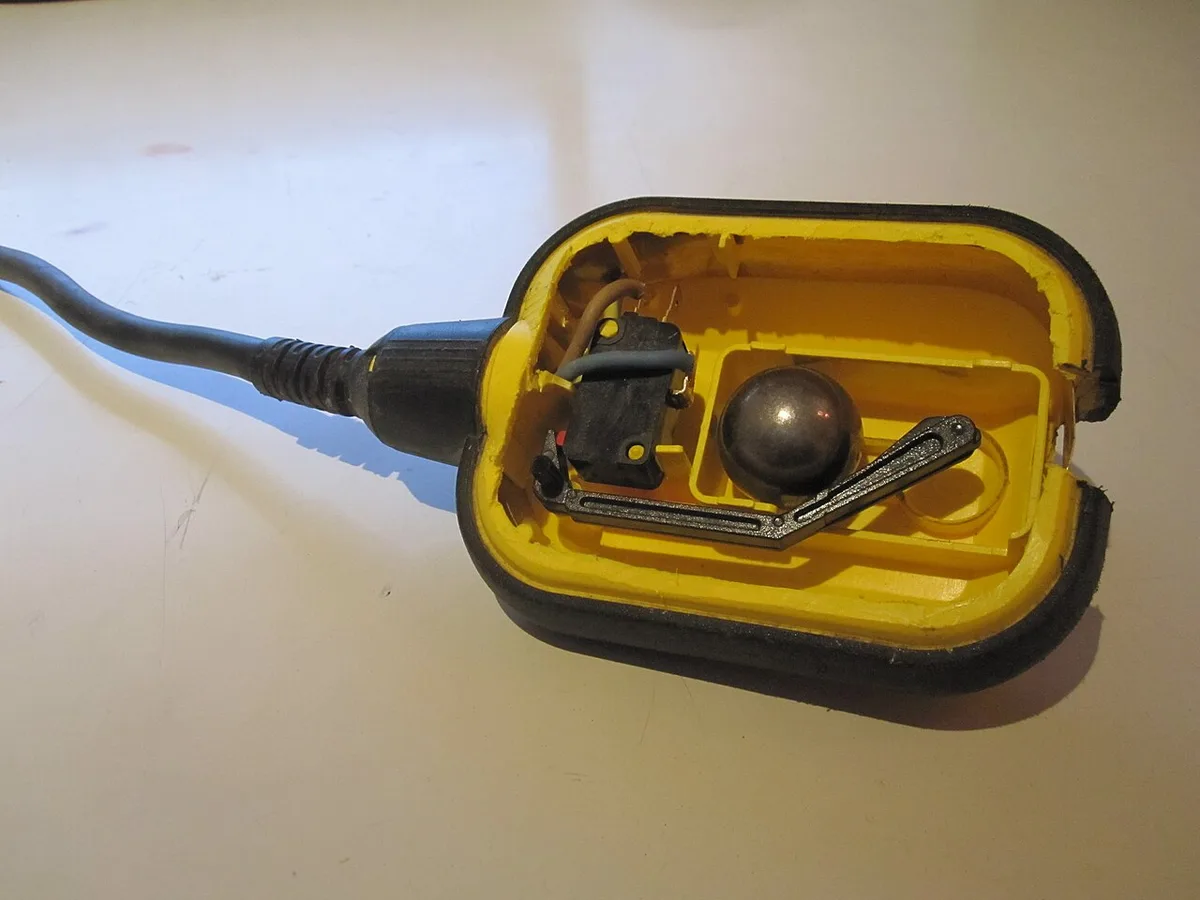
Image source: Wikimedia Commons / Martin Meise (CC BY)
Identifying Short Cycling
If the motor kicks on and off every few seconds, check the float tether first. Debris jamming the switch arm also causes erratic behavior. Grease buildup on the float itself adds weight and triggers false activations.
Clean the basin annually to remove sludge that interferes with movement. Adjusting the tether often resolves this without replacing parts.
Diagnosing Discharge Blockages
Humming without pumping usually means a clogged impeller or frozen pipe. Non-flushable items like wipes frequently wrap around the rotating blades. In cold climates, uninsulated discharge lines can ice up overnight.
Pull the unit and inspect the intake screen for obstructions. Clearing blockages promptly prevents motor burnout from overheating.
Spotting Seal and Gasket Leaks
Sewer odors escaping into the basement indicate a compromised lid seal. Inspect the rubber gasket for cracks, warping, or missing bolts. Loose fasteners allow dangerous gases to enter living spaces continuously.
Tighten hardware evenly and replace worn gaskets immediately. Proper sealing maintains indoor air quality and code compliance.
Common Questions About Basement Ejector Systems
How long do sewage ejector pumps last?
Aggregate user reviews and manufacturer data suggest seven to ten years is typical for residential units. Cast iron models often outlast thermoplastic versions in heavy-use scenarios. Regular cleaning and avoiding chemical drain cleaners extend lifespan considerably.
Replace proactively if yours approaches the decade mark to avoid sudden failure.
Can I use a sump pump instead?
No, because sump pumps cannot handle solid waste or toilet paper. Their impellers clog instantly with anything larger than clean groundwater. Sewage ejectors feature open vortex designs specifically for two-inch solids.
Using the wrong pump type guarantees immediate failure and sanitation hazards. Always match the equipment to the waste stream.
Why is my ejector pump so loud?
Check valve slam creates the most common banging noise during shutoff. Installing a silent swing check or soft-close model eliminates this impact sound. Motor bearing wear produces grinding noises that worsen over time.
Vibration against basin walls amplifies operational hum significantly. Isolate pipes with foam sleeves to reduce transmitted noise.
What size pump do I need?
Residential bathrooms typically require four-tenths to one-half horsepower at standard head heights. Measure your vertical lift distance and horizontal pipe run accurately first. Undersized units struggle against friction loss and fail prematurely.
Oversized pumps cause excessive cycling that wears components faster. Consult manufacturer flow charts matching your specific plumbing layout.