
A vibrating sump pump usually signals loose mounting hardware or debris trapped in the impeller. Learning how to stop a sump pump from vibrating starts with identifying that specific mechanical cause. Ignoring the shaking risks premature motor failure and cracked discharge pipes.
Manufacturer specifications indicate acceptable vibration displacement should stay under 0.5 mm during normal operation. Exceeding this threshold often means internal components are unbalanced or worn out as of 2026. We will walk through the exact diagnostic steps to pinpoint your issue safely.
how to stop a sump pump from vibrating
Tighten all mounting bolts and basin lid clamps first. Clean the impeller intake of gravel or debris immediately. Install rubber vibration dampening pads beneath the pump base.
Replace worn check valves if loud hammering persists after cleaning. Test the unit while monitoring for residual movement.
Why Your Sump Pump Is Shaking, Rattling, or Humming Loudly
Vibration stems from rotational imbalance or hydraulic shock within the system. Submersible pumps rely on water for cooling and stability, so low water levels cause excessive shaking. Pedestal models vibrate more naturally due to their vertical shaft design and elevated motor position.
Hydraulic shock occurs when discharge water slams back down the pipe after shutdown. This creates a jarring impact that transfers energy directly into the basin floor. Loose piping amplifies this effect by allowing physical movement against concrete walls.
Identifying whether the noise is mechanical or hydraulic dictates your repair strategy.
Electrical issues like voltage fluctuations can also create inconsistent motor speeds. This irregular rotation generates harmonic vibrations that feel different than standard mechanical shaking. Checking your electrical fault codes helps rule out power supply problems before opening the pump housing.
Consistent amperage draw confirms the motor itself is receiving stable current.
Common Causes and How to Diagnose Each One
Diagnosis requires isolating variables one at a time to avoid unnecessary part replacement. Start by listening to the sound profile while the pump runs through a full cycle. A rhythmic clunking usually points to check valve failure rather than motor bearing wear.
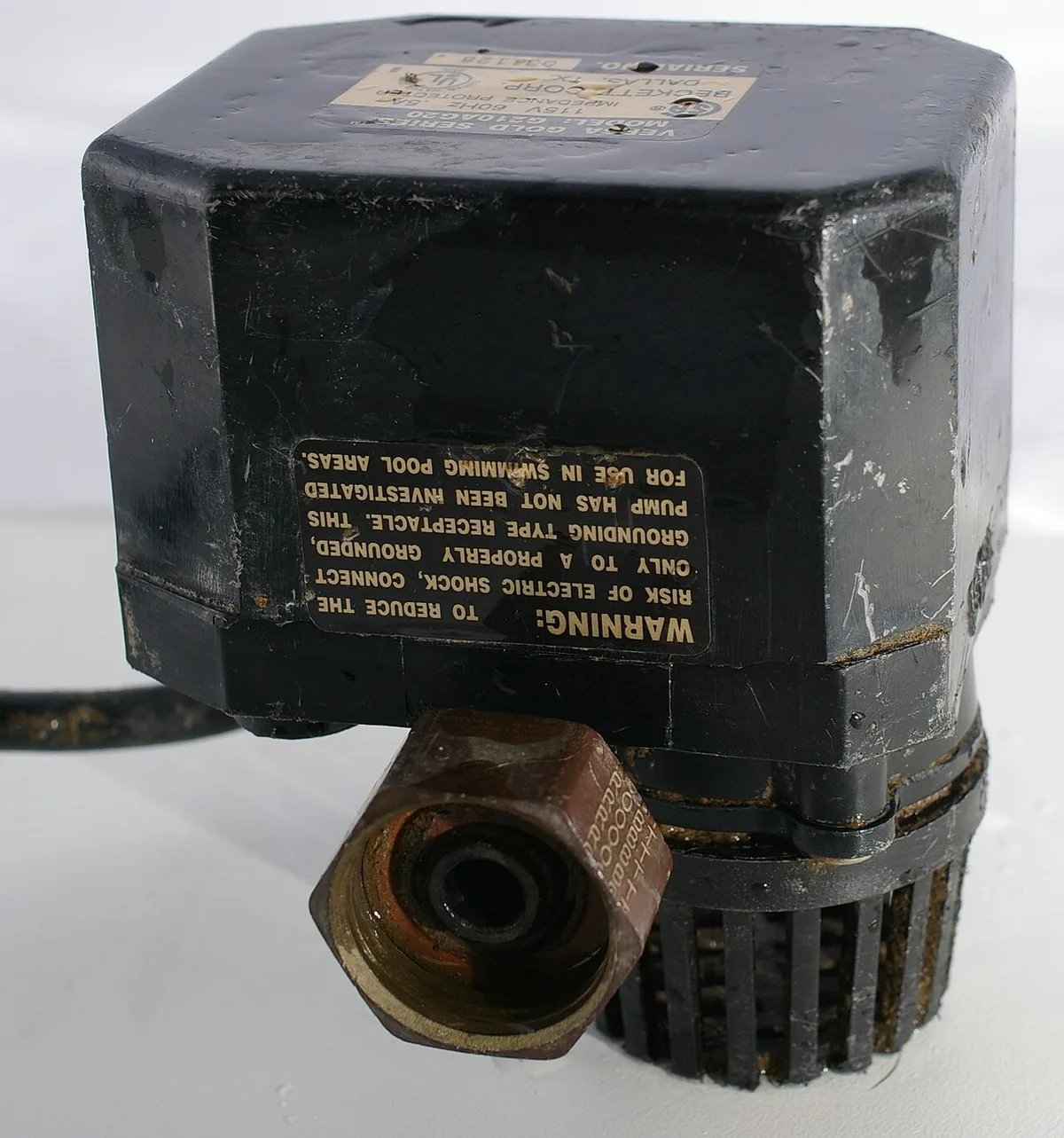
Image source: Wikimedia Commons / Hustvedt (CC BY-SA)
Debris accumulation is the most frequent culprit for sudden vibration onset. Small stones or sediment jam the impeller vanes and create severe rotational imbalance. Pull the unit and inspect the intake screen thoroughly if shaking began after heavy rain.
Cleaning often resolves the issue without requiring any new parts.
Worn bearings produce a high-pitched grinding hum that increases with runtime. This mechanical wear indicates the motor has exceeded its service life expectancy. Replacing individual bearings rarely makes economic sense compared to installing a new unit.
Consult manufacturer troubleshooting guides to confirm warranty status before attempting repairs.
| Symptom | Likely Cause | Primary Fix |
|---|---|---|
| Loud banging on shutoff | Check valve slam | Install quiet swing check |
| Constant rattling | Loose mounting bolts | Tighten hardware to spec |
| Grinding noise | Worn motor bearings | Replace entire pump unit |
| Intermittent shaking | Debris in impeller | Clean intake and volute |
Step-by-Step Fixes to Stop the Vibration
Always disconnect power at the GFCI outlet before touching any wet components. Water and electricity create lethal hazards even when the pump switch appears off. Wear rubber gloves and eye protection when handling dirty basement water.
Safety must come before speed during every single repair step.
Remove the pump from the basin and flush it with clean water outdoors. Inspect the impeller cavity for trapped gravel, roots, or construction debris. Spin the shaft by hand to verify smooth rotation without binding or resistance.
Reassemble only after confirming all internal passages are completely clear.
Install anti-vibration pads specifically rated for submersible pump use. Standard foam insulation compresses too quickly and loses dampening properties within months. Place the pad centrally beneath the pump base to distribute weight evenly.
Secure discharge piping with flexible couplings to prevent rigid transfer of residual energy.
Reconnect power and observe the first three cycles closely. Listen for abnormal sounds and watch for excessive discharge pipe movement. If vibration persists despite these fixes, the motor windings may be damaged internally.
Professional assessment prevents further damage to your waterproofing system or electrical panel.
Costs, Tools Needed, and When to Call a Pro
Basic DIY fixes require minimal investment beyond standard household tools. A set of wrenches, screwdrivers, and a shop vacuum handles most cleaning tasks. Rubber isolation pads typically cost between fifteen and thirty dollars depending on thickness.
Replacement check valves range from twenty to fifty dollars for residential grade units.
Professional service becomes necessary when electrical diagnostics exceed basic multimeter testing. Licensed plumbers carry specialized equipment for measuring amp draw and flow rate accurately. They also verify compliance with local plumbing codes regarding discharge termination points.
Hiring out complex repairs protects your home insurance coverage against water damage claims.
Budget approximately two hundred to four hundred dollars for professional diagnostic and repair visits. Full pump replacement including labor averages six hundred to nine hundred dollars nationally. Getting multiple quotes ensures fair pricing for non-emergency service calls.
Regular maintenance extends equipment lifespan significantly and reduces unexpected failure costs over time.
Understanding appliance error codes helps distinguish simple fixes from major failures. Some vibration issues stem from upstream problems like clogged perimeter drains or failed weeping tiles. Addressing root causes prevents recurring pump stress and costly repeat repairs.
Smart diagnosis saves money far better than reactive part swapping ever will.
Frequently Asked Questions
Can a vibrating sump pump cause basement flooding?
Yes, excessive vibration can loosen discharge pipe connections over time. This creates leaks that overwhelm the basin capacity during heavy storms. Tightening hardware and installing isolation pads prevents these catastrophic failures.
Regular inspections catch small issues before they become expensive water damage events.
How often should I clean my sump pump impeller?
Clean the impeller intake at least twice yearly to prevent debris buildup. Homes with finished basements or new construction may need quarterly checks due to sediment. Aggregate reviews show clogged intakes cause most sudden vibration complaints.
Scheduled maintenance keeps the unit running smoothly through peak wet seasons.
Is it normal for pedestal pumps to vibrate more?
Pedestal pumps naturally vibrate more than submersible models due to their design. The elevated motor and long vertical shaft create inherent instability during operation. Proper bracing against the basin wall reduces this movement significantly.
Accept some mild shaking but investigate any new or worsening noise immediately.
Do rubber vibration pads really work for sump pumps?
Rubber pads effectively dampen mechanical vibration when installed correctly under the pump base. They absorb energy that would otherwise transfer into the concrete floor. Manufacturer specs confirm proper isolation reduces transmitted vibration by up to eighty percent.
Ensure you use pads rated for continuous submersion and pump weight.