
The Maytag Maxima dryer is built for durability and performance, but like any appliance, it can develop issues over time. Whether your dryer won't start, isn't heating properly, or is taking too long to dry clothes, knowing how to troubleshoot common problems can save you time and money. Instead of immediately calling a repair technician, start with basic checks—power connections, lint filter cleanliness, and door closure. These steps often resolve minor issues quickly. This comprehensive guide walks you through diagnosing and fixing the most frequent Maytag Maxima dryer problems, helping you decide when to DIY and when to call in a pro.

Always disconnect power before performing internal checks on your dryer.

Inspect the thermal fuse and drive motor if your dryer won't start.
Dryer Won't Start
A dryer that won't start can be caused by several issues—from simple power problems to failed internal components. Before calling for help, try these diagnostic steps in order:
Check the Power Supply
- Verify the dryer is plugged in securely at both the wall outlet and the dryer itself.
- Check the circuit breaker or fuse box—flip the breaker off and back on to reset it.
- Use a multimeter to test for proper voltage (240V for electric dryers). No power means the issue is external.
Inspect the Thermal Fuse
- The thermal fuse is a safety device that cuts power to prevent overheating.
- Located on the blower housing or exhaust duct, it can blow due to restricted airflow.
- Remove it and test with a multimeter for continuity. No continuity means replace it.
Examine the Drive Motor
- If power is reaching the dryer but nothing happens, the drive motor may be faulty.
- Listen for humming sounds—if present, the motor might be seized.
- Test for continuity between motor terminals and ground. Replace if no continuity exists.
Test the Start Switch and Door Switch
- The door switch ensures the dryer only runs when the door is closed.
- The start switch initiates the cycle—test both with a multimeter.
- A faulty switch prevents the dryer from starting even if other components are working.
For more detailed guidance on electrical diagnostics, visit our blog for ongoing tips. For more on this, see our guide on lg dryer d80 code but no blockage.
Dryer Isn't Heating
An electric Maytag Maxima dryer that doesn't produce heat leaves clothes damp and cycles endlessly. Gas models that fail to ignite have different causes. Here's how to narrow it down:
Electric Dryer Heating Issues
| Component | Symptom | Test Method |
|---|---|---|
| Heating Element | No heat, drum spins | Multimeter test for continuity |
| Thermal Cut-Off | Heat stops mid-cycle | Check for broken circuit |
| Thermostat | Intermittent heating | Test for open/closed state |
Gas Dryer Ignition Problems
- Igniter: Glows bright orange. If it cracks or doesn't glow, replace it.
- Flame Sensor: Detects flame. A faulty sensor stops gas flow.
- Gas Valve Coils: Control gas release. Weak coils prevent ignition.
Clogged Airflow System
Poor airflow causes overheating protection circuits to cut heat. Clean the lint filter after every load, and vacuum the exhaust vent annually. A blocked vent reduces efficiency and increases drying time significantly.
Clean lint screens regularly—it's one of the simplest ways to maintain heating performance.
Dryer Takes Too Long to Dry Clothes
Extended drying times usually point to airflow restrictions or sensor malfunctions. Address these issues systematically:
Clean the Lint Filter and Exhaust Vent
- Remove lint from the filter after each use.
- Inspect the exhaust duct behind the dryer for kinks or blockages.
- Use a vent cleaning brush to clear lint buildup deep inside the ductwork.
Check the Moisture Sensor
- Located inside the drum, the sensor monitors moisture levels.
- Wipe it clean with rubbing alcohol and a soft cloth.
- Fabric softener buildup can insulate the sensor—clean monthly.
Verify Heating Element Function
- If using high heat settings doesn't warm the drum adequately, test the element.
- A partially burned-out element produces insufficient heat.
- Replace the heating element if testing shows partial or no continuity.
Dryer Makes Strange Noises
Unusual sounds indicate mechanical wear. Identifying the noise type helps isolate the problem:
Squealing or Screeching Sounds
- Usually caused by a worn belt or idler pulley.
- The idler pulley maintains tension on the drum belt.
- Apply pressure to the idler arm—if noise stops, replace the pulley.
Thumping or Banging
- Often linked to drum rollers or rear drum bearing.
- Worn rollers create uneven rotation.
- Check for foreign objects trapped in the drum.
Rattling or Ticking
- Could signal loose screws, coins in the drum, or blower wheel damage.
- Remove items from pockets before drying.
- Inspect the blower wheel for debris or damage.
Grinding Noises
- Indicates bearing failure—either drum support bearings or motor bearings.
- Requires immediate attention to prevent further damage.
If your LG dryer exhibits similar noise patterns, consult our LG dryer diagnostics for cross-model troubleshooting strategies. For further reading, see maytag.com.
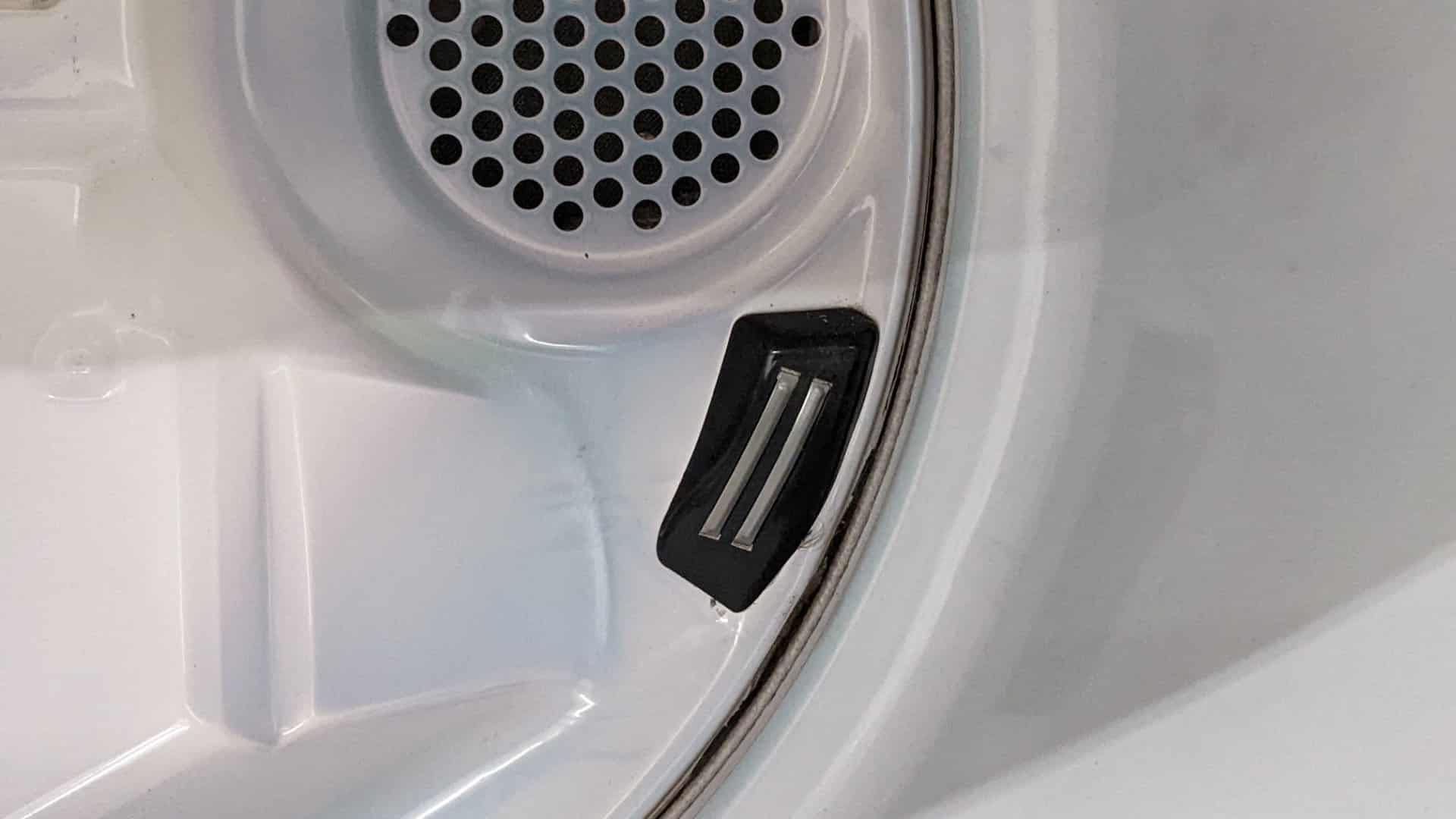
A dirty moisture sensor can extend drying times unnecessarily.
Dryer Shuts Off Too Soon
Premature shutdown typically involves temperature or moisture sensing failures:
Faulty Moisture Sensor
- Dirty sensors give false dry readings.
- Clean with rubbing alcohol—ensure full sensor surface contact.
- Replace if cleaning doesn’t resolve early shutdowns.
Malfunctioning Thermostat
- Cycling thermostat regulates temperature.
- High-limit thermostat prevents overheating.
- Both should show continuity when at rest—replace if open.
Operating Thermostat Failure
- Controls when heating element activates.
- Test for proper opening/closing at set temperatures.
- Replace thermostats showing erratic behavior.
Dryer Door Won't Close Properly
A misaligned or obstructed door prevents safe operation. Address these areas:
Check Door Alignment
- Ensure the door sits flush against the frame.
- Look for gaps larger than 1/8 inch.
- Adjust the hinge screws if the door sags.
Inspect Door Latch and Strike Plate
- The latch hooks into the strike plate to secure the door.
- If the latch is bent or broken, the door won’t stay closed.
- Replace damaged latches immediately.
Clean the Door Seal
- Lint and debris around the seal block proper closure.
- Wash the seal with mild soap and water.
- Replace cracked or brittle seals promptly.
Replace Faulty Door Switch
- Activates when the door closes.
- A faulty switch prevents startup—even if the door shuts tight.
- Test for continuity; replace if absent.
Learn more about door-related repairs in our general dryer troubleshooting resources.
Dryer Overheats Dangerously
Overheating poses fire risks and damages internal components. Causes include:
Blocked Ventilation Path
- Restricted airflow forces heat to accumulate.
- Clean the lint filter, exhaust duct, and outdoor vent cap.
- Ensure flexible ducting isn’t crushed or kinked.
Failed Thermostats
- High-limit and thermal cutoff fuses monitor temperature.
- Replace blown fuses and verify thermostat calibration.
- Never bypass safety devices—they exist for protection.
Defective Heating Element
- A grounded or shorted element overheats the drum.
- Disconnect power and remove wires before testing.
- Test resistance values against manufacturer specifications.
Never ignore overheating symptoms—address them immediately to avoid hazards.
Dryer Leaves Marks or Stains on Clothes
Stains or marks left behind indicate contamination or mechanical issues:
Drum Contamination
- Fabric softener residue builds up over time.
- Run empty cycles with white vinegar to dissolve deposits.
- Avoid dryer sheets—they contribute to sticky buildup.
Worn Drum Seal or Bearing
- Clothes catching in gaps get marked or torn.
- Inspect the drum seal for tears or gaps.
- A wobbling drum suggests bearing wear—replace accordingly.
Dirty Interior Components
- Wipe down drum walls with soapy water.
- Remove fibers from felt pads and glides.
- Check for oil leaks from motor bearings.
Regular maintenance prevents most marking issues.
Preventive Maintenance Tips
Consistent care extends your dryer’s lifespan and prevents many problems:
- Monthly: Clean the lint filter and inspect the door seal.
- Quarterly: Vacuum the exhaust vent and blower housing.
- Annually: Schedule professional cleaning of internal components.
- Load Size: Don’t overload—allow clothes to tumble freely.
Consider upgrading to a hair dryer under $50 for spot-treating stains that escape your regular dryer routine. For further reading, see [repairclinic.com](https://www.repairclinic.com/RepairHelp/How-To-Fix/ dryer-wont-start).
When to Call a Professional
While many issues can be resolved at home, some situations require expert intervention:
- Electrical shock hazards during repairs
- Major component replacements requiring special tools
- Warranty-covered repairs that void if opened improperly
- Persistent problems after multiple troubleshooting attempts
Certified technicians have access to schematics, specialized equipment, and replacement parts unavailable to consumers.
Frequently Asked Questions
What should I check first if my Maytag Maxima dryer won't start?
Start with verifying the power connection—ensure it's plugged in and the circuit breaker hasn't tripped. Next, inspect the door switch by closing the door and pressing the start button. If those seem fine, test the thermal fuse and drive motor with a multimeter for continuity.
How often should I clean the lint filter on my Maytag dryer?
Clean the lint filter after every single load to maximize efficiency and reduce fire risk. A clogged filter forces the dryer to work harder, increasing energy costs and wear on internal components. Monthly deep cleans with warm water and mild detergent remove residue buildup.
Why does my Maytag Maxima dryer keep shutting off mid-cycle?
This usually indicates a faulty moisture sensor, a blown thermal fuse, or a malfunctioning thermostat. Clean the moisture sensor first with rubbing alcohol. If that doesn’t help, test the thermal cutoff and cycling thermostats with a multimeter for continuity.
Can I troubleshoot Maytag Maxima error codes myself?
Yes, many error codes correspond to user-serviceable issues. Codes beginning with "F" often relate to temperature or moisture sensing faults. Refer to your owner’s manual or search online for specific codes. Simple resets sometimes clear temporary glitches—but recurring codes need professional diagnosis.
Is it safe to replace the thermal fuse on my dryer myself?
Replacing the thermal fuse is generally safe if you disconnect power first. However, replacing a thermal fuse without addressing the underlying airflow restriction that caused it to blow risks blowing the new one immediately. Always clean vents and ducts thoroughly before installing a replacement.
What causes a Maytag dryer to make loud banging noises during operation?
Banging usually stems from loose drum rollers, a worn drum belt, or foreign objects inside the drum. First, remove all items from pockets and shake out clothes. If noise persists, inspect drum rollers and the idler pulley assembly. Tighten mounting screws and lubricate moving parts as needed.