
Can a sump pump discharge into a septic system without causing damage? The answer is almost always no. Connecting these two systems risks immediate hydraulic failure and code violations.
You need to understand why this common shortcut destroys infrastructure.
Most residential septic tanks handle roughly 150 gallons per bedroom daily. A standard sump pump moves 20 to 40 gallons per minute during operation. This massive volume mismatch violates International Plumbing Code standards as of 2026.
Let us break down exactly what happens when you ignore this rule.
Can a Sump Pump Discharge Into a Septic System
No, a sump pump should never discharge into a septic system. Sump pumps remove clear groundwater that overwhelms treatment capacity. Septic systems are designed only for specific wastewater volumes.
Connecting them causes rapid drain field saturation and regulatory fines. Always route sump water to approved exterior discharge points instead.
How Hydraulic Overload Destroys Drain Fields and Violates Code
Sump pump discharge creates hydraulic overload that pushes untreated solids into your leach lines. Your septic tank relies on retention time to separate waste layers properly. Introducing thousands of gallons of clear water flushes this process entirely.
Solids migrate downstream and permanently clog the soil absorption area.
This practice also violates plumbing codes in nearly every jurisdiction. The International Plumbing Code explicitly prohibits connecting clear water sources to sanitary sewers. Local health departments enforce these rules to protect groundwater quality.
Inspectors will flag this cross-connection during real estate transactions or permit reviews.
You might think occasional pumping won't hurt, but the math disagrees. A single hour of sump operation can exceed your tank's daily design flow. That surge leaves zero settling time for biological treatment.
The result is raw effluent surfacing in your yard or backing up indoors.
Safe Discharge Alternatives That Protect Your Septic System
Daylighting remains the simplest and most code-compliant solution for most properties. This method routes discharge piping above grade to a safe distance from foundations. Gravity carries water away naturally without mechanical assistance or infiltration risk.
Ensure the outlet sits below the frost line to prevent winter freezing.
A dedicated dry well works best when surface discharge isn't feasible due to grading. This buried chamber allows groundwater to infiltrate slowly through surrounding soil. It must be sized correctly for your pump’s flow rate and soil percolation test results.
Never connect a dry well to your septic drain field.
Municipal storm sewers accept sump discharge where available and permitted by local ordinance. This keeps clear water completely separate from sanitary wastewater treatment infrastructure. Contact your public works department before tapping into any storm main.
They often require backflow prevention devices and specific connection permits.
| Discharge Method | Best For | Key Requirement |
|---|---|---|
| Daylighting | Sloped yards with drainage paths | Outlet below frost line |
| Dry Well | Flat sites with permeable soil | Proper sizing and setbacks |
| Storm Sewer | Urban areas with separated systems | Municipal permit and backflow valve |
Common Sump Pump Mistakes and Frequently Asked Questions
Many homeowners accidentally create cross-connections during basement finishing or landscaping projects. Tracing existing discharge lines before renovation prevents costly corrections later. Dye testing confirms whether your current setup complies with separation requirements.
Always verify pipe routing independently rather than assuming previous work was correct.
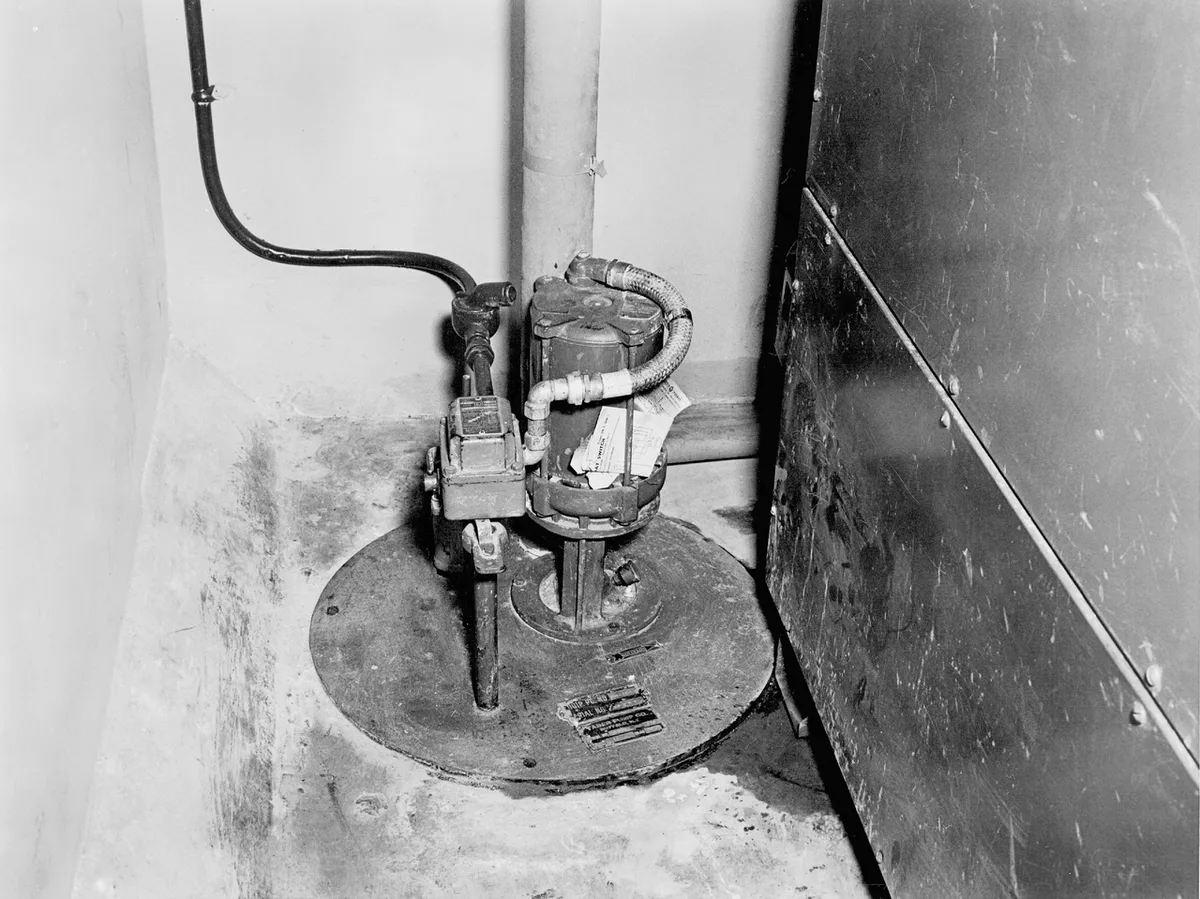
Image source: Wikimedia Commons / United States Department of Energy
Missing check valves cause discharged water to flow backward into your pit after each cycle. This forces the pump to re-move the same water repeatedly and wastes energy. Installing a proper valve protects both the pump motor and your discharge point.
Regular inspection ensures the flapper hasn't stuck open over time.
Can I use a smaller pump to avoid overloading my septic tank?
No, reducing pump size doesn't solve the fundamental capacity mismatch problem. Even low-flow pumps exceed septic design limits during sustained rainfall events. The issue is total volume, not just instantaneous flow rate.
Always redirect discharge externally regardless of pump specifications or runtime duration.
What if my sump pump only runs occasionally during heavy storms?
Infrequent operation still poses significant risk during peak saturation periods. Storm events coincide with highest groundwater levels and maximum system stress. Your septic field needs full capacity for household wastewater during these windows.
Divert all clear water sources to preserve treatment function when it matters most.
How do I know if my sump pump is already connected illegally?
Dye testing provides definitive proof of cross-connection without destructive excavation. Add fluorescent dye to the sump pit and monitor septic tank access ports. Visible color in the tank confirms an illegal link requiring immediate correction.
Camera inspections of lateral lines also reveal unauthorized tie-ins accurately.
Does discharging roof gutters into a septic system cause similar problems?
Yes, roof runoff creates identical hydraulic overload issues as sump pump discharge. Gutters collect massive volumes during storms that overwhelm treatment capacity instantly. Always direct downspouts away from septic components using extensions or underground leaders.
Keep all clear water sources completely separate from sanitary wastewater infrastructure.