
Why does my sump pump smell like sewage? It happens when sewer gases sneak into your basement through your sump system. You're not alone, many homeowners deal with this exact issue at some point.
The smell usually comes from something as simple as a dry trap or a faulty check valve. Per manufacturer specifications, most residential check valves fail after 5 to 10 years of use. That’s why catching the problem early makes such a big difference.
Why Does My Sump Pump Smell Like Sewage?
Your sump pump doesn’t actually create the odor, it gives sewer gas a way to escape into your home. Here's what's really going on:
- A dry P-trap (U-shaped pipe) lets sewer gases rise up through floor drains or the sump itself.
- A failed check valve allows smelly water trapped in the discharge pipe to seep back into the pit.
- A cracked or loose discharge pipe opens a direct path for gas to leak out.
- An unsealed sump lid lets odors escape right from the basin.
Think of your plumbing system like a network of sealed pathways. When one pathway breaks, gas finds the easiest way out, which might just be your basement.
The Main Causes Behind the Smell
Understanding the root cause helps you fix it fast. These are the usual suspects behind that sewage stench:
- Dry P-Trap: In homes with infrequent pump use, water seals evaporate. Sewer gas then enters freely.
- Bad Check Valve: After shutdown, water should stay in the pipe. If it drains back, the smell returns.
- Cracked Discharge Line: Damage underground or near the pump creates gaps gas can escape through.
- Loose Sump Basin Lid: Older lids often aren’t airtight, letting odors drift into the air.
- Sewer Line Issues: Rare but serious, backups or cross-connections can push raw sewage odors into the pit.
Each scenario behaves differently. The key is narrowing down which route the gas is taking, and that starts with inspection.
How to Find the Source Yourself
Start simple before reaching for tools or calling pros. This process isolates the issue quickly:
- Check the water level: Peek inside the sump basin. Low or no standing water suggests a lost seal.
- Pour water test: Run a gallon down nearby floor drains. If the smell vanishes briefly, suspect a dried-out trap.
- Inspect the lid: Wiggle the cover. Gaps mean odor leakage.
- Activate the pump: Pour water into the pit to trigger a cycle. Watch the discharge pipe closely.
- Watch for backflow: Water creeping back in post-shutdown? Replace the check valve.
- Look for cracks: Shine a light along all pipes. Rust stains or wet spots point to leaks.
- Neutralize temporarily: Wipe suspect zones with diluted bleach. Less odor = bingo, that’s your spot.
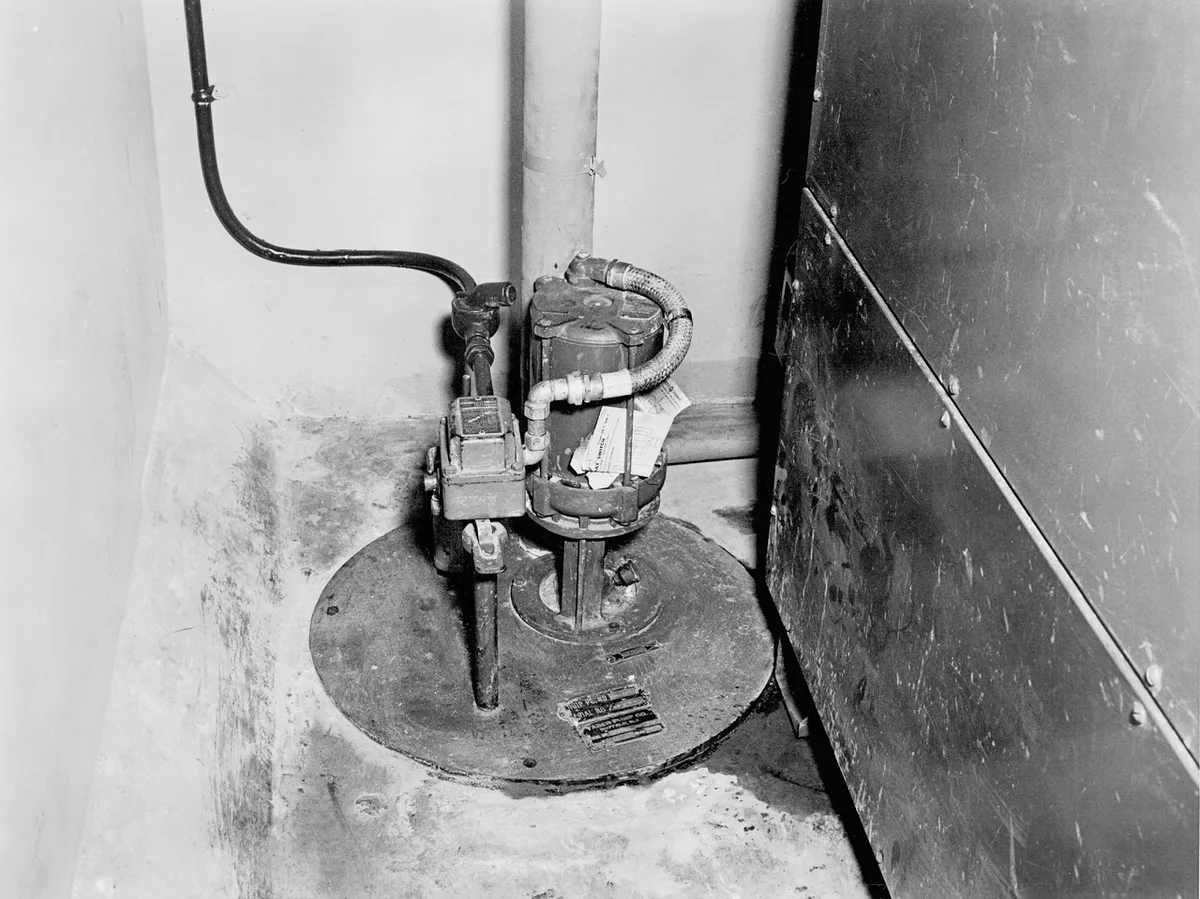
Image source: Wikimedia Commons / United States Department of Energy
Once you pinpoint the source, matching the right repair becomes straightforward.
Fixing It Right the First Time
Apply the correct solution based on what triggered the smell:
For Dry Traps or Lost Seals
Regularly refill traps by pouring water down drains monthly. For permanent protection, install an automatic trap primer, it maintains water levels without manual effort.
For Failed Check Valves
Replace old rubber-flap valves with brass or PVC ball-check types, they’re more durable and reliable. Install with proper orientation (arrow pointing upward) to ensure correct flow direction.
For Cracked or Broken Pipes
Seal minor cracks with waterproof epoxy tape or pipe repair clamps. Major breaks need full pipe replacement, ideally using schedule 40 PVC rated for sewer duty.
For Loose Sump Lids
Upgrade to a sealed lid assembly with a rubber gasket. This blocks odors while keeping radon and moisture locked outside your living space.
When Nothing Works
Persistent smells despite repairs may signal deeper sewer line problems. Contact a licensed plumber to inspect laterals and main connections using camera equipment.
When to Call a Pro Instead
DIY fixes go far, but some issues cross the line into professional territory.
Call a plumber if:
- You smell sewage across multiple rooms, not just the basement.
- The odor returns within days of sealing everything yourself.
- Nearby floor tiles feel spongy or crack, suggesting hidden slab leaks.
- Local codes require permits for sewer lateral work.
Plumbers bring scoped cameras, pressure gauges, and code knowledge that turns “mystery smell” into exact diagnosis. They also catch risks like root intrusion or bellies in pipes that DIYers miss.
Ignoring recurring odors can escalate into major backups or health hazards. Trust the process, and when needed, trust the pros too.
Frequently Asked Questions
Why does my sump pump room smell like rotten eggs?
Most likely hydrogen sulfide from sewer gas entering through a dry trap or loose seal.
Can I just clean the sump pit to remove the smell?
You can clean debris, but cleaning won’t stop gas infiltration, fixing the source is essential.
How often should I check my sump system?
Twice yearly, once in spring and once before winter, to prevent buildup and test components.
Is baking soda safe to neutralize sump odors?
It helps absorb mild odors temporarily but won’t resolve underlying mechanical failures.
Should I seal my sump pit lid permanently?
No, ensure access for maintenance while using a properly sealed lid with a gasket.
Frequently Asked Questions
Why does my sump pump room smell like rotten eggs?
That's hydrogen sulfide from sewer gas entering through a dry trap or loose seal. It happens when water barriers evaporate or pipes aren't properly sealed.
Can I just clean the sump pit to remove the smell?
Cleaning removes debris, but it won't stop gas infiltration. Without fixing the root cause, the odor returns within hours or days.
How often should I check my sump system?
Twice yearly works well, spring and fall. Test the pump cycle, inspect seals, and pour water down nearby drains to maintain traps.
Is baking soda safe to neutralize sump odors?
It absorbs mild smells temporarily. But if gas is actively entering, you'll need to fix the mechanical issue, not mask it.
Should I seal my sump pit lid permanently?
No, use a sealed lid with a gasket instead. This blocks odors while still allowing access for maintenance and repairs.