
Why is my sump pump overflowing? It usually happens when your pump can't keep up with the water coming in, but the exact reason depends on what you find when you look at the system as a whole.
The problem isn't always the pump itself. In many cases the water has nowhere to go because something downstream is blocked or broken. Most sump basins see normal inflow rates of 5 to 15 gallons per minute during heavy rain, so a correctly sized pump should handle that easily.
But if the discharge path is restricted or the check valve has failed, you'll see water backing up before the motor ever struggles.
why is my sump pump overflowing
Your sump pump overflows when water enters faster than it leaves. Check the discharge pipe first. A clogged or frozen pipe is the most common cause.
Next the float switch may be stuck or the check valve could be failed. These issues stop outflow even when the pump runs.
Start by pulling the float up by hand. Listen for the pump to kick on and watch where water comes out. If it sprays from the weep hole near the bottom of the pipe rather than flowing freely overhead something is blocking the exit.
Clear that clog and you solve half your problems.
How to Diagnose and Fix the Problem
Follow these steps in order. Each one eliminates a possible cause before you move to the next.
- Unplug the pump and remove the cover from the sump basin.
- Check the check valve for debris or mineral buildup.
- Verify the float switch moves freely and isn't wedged against the basin wall.
- Inspect the discharge pipe where it exits your house. Look for ice, kinks, or clogs.
- Run a garden hose into the basin to simulate inflow. See how quickly the pump clears it.

Image source: Wikimedia Commons / Eric Jones (CC BY-SA)
Tools You’ll Need
- Flathead screwdriver
- Channel-lock pliers
- Bucket or large cup
- Flashlight
- Garden hose
Quick Fixes That Work
If water is rising but the pump runs, the issue lies downstream. Clear the exit point first. Sometimes ice forms in winter and blocks the whole line.
Pouring hot water over the frozen section usually breaks it loose.
Check the weep hole too. This little opening near the pump base prevents air locks. Cover it with tape and the pump loses prime fast.
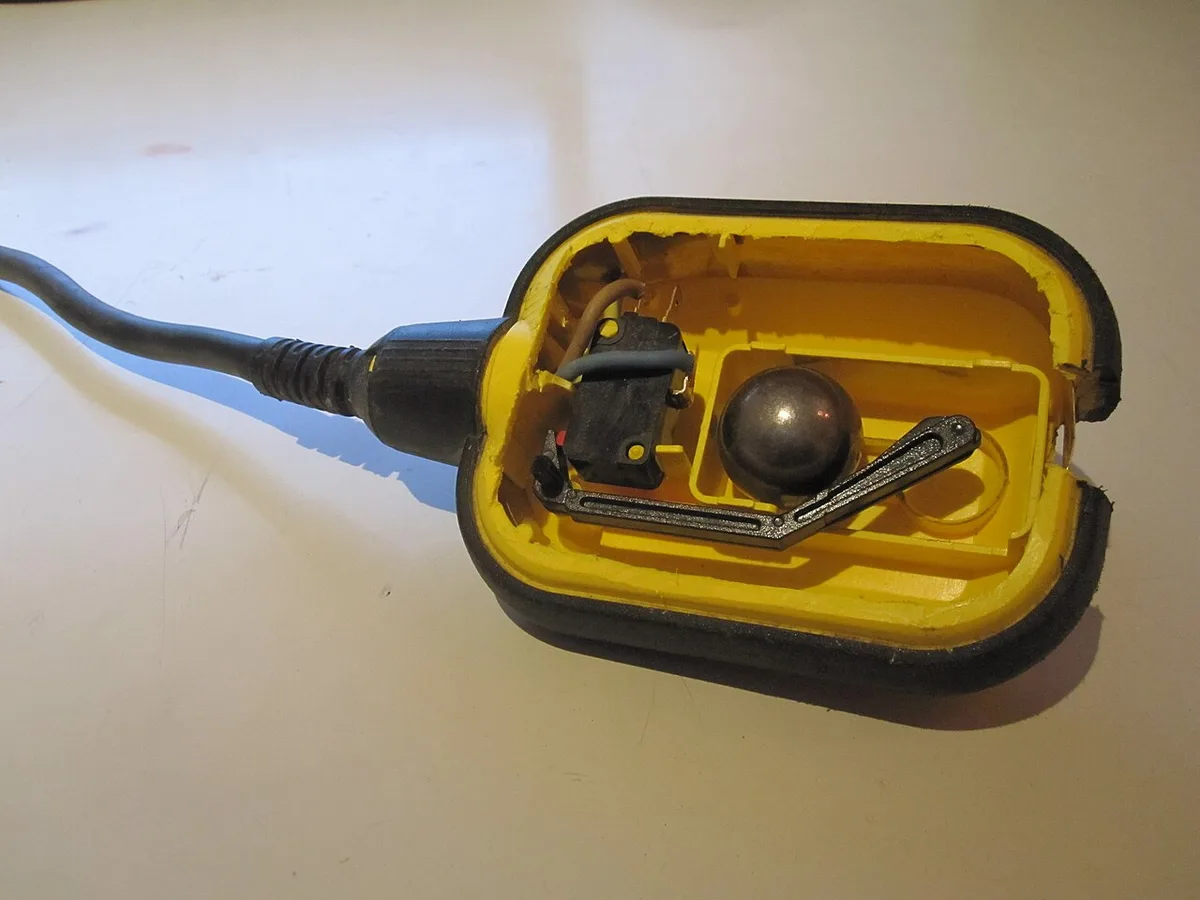
Image source: Wikimedia Commons / S.J. de Waard (CC BY)
What to Look for With a Stuck Float Switch
A float switch stuck in the upward position causes continuous cycling. The pump never shuts off, overheats, and burns out. Conversely, if it’s stuck low, water keeps rising without triggering the motor.
Try wiggling the float arm manually. If the pump doesn’t respond, replace the switch. They cost less than replacing the whole unit later.
When to Call a Pro vs DIY
You can handle basic clogs and switch adjustments yourself. But call a pro if you see any wiring issues, burnt smells, or tripped breakers when the pump tries to start.
Professional help also matters when the basin itself overflows despite clearing everything. At that point you might have a cracked pipe hidden underground. Pros bring cameras and pressure tests to find underground breaks without tearing up your yard.
Another sign you need an expert: repeated failures after temporary fixes. If you keep unclogging the same line every few months, there’s likely a design flaw like improper pitch or missing venting.
Our research shows homeowners spend $300 to $800 on average for professional repairs, compared to $100 to $300 for DIY parts. Don't risk electrical work unless you're experienced.
Sump Pump Overflow Prevention Checklist
Use this list twice a year, ideally before spring thaw and again before winter.
- Test the pump monthly by pouring water into the basin
- Clean gutters and downspouts leading to the discharge area
- Make sure the discharge extends at least 5 feet away from your foundation
- Insulate exposed pipes in freezing weather
- Replace backup battery systems every 3 to 5 years
- Check that the check valve closes securely after each cycle
- Trim any roots or debris near outdoor drain entrances
Keep a water alarm installed near the basin so you know immediately if water levels rise unexpectedly. The EPA recommends monitoring high-water areas like this as part of home maintenance.
Per manufacturer specifications, most submersible pumps operate safely between 35°F and 120°F. If your basin sits in a cold crawl space, consider upgrading to a model rated for lower temperatures.
Frequently Asked Questions
Why does water keep coming back into my sump basin?
Water returns when the discharge point flows back toward your house. This often means your pipe lacks proper slope or ends too close to the foundation. Redirect the outlet at least 10 feet from the structure.
Is it normal for my sump pump to run constantly?
No. Occasional cycling is normal during storms, but constant operation signals a problem. Check for a stuck float switch or ongoing inflow from a leak.
A properly functioning system cycles every 5 to 10 minutes at most.
Can I prevent freezing in winter?
Yes. Insulate exposed discharge pipes with foam sleeves and ensure they slope downward outdoors. Installing a freeze-resistant discharge kit keeps water moving even in cold weather.
As of 2026, these kits are standard on newer models.
What size pump do I need for a typical basement?
Most residential basements require a 1/3-horsepower pump handling up to 40 GPM. Measure your basin depth and expected inflow rate to size correctly. Larger homes or those with higher water tables may need 1/2 HP or more.