
Yes, a generator can run a sump pump if it supplies enough starting watts to handle the motor surge. Most residential pumps need 1,300 to 3,000 starting watts depending on horsepower. Undersized units will stall or damage the motor during startup.
Always verify your specific pump requirements before connecting backup power.
Yes, But You Must Match Starting Watts to Avoid Motor Burnout
A generator can run a sump pump only when its surge capacity exceeds the motor’s locked rotor amperage. Running watts alone do not determine compatibility since induction motors draw three to five times normal current at startup. Manufacturer specifications confirm that a standard 1/2 HP pump typically requires 2,000 to 3,000 starting watts despite using just 1,050 running watts.
Ignoring this surge requirement is the most common cause of failure during outages. The generator may power lights and fans but trip immediately when the float switch activates the pump. This repeated stalling damages both the generator windings and the pump motor over time.
Proper sizing prevents costly equipment replacement and keeps your basement dry when storms hit.
How to Calculate True Sump Pump Power Requirements From the Nameplate
The motor nameplate provides the exact electrical data needed for accurate generator sizing. Look for Locked Rotor Amps (LRA) or Code Letter designations rather than relying on generic horsepower charts. Multiply LRA by voltage to get true starting wattage, which is always higher than published estimates.
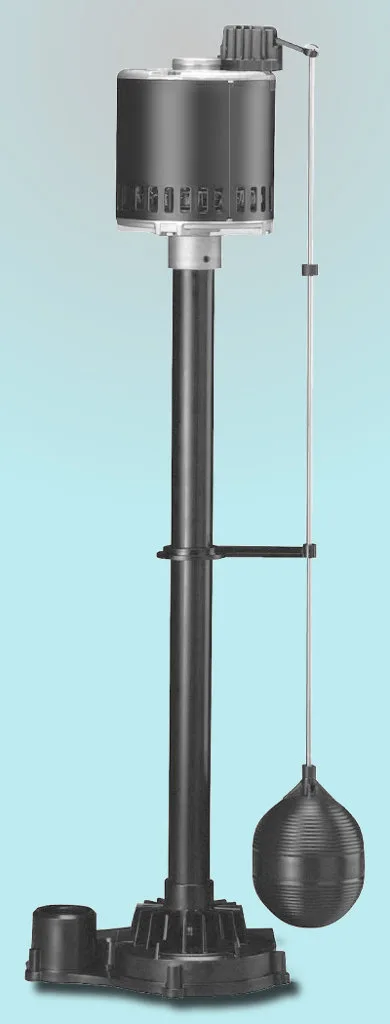
Image source: Wikimedia Commons / Own work (CC BY-SA)
If LRA is missing, use Full Load Amps (FLA) multiplied by five as a conservative estimate. A 1/2 HP pump showing 9.8 FLA at 120V needs roughly 5,880 starting watts under this formula. This method aligns with NFPA 70 Article 430 calculations for motor branch circuits.
Always round up to the next standard generator size to account for voltage drop and aging components.
| Pump Size | Running Watts | Estimated Starting Watts | Minimum Generator Size |
|---|---|---|---|
| 1/3 HP | 800 | 1,300 to 2,000 | 3,000W |
| 1/2 HP | 1,050 | 2,000 to 3,000 | 4,000W |
| 3/4 HP | 1,500 | 3,000 to 4,500 | 5,500W |
Safe Connection Methods: Transfer Switches, Cords, and Grounding Rules
Never plug a generator directly into a wall outlet or main panel without an approved transfer device. Backfeeding creates lethal electrocution hazards for utility workers and violates electrical codes in every jurisdiction. A manual transfer switch or interlock kit isolates backup power from the grid safely.
Heavy-duty outdoor extension cords must match the pump’s amperage and distance from the generator. Use 12-gauge wire for 20-amp loads up to 50 feet and 10-gauge for longer runs. Inspect cord insulation for cracks before each use since damaged jackets cause ground faults in wet conditions.
Just like diagnosing appliance error codes, checking connections prevents failures when you need power most.
Grounding requirements vary by generator type and local amendments to the National Electrical Code. Portable units often require a separate grounding rod when powering fixed building loads. Standby generators bond to the home’s existing grounding electrode system through the automatic transfer switch.
Consult a licensed electrician to verify compliance before operating any backup system.
Critical Generator Sizing Mistakes That Cause Failure During Outages
Assuming running watts equal starting capacity leads to undersized purchases that fail under load. Many buyers focus on continuous ratings while ignoring the brief but massive surge needed to spin a motor from rest. This mistake leaves basements vulnerable even when the generator appears adequately rated on paper.
Daisy-chaining multiple appliances on the same circuit compounds voltage drop during pump startup. Lights dimming or electronics resetting signals insufficient reserve capacity for inductive loads. Dedicated circuits for critical pumps prevent interference from nonessential devices sharing limited backup power.
Understanding these electrical demands mirrors troubleshooting complex systems where one weak link causes total failure.
Fuel degradation and stale gasoline reduce available output after months of storage. Ethanol-blended fuels absorb moisture and form varnish that clogs carburetors precisely when emergencies strike. Using fuel stabilizer and running monthly maintenance cycles preserves rated performance.
Neglecting this upkeep effectively downsizes your generator right before the next storm season arrives.
Common Questions About Running Sump Pumps on Backup Power
Will a 2000 watt generator run a sump pump?
Most 2,000-watt generators cannot reliably start a standard 1/2 HP sump pump due to insufficient surge capacity. They may handle smaller 1/3 HP models with low LRA ratings but risk stalling on larger units. Check your specific pump nameplate before attempting this pairing.
Upgrade to at least 3,000 starting watts for dependable operation during extended outages.
Can I plug my sump pump directly into a portable generator?
Direct connection is possible only with a properly rated outdoor extension cord and GFCI protection. Never backfeed through household wiring without an installed transfer switch or interlock device. Wet environments demand ground fault protection to prevent shock hazards.
Verify cord gauge matches pump amperage to avoid dangerous voltage drops during motor startup.
Does a battery backup replace the need for a generator?
Battery backups provide immediate seamless power but typically last only four to eight hours depending on cycle frequency. Generators offer indefinite runtime with adequate fuel supply for multi-day outages. Many homeowners install both systems for layered protection against flooding.
Batteries bridge the gap until generator power stabilizes or utility service returns.
Why does my generator stall when the sump pump kicks on?
Stalling indicates the generator lacks sufficient starting wattage for the motor’s locked rotor current. Voltage sag triggers overload protection or starves the engine of necessary excitation power. Repeated stalling damages both the generator and pump motor windings permanently.
Upsize your generator or add a soft-start capacitor to reduce inrush current demands.
How far should the generator be from the house?
Place portable generators at least 20 feet from windows, doors, and vents per CPSC safety guidelines. Carbon monoxide enters homes through small openings and accumulates silently without warning. Never operate units in garages, basements, or enclosed porches regardless of ventilation attempts.
Install battery-operated CO detectors on every level as secondary protection.