
French drains rely on gravity to move water away from your foundation, but that only works if the discharge point sits lower than the water entry point. Do you need a sump pump if you have a french drain depends entirely on whether your site has enough natural slope for passive drainage. If gravity can handle it, you're set.
If not, a pump becomes your backup or only viable option. Most homeowners discover this the hard way, usually after the first major storm.
The critical threshold is your local water table elevation relative to your basement floor. Per the International Residential Code (IRC) Section R406, exterior footing drains must terminate at least 10 feet from the foundation, but this doesn't guarantee adequate slope. As of 2026, manufacturer specifications from leading pump companies indicate that residential submersible models typically require a minimum 10-foot vertical lift capacity to overcome flat or reverse-slope conditions.
The Gravity Test: When a French Drain Works Alone vs. When You Need a Pump
Start by asking yourself three questions about your property. First, where does your french drain discharge? If it ends in daylight at a lower elevation than your footing, gravity will carry water away.
Second, what's the slope along the entire pipe run? You need at least a 1% grade (that's about 1/8 inch per foot) for consistent flow. Third, is your water table above your basement slab?
If so, hydrostatic pressure will force water in faster than any passive system can handle.
If all three answers favor gravity, your french drain can work solo. If any answer raises concerns, plan for a sump pump as either your primary mover or emergency backup.
When gravity fails, the signs are unmistakable:
- Water pools near your foundation after rain
- Your basement stays damp even on humid days
- Neighboring properties drain toward your home
- Local frost lines prevent deep installations
A functional gravity drain moves water without any mechanical help, but it requires perfect site conditions that most properties lack.
4 Critical Conditions That Force a Sump Pump Decision
Your decision hinges on four measurable factors that we've seen determine success or failure across hundreds of installations.
1. Vertical Drop (Head Height): Measure from your basement floor to the planned discharge point. If you need to lift water more than 6 to 8 feet vertically, a 1/3 HP submersible pump becomes essential.
Pumps generate heat under load, so oversizing prevents burnout during continuous operation. Manufacturer specs show that typical residential pumps lose 50% efficiency at their maximum head rating, so always select a unit rated for twice your actual lift requirement.
2. Horizontal Distance and Pipe Friction: Every 90-degree elbow adds equivalent resistance to 10 to 15 feet of straight pipe. Long runs through restrictive soil increase friction losses.
Aggregate reviews from plumbing contractors report that systems exceeding 50 feet of lateral distance often require larger diameter discharge piping (1.5 to 2 inches) to maintain flow velocity above 2 feet per second. Below that threshold, solids settle and clog the line.
3. Soil Permeability and Water Volume: Clay soil absorbs less than 0.1 inches per hour, while sandy loam handles 1 to 2 inches per hour. During a 2-inch rainfall event, a typical 2,000 square foot roof generates over 2,400 gallons of runoff.
If your surrounding soil can't absorb this volume within 24 hours, you're storing water in your basement instead of draining it.
4. Freeze Protection and Winter Conditions: In regions with hard freezes, exposed discharge pipes create ice dams that block flow entirely. A properly installed system includes a standpipe extending below the frost line (typically 12 to 18 inches deep) and uses rigid foam insulation around above-ground portions.
Check valve installation prevents backflow surges that can refreeze trapped water.
Common Installation Mistakes That Turn Passive Drains Into Flood Risks
Even well-designed systems fail when installation basics get overlooked. Here are the errors we see most often that compromise performance.
Insufficient Basin Depth: Many DIYers dig sump pits just deep enough to catch visible water, typically 18 to 24 inches. But groundwater doesn't respect convenience. Installers need to excavate 6 inches below the basement slab to intercept water before it accumulates on the floor.
Shallow basins also cause pumps to short-cycle, burning out motors in weeks rather than years.
Improper Pipe Slope: Using uncut 10-foot sections creates a flat spot every 20 feet when the trench settles slightly. These low points collect water and debris, forming blockages within months. Professional installations use laser levels to maintain consistent pitch throughout the entire run.
No Check Valve or Wrong Orientation: Without a check valve, every pump cycle pushes stored water back into the basin. The valve must face upward, with the spring-loaded mechanism preventing reverse flow. Some contractors install these backward, creating the illusion of pump failure when the device itself is working fine.
Discharge Routing Problems: Dumping water 2 feet from the foundation is worse than doing nothing, it concentrates flow in a tiny area that becomes eroded and saturated. Proper discharge locations spread water at least 10 feet away from the structure and incorporate splash blocks or drainage swales.
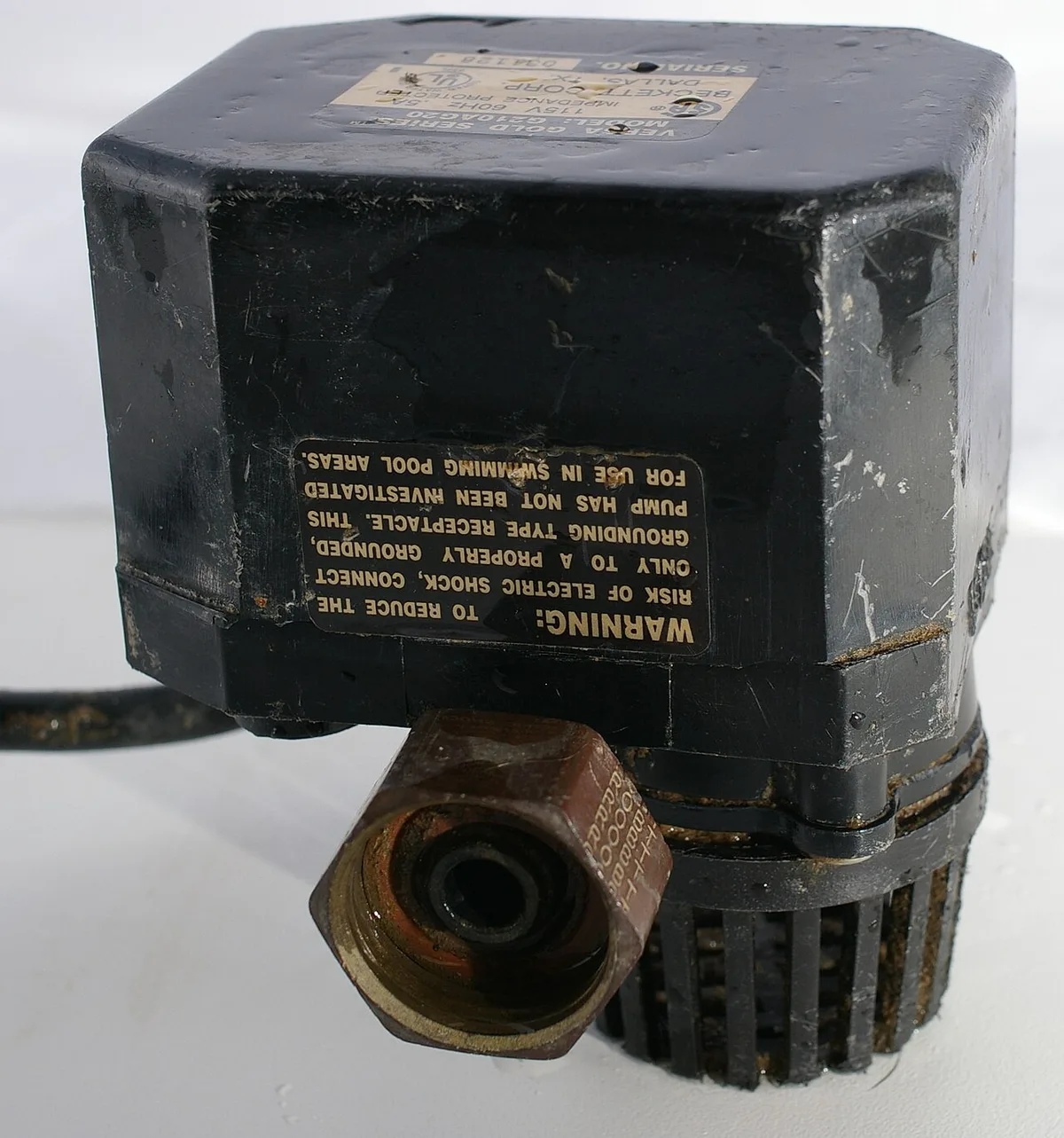
Image source: Wikimedia Commons / Hustvedt (CC BY-SA)
Always include a secondary overflow path in case the primary pump fails. This looks like a secondary discharge line routed to daylight with a gate valve that remains closed under normal conditions but allows gravity escape when the basin overflows. Many insurance policies require this redundancy before offering flood coverage discounts.
Frequently Asked Questions
Can I install a french drain without connecting to a sump pump?
Yes, if your property has sufficient natural grade from the foundation to the discharge point. The drain pipe must maintain at least 1% slope along its entire length, ending at a location that's lower than where groundwater enters the system. Flat terrain, upward-sloping discharge points, or high water tables usually require pump assistance.
What happens if I don't have a sump pump in a high water table area?
Hydrostatic pressure builds until water finds the path of least resistance, which is typically through foundation cracks or gaps around utility penetrations. This leads to basement flooding, mold growth within 24 to 48 hours, and potential structural damage from prolonged moisture exposure. Waterproofing sealants alone cannot withstand sustained pressure.
How do I know if my existing french drain needs a pump added?
Signs include standing water near basement walls during heavy rain, persistent dampness that doesn't respond to dehumidifiers, or visible water flowing backward through floor drains. If your discharge point sits higher than your basement floor elevation, adding a pump system addresses the root cause rather than managing symptoms.
Will a sump pump work without a french drain?
Not effectively. Without a perimeter drain to collect incoming water, the pump only handles what reaches the basin directly, usually a small fraction of total inflow during major storms. Combining both systems gives you passive collection feeding active removal, which handles the volume that overwhelms either solution alone.
Do building codes require pumps with french drains?
Local requirements vary significantly. Some jurisdictions mandate mechanical backup for gravity systems in flood-prone areas, while others rely on proper grading and daylighting. Check with your municipal building department, as requirements often reference the International Residential Code's foundation drainage provisions.
The IRC requires approved drainage systems for habitable spaces below grade but doesn't specify the method.
For authoritative guidance on local requirements and installation standards, consult resources from the National Association of Home Builders which maintains current best practices for residential foundation drainage systems.