
Identify your sump pump's running and starting wattage using manufacturer specs. Add a safety margin of at least 25 percent above the startup load. Decide between a portable or standby generator based on outage frequency and automation needs.
Match the generator's output to the pump's total electrical requirements, including any additional backup devices.
Core Explanation / How It Works
Choosing a generator for a sump pump hinges on matching the device's electrical demand to the generator's capacity. Most residential sump pumps run between 800 and 2,000 watts, but they can pull 2 to 3 times that amount during startup. This surge is brief but critical, if the generator can't handle it, the pump won't kick on.
There are two main paths: portable generators and standby systems. Portable units offer flexibility and lower upfront costs, but they require manual setup and operation. Standby generators are permanently installed, automatically start during outages, and provide consistent power without user intervention.
They cost more and need professional installation, but they're ideal for basements that flood easily.
Key specs to consider include running and starting wattage, runtime at 50 percent load, noise levels, and fuel type. Battery-powered alternatives exist for some setups, but traditional gas or propane models remain the go-to for reliable performance.
how to choose a generator for a sump pump

Image source: Wikimedia Commons / PumpExpert (CC BY-SA)
Step-by-Step: How to Size and Choose the Right Generator
Follow these steps to size a generator correctly for your sump pump. Start with identifying your pump type and load requirements.
- Check your pump label: Look for a metal plate listing running and starting watts or horsepower. If missing, consult the manual or manufacturer website.
- Understand the numbers: Running watts are continuous power needed. Starting watts (surge) are momentary power required to turn on the motor.
- Account for surge draw: Multiply horsepower by 3 to 5 to estimate surge wattage if running watts aren't listed.
- Add other loads: If powering lights or a refrigerator alongside, include their combined wattage.
- Apply a buffer: Increase your calculated total by 20 to 25 percent to prevent overloading.
- Choose generator type:
, Portable: Cheaper, movable, good for infrequent outages.
, Standby: Expensive, automatic, best for frequent or long outages.
- Plan the connection: Use a transfer switch for safety or heavy-duty outdoor-rated extension cords if plugging in directly.
Always verify local electrical codes, many areas require permits for standby installations.
transfer switch installation best practices ensures compliance with NEC Article 702.
Standby vs Portable Generators for Sump Pumps
Deciding between types depends on how often you lose power and whether you can respond manually.
| Feature | Portable Generator | Standby Generator |
|---|---|---|
| Automation | Manual start | Auto-starts on outage |
| Wattage Range | 2,000 – 10,000W | 10,000 – 25,000W+ |
| Installation | Plug-and-play with cord | Hardwired, requires permit |
| Noise Level | Moderate to high | Low (enclosed unit) |
| Cost | $400 – $2,500 | $2,000 – $10,000 installed |
| Best For | Occasional outages, renters | Frequent outages, permanent homes |
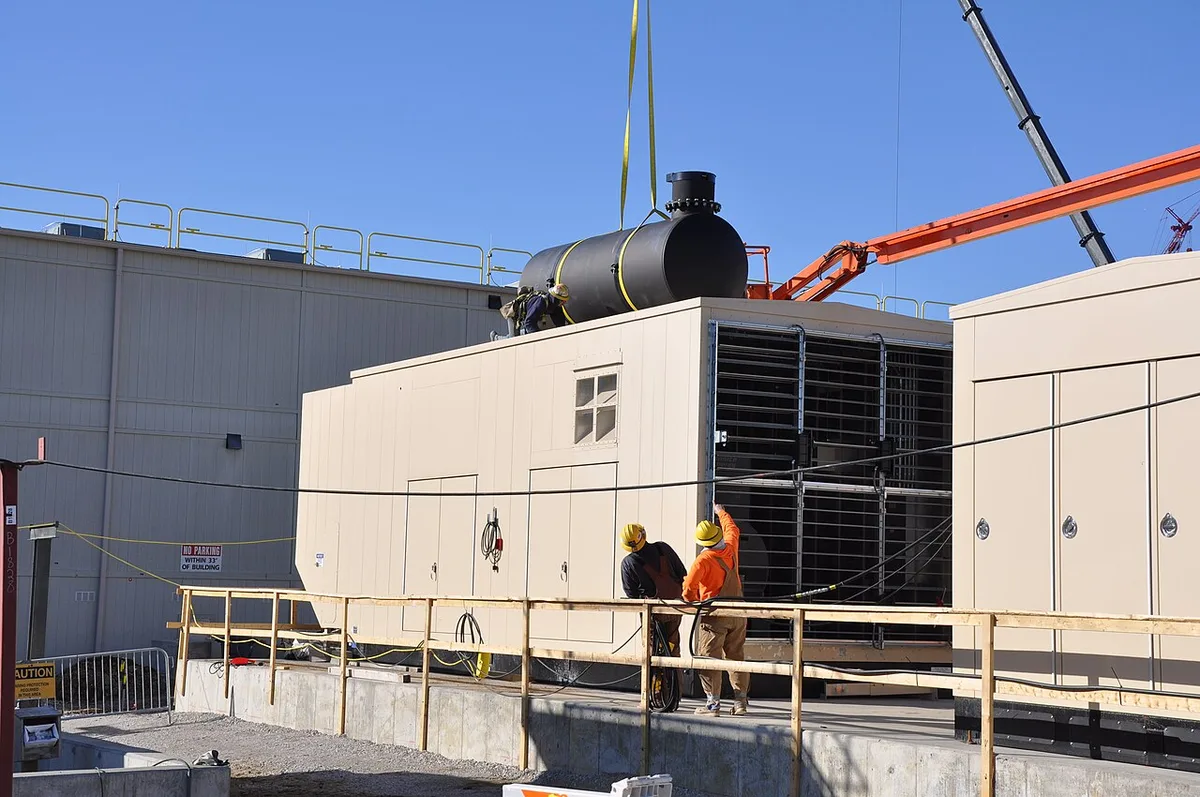
Image source: Wikimedia Commons / PEO ACWA (CC BY)
A portable unit works well if you're nearby and awake during storms. But for critical basements, a standby generator provides peace of mind, even while you sleep.
Common Mistakes and How to Avoid Them
Missteps here can lead to pump failure or serious hazards.
- Undersizing the generator: Underestimating surge leads to tripped breakers or burnout. Always add headroom.
- Overloading circuits: Connecting too many devices causes overheating and fire risks.
- Improper grounding: Failure to ground increases shock danger. Follow OSHA guidelines.
- Indoor use: Never operate near windows or vents, carbon monoxide poisoning is fatal.
- Neglecting maintenance: Stale fuel and corroded contacts cause breakdowns. Test monthly as of 2026 standards recommend.
Avoid these pitfalls.
Frequently Asked Questions
What size generator do I need for a 1/3 HP sump pump?
A 1/3 HP pump typically draws 700, 1,000 running watts with up to 2,000 surge watts. A 2,500-watt generator should suffice.
Do I need a transfer switch for a portable generator?
Yes, for whole-home safety. Direct plug-in is acceptable only with proper outdoor-rated cords.
Is battery backup better than a generator?
Battery backups act instantly but limited runtime. Generators offer longer duration but delay during startup.
How far should a generator be placed from the house?
At least 20 feet away from windows, doors, or vents. Use EPA Carbon Monoxide awareness rules for guidance.
Can I charge a generator battery with solar panels?
No, standard portable generators lack built-in charging circuits. Separate battery maintainers apply.