
Bosch dryers are built for performance, but like any appliance, they can develop issues over time. Whether your dryer won't start, won't heat, or stops mid-cycle, understanding the root cause can save you time, money, and a service call.
This guide covers the seven most common Bosch dryer problems, complete with step-by-step troubleshooting and repair advice. Before calling a technician, check these solutions first. For more on this, see our guide on top 7 hair dryer under 50.
Problem 1: Dryer Won’t Start – No Power
A Bosch dryer that won’t turn on is usually caused by power supply issues, a faulty door switch, or a blown thermal fuse.
Steps to Troubleshoot:
Check the Power Source
- Ensure the dryer is firmly plugged into a dedicated 240V outlet.
- Inspect the circuit breaker or fuse box. Reset any tripped breakers.
- Test the outlet with another device to confirm power is reaching the unit.
Inspect the Power Cord
- Look for fraying, cuts, or burn marks on the power cord.
- Ensure the cord is securely connected to both the dryer and the wall.
- Replace the cord if damage is visible.
Test the Door Switch
- Close the door firmly. The dryer won’t start if the door isn’t fully shut.
- Use a multimeter to test continuity across the door switch terminals.
- Replace the switch if it fails to conduct electricity.
Check the Thermal Fuse
- The thermal fuse prevents overheating. If blown, the dryer won’t start.
- Remove the back panel to locate the fuse (usually near the blower or heating element).
- Test with a multimeter. Replace if there’s no continuity.
Verify Control Settings
- Make sure the dryer is set to the correct cycle and temperature.
- Some models have a child lock feature that disables controls temporarily.
Call a Professional If Needed
- If none of the above fixes the issue, the problem may lie with the main control board or motor. These repairs require professional expertise.
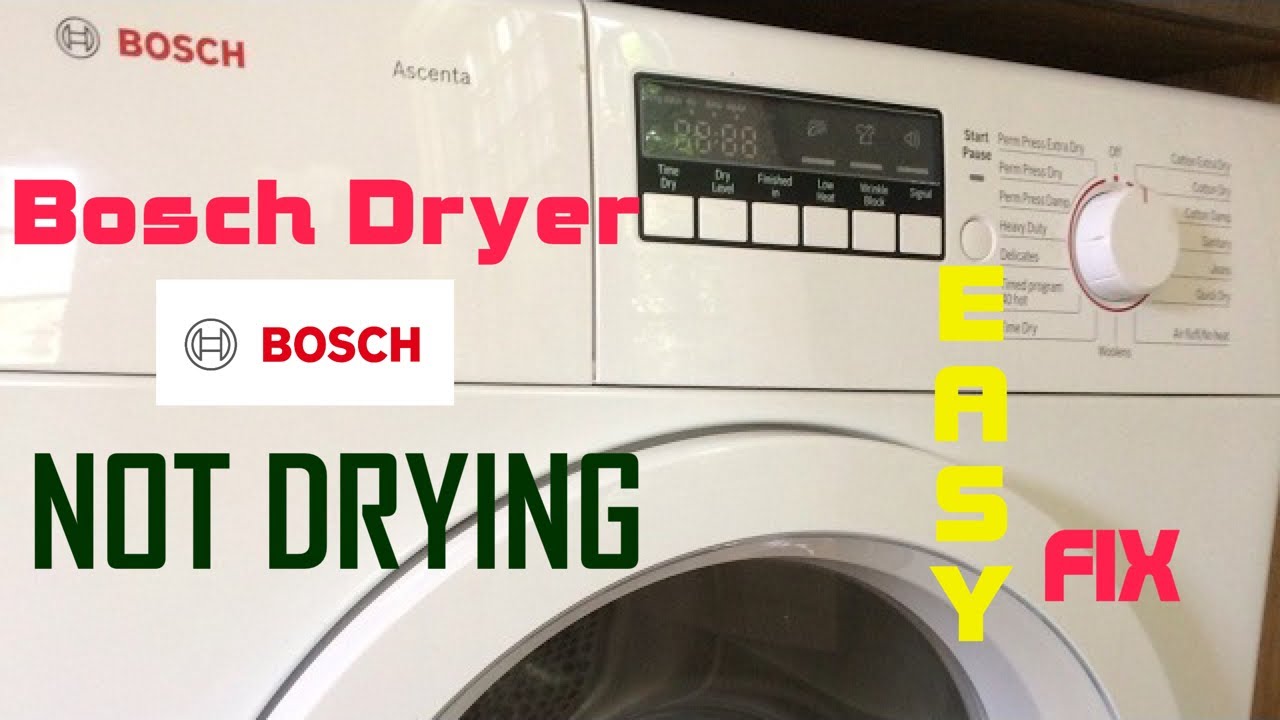
Inspect the power cord and connections as a first step.
Image source: m.youtube.com
Problem 2: Dryer Not Heating Up
A Bosch dryer that runs but doesn’t produce heat can be due to a faulty heating element, clogged airflow, or thermostat failure.
Steps to Troubleshoot:
Inspect the Heating Element
- Disconnect power and remove the back panel.
- Visually check the element for breaks, blistering, or burn marks.
- Test resistance with a multimeter. A zero-reading means the element is bad.
Check the Thermal Cut-Out and Thermostat
- These safety devices cut power to the heating element if it overheats.
- Test for continuity. Replace any that show no reading.
Clean or Replace the Lint Filter and Vent
- A clogged filter restricts airflow, causing the dryer to shut off heat prematurely.
- Clean the lint screen after every load.
- Inspect the exhaust vent for blockages and clean it regularly.
Examine the Control Board
- If heating elements and thermostats test fine, the issue may be with the electronic control board sending incorrect signals.
For more on airflow issues, see our guide on cleaning your dryer vent.
Problem 3: Dryer Not Spinning or Drum Won’t Rotate
When the motor runs but the drum doesn’t spin, the drive belt is often the culprit—but not always.
Steps to Troubleshoot:
Check the Drive Belt
- Unplug the dryer and remove the top panel or rear access panel.
- Look for cracks, fraying, or breaks in the belt.
- If broken, replace with a manufacturer-approved belt.
Inspect the Drum Rollers and Pulleys
- Worn rollers create friction and can prevent the drum from turning.
- Spin each roller by hand. Replace if they wobble or feel rough.
Test the Motor
- If the belt and rollers are fine, the motor might be failing.
- Listen for humming sounds without drum movement—a sign of motor trouble.
Look for Clothing Jammed in the Drum Seal
- Small items can get caught between the drum and the seal, preventing rotation.
In practice, replacing a snapped belt is one of the easiest fixes and often solves the issue immediately.
Problem 4: Dryer Making Unusual Noises
Strange noises—squealing, thumping, grinding—are usually signs of internal wear or debris.
Common Causes and Fixes:
| Noise Type | Likely Cause | Solution |
|---|---|---|
| Squealing | Worn drum belt or idler pulley | Replace belt or pulley |
| Thumping | Drum out of balance or foreign object | Clean drum, check leveling |
| Grinding | Damaged drum bearings or motor | Professional repair |
| Rattling | Loose parts or coins in the drum | Remove debris, tighten screws |
Inspection Tips:
- Remove lint and foreign objects from the drum and blower housing.
- Check the idler pulley for wear. It maintains belt tension and can squeal when dry.
- Replace drum glides or slides if they’re cracked or missing—they help support the drum.
Regular maintenance prevents most of these issues. See our checklist for basic dryer maintenance tasks.
Problem 5: Dryer Stops Mid-Cycle
An interrupted drying cycle can stem from overheating, sensor errors, or vent blockages.
Troubleshoot These Areas:
Moisture Sensor Issues
- A dirty or misaligned sensor may signal incorrect dryness levels.
- Clean the sensor bars with rubbing alcohol and a soft cloth.
- Test continuity if cleaning doesn’t help.
Thermostat or Thermal Fuse Failure
- Overheating can trip these components.
- Use a multimeter to test for continuity. Replace any that fail.
Blocked Exhaust Vent
- Restricted airflow causes the dryer to shut down to prevent overheating.
- Detach the vent hose and inspect for clogs.
- Run a full cycle with the vent disconnected to see if the problem clears.
Overloaded Drum
- Too many items restrict tumbling and airflow.
- Avoid overloading—leave space for clothes to move freely.
A common mistake is ignoring recurring cycles—this often indicates a deeper airflow problem.
Problem 6: Dryer Takes Too Long to Dry Clothes
Slow drying is typically linked to airflow restrictions rather than internal component failure.
Quick Fixes:
Clean the Lint Screen After Every Load
- Even partial clogs reduce efficiency significantly.
Inspect the Exhaust Vent Pipe
- Long or kinked vents increase drying time.
- Use rigid metal ducting instead of flexible plastic or foil.
Check the Outdoor Vent Hood
- Bird nests or debris can block airflow.
- Ensure the flap opens freely when the dryer runs.
Don’t Overload the Dryer
- Clothes need room to tumble and expose wet surfaces to heated air.
Calibrate or Replace the Moisture Sensor
- If clothes come out overly damp or overly dry, the sensor may be inaccurate.
We recommend checking the LG D80 code guide for similar airflow diagnostics applicable to Bosch models.

Internal view of a Bosch dryer highlighting airflow pathways.
Image source: www.bosch-home.com
Problem 7: Error Codes on Display
Modern Bosch dryers show alphanumeric codes when something goes wrong. Decoding them saves guesswork.
How to Diagnose:
Note the Exact Code
- Write down the number or letter sequence displayed.
- Codes like
E10,E24, orF21point to specific systems.
Refer to Your Model’s Manual
- Visit Bosch's official support site to download your manual or look up codes.
Interpret Common Codes
- E10/E11: Heating issue—check element or thermostat.
- E24/E28: Moisture sensor or control board fault.
- F21/F24: Door lock or heating issue.
Reset the Dryer
- Turn the dryer off, unplug for 10 minutes, then restart.
- This clears temporary glitches in many cases.
If the code persists, record it and consult Bosch’s online database or schedule a service appointment.
For broader fault diagnosis tips, explore our breakdown of LG dryer diagnostic codes—many principles apply across brands.
Final Thoughts
Most Bosch dryer issues fall into predictable patterns, and tackling them early keeps your appliance running longer. From power failures to noisy tumblers, knowing what to check—and when to stop and call a pro—makes all the difference.
Whether you're replacing a belt, cleaning a vent, or decoding an error code, these DIY steps can resolve minor problems quickly. But don’t hesitate to reach out to a qualified technician when dealing with electrical components or persistent errors.
With regular upkeep and prompt attention to warning signs, your Bosch dryer should deliver reliable performance for years.
Frequently Asked Questions
Why won’t my Bosch dryer turn on at all?
Start by confirming the dryer is plugged in and the breaker hasn’t tripped. Check the door switch, thermal fuse, and control settings. A faulty main control board may also prevent startup.
What does error code E10 mean on a Bosch dryer?
E10 typically indicates a heating system fault—possibly a failed heating element, tripped thermal fuse, or malfunctioning thermostat. Test components with a multimeter for continuity.
Why does my Bosch dryer take forever to dry clothes?
Usually, airflow restrictions cause slow drying. Clean the lint filter, check the exhaust vent for clogs, and make sure the outdoor vent flap moves freely. Overloading the drum also slows drying.
How often should I clean my Bosch dryer vent?
Clean the lint screen after every load. Inspect and clean the exhaust vent hose and outdoor vent at least once per year, ideally before heavy winter use.
Can I fix a squeaking Bosch dryer myself?
Yes—if the noise stems from a worn drive belt, idler pulley, or drum rollers. Unplug the dryer, remove panels, and inspect moving parts. Replace worn components with OEM parts.
Is it safe to run a Bosch dryer with a torn door seal?
No—a damaged seal lets heat escape and lets lint enter internal parts, reducing efficiency and creating fire hazards. Replace the door seal promptly to maintain safety and performance.
Frequently Asked Questions
Why won’t my Bosch dryer turn on at all?
Start by confirming the dryer is plugged in and the breaker hasn’t tripped. Check the door switch, thermal fuse, and control settings. A faulty main control board may also prevent startup.
What does error code E10 mean on a Bosch dryer?
E10 typically indicates a heating system fault—possibly a failed heating element, tripped thermal fuse, or malfunctioning thermostat. Test components with a multimeter for continuity.
Why does my Bosch dryer take forever to dry clothes?
Usually, airflow restrictions cause slow drying. Clean the lint screen, check the exhaust vent for clogs, and make sure the outdoor vent flap moves freely. Overloading the drum also slows drying.
How often should I clean my Bosch dryer vent?
Clean the lint screen after every load. Inspect and clean the exhaust vent hose and outdoor vent at least once per year, ideally before heavy winter use.
Can I fix a squeaking Bosch dryer myself?
Yes—if the noise stems from a worn drive belt, idler pulley, or drum rollers. Unplug the dryer, remove panels, and inspect moving parts. Replace worn components with OEM parts.
Is it safe to run a Bosch dryer with a torn door seal?
No—a damaged seal lets heat escape and lets lint enter internal parts, reducing efficiency and creating fire hazards. Replace the door seal promptly to maintain safety and performance.