
Have you ever stood in front of a mirror and wondered how it seems to magically reveal what’s behind you? It’s a curious phenomenon that captures our imagination and challenges our understanding.
You might think it’s a simple reflection, but there’s more to it than meets the eye. Imagine uncovering the secrets that make mirrors such powerful tools in our everyday lives. By the end of this article, you’ll gain a new perspective on the science and magic of mirrors.
Let’s dive into this fascinating topic that combines physics and perception, and discover how you can see beyond the surface with just a glance.
Principles Of Reflection
Understanding the principles of reflection is key to grasping how mirrors can seemingly see behind things. Reflection is the process where light bounces off surfaces, allowing us to perceive objects and their surroundings in a mirror. It’s fascinating how simple this concept is, yet how many complex phenomena it can explain.
Understanding Light Reflection
Light travels in straight lines until it hits an object. When it encounters a reflective surface like a mirror, it bounces back. This is why you can see your reflection in the bathroom mirror every morning. The light from your face hits the mirror and bounces back to your eyes.
Imagine you’re standing in front of a mirror. You see yourself clearly because the light reflects back directly. But what about the vase on the table behind you? The light from the vase also hits the mirror and reflects back to your eyes, allowing you to see it.
The Law Of Reflection
The law of reflection states that the angle at which light hits the mirror is equal to the angle at which it bounces off. This is known as the angle of incidence equaling the angle of reflection. It’s a simple principle that holds true every time light interacts with a reflective surface.
Next time you’re adjusting your rearview mirror in the car, remember the law of reflection. It’s the reason you can see cars behind you without turning your head. The light from those cars reflects into your eyes at the same angle it hits the mirror.
Mirrors And Virtual Images
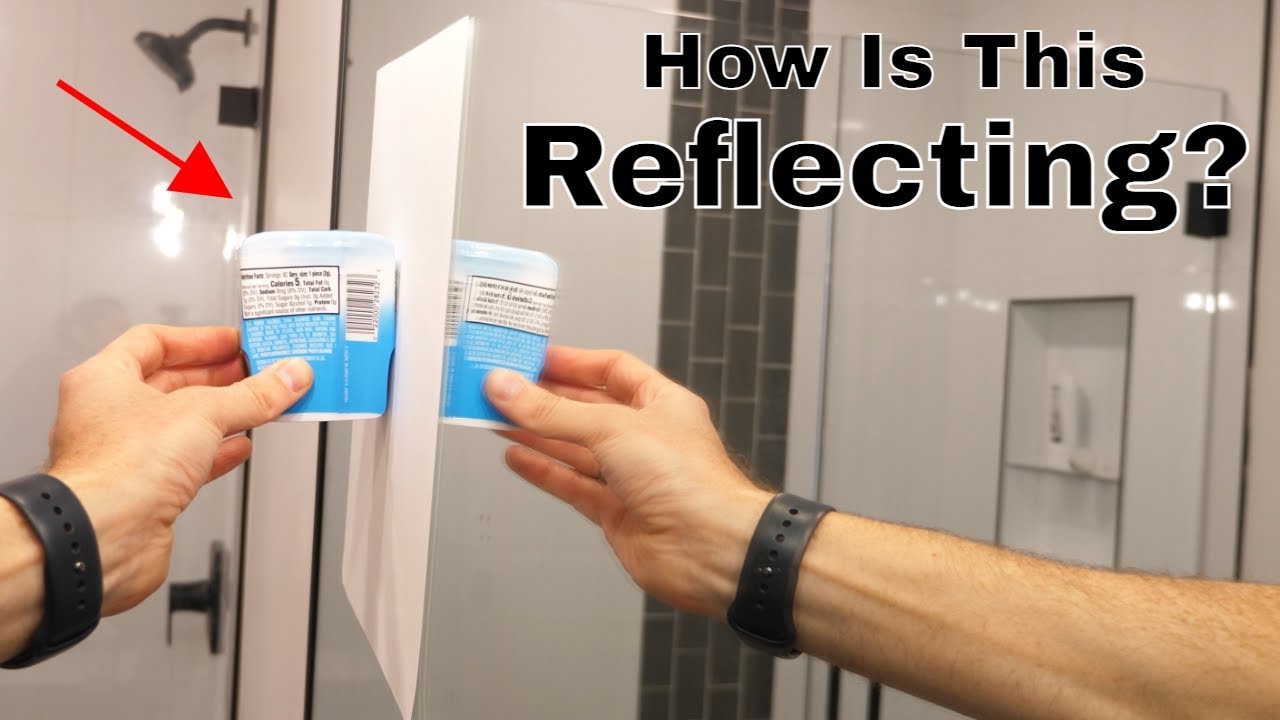
Mirrors create virtual images that appear to be behind the mirror. When you look into a mirror, the image you see isn’t actually behind the mirror—it’s a virtual image created by reflected light. This is why the vase seems to be behind you when you’re looking in the mirror.
Virtual images are an illusion of depth. You might have noticed this when trying to touch your reflection in a mirror. Your hand never reaches the image because it’s not physically there. This concept explains why mirrors are used in periscopes and telescopes to view distant objects.
Practical Applications Of Reflection
Reflection principles have real-world applications. Think about how mirrors help us see around corners or even behind furniture. They enable security cameras to monitor blind spots, giving a broader view of spaces.
Have you ever used a hand mirror to check the back of your hair? This practical use of reflection allows you to see areas otherwise hidden from direct view. Mirrors are more than just decorative—they are tools that enhance visibility and awareness.
So, next time you stand in front of a mirror, consider what else you might be able to see. What hidden details will reflection reveal to you today?

Credit: www.iflscience.com
Role Of Angles And Positioning
Mirrors have a fascinating ability to reflect light in unique ways. This allows them to see behind things. The magic lies in the role of angles and positioning. By understanding this, you can use mirrors effectively in your daily life.
Understanding Reflection Angles
Every mirror relies on the principle of reflection. Light hits the mirror surface at a certain angle. The mirror reflects this light back at the same angle. This angle determines what you can see in the mirror.
Consider the angle of incidence and reflection. Both are equal. This means the light path is predictable. Adjusting the angle can change what the mirror shows you.
Positioning For Optimal View
Mirror positioning affects what you see. Placing the mirror at the right spot is crucial. You can see around corners or behind objects. This depends on where you place the mirror.
Experiment with different positions. You might discover a new view. The right position can reveal hidden areas. This is useful in homes and vehicles.
Practical Examples Of Mirror Use
Think about driving. Mirrors help see what’s behind. They rely on angles and positioning. Adjusting car mirrors lets drivers see blind spots.
In homes, mirrors can make spaces feel larger. Position them to reflect light and views. This enhances room appearance.
Why Angles Matter In Mirror Placement
Angles change the mirror’s reflection. A slight adjustment can alter visibility. Mirrors in stores use angles cleverly. This lets security see more.
Understanding angles helps you use mirrors creatively. You can improve your home’s functionality and safety.
Practical Applications
Understanding how mirrors work can lead to surprising practical uses. Mirrors have the ability to reflect light and images. This makes them a valuable tool in various situations. From safety enhancements to artistic designs, mirrors have found their place.
Safety Enhancements
Mirrors play a vital role in safety, especially on roads. Convex mirrors on vehicles help drivers see behind. This reduces blind spots and potential accidents. They are also used at intersections for a clear view of oncoming traffic. These simple tools can save lives and prevent mishaps.
Interior Design
Mirrors are popular in interior design. They create the illusion of space in small rooms. A well-placed mirror reflects light, brightening dark corners. This trick makes rooms feel more open and welcoming. Interior designers often use mirrors to enhance aesthetics.
Scientific Instruments
Mirrors are essential in many scientific tools. Telescopes use mirrors to focus light from distant stars. This allows astronomers to study the universe. Microscopes also use mirrors to illuminate specimens. These instruments rely on mirrors for precision and clarity.
Art And Illusion
Artists use mirrors to create illusions and depth. Mirrors can transform a flat painting into a 3D scene. This artistic technique captivates viewers and challenges perceptions. Illusions created with mirrors fascinate people of all ages.
Home Security
Home security systems benefit from mirrors. Convex mirrors help monitor large areas. They give a wider view, ensuring no blind spots. This improves surveillance and provides peace of mind. Homeowners feel safer with these simple installations.

Credit: www.youtube.com
Credit: www.youtube.com
Conclusion
Mirrors are fascinating tools with unique abilities. They create illusions by reflecting light. This reflection allows us to see around corners. It’s all about angles and positioning. Place a mirror correctly, and you see beyond obstacles. Mirrors work through simple physics principles.
Understanding these can change your perspective. Next time, experiment with a mirror. Discover what it reveals from hidden angles. This simple tool offers endless possibilities. Mirrors are not just for checking our appearance. They help us explore our environment in new ways.
Keep experimenting and learning with mirrors.