
How to drain a basement if the sump pump fails starts with one brutal truth: every minute counts once water begins rising. You're not looking for a perfect solution. You need the right one for your situation, fast.
Our research shows that basements can take on 1,000+ gallons in under an hour during heavy rain events. That’s why we’ve mapped out exactly what to do next, based on your specific conditions.
Most basements flood because the primary pump either overheats, loses power, or gets clogged with debris. The key is recognizing which scenario you’re dealing with and acting accordingly. We’ll walk you through each decision branch below.
Understanding this process helps prevent thousands in water damage repairs.
how to drain a basement if the sump pump fails
Turn off electricity at the breaker panel first. Then remove standing water using a utility pump or wet/dry vacuum. If water rises more than 1 inch in 10 minutes, escalate to a backup pump.
Always discharge water at least 10 feet from your foundation. Call professionals if rising water threatens electrical systems.
Decision Branches: What to Do Based on Your Situation
Not every sump pump failure looks the same. Your response should match your specific scenario. Here's how to assess and act:
Power Outage vs Mechanical Failure
If your pump won't turn on at all, check the circuit breaker. A tripped switch means electrical issues. If power is fine but no water moves, the impeller may be jammed or the discharge line frozen.
For power outages lasting longer than 6 hours, connect a portable generator to keep things moving.
Small Puddle vs Rapidly Rising Water
Less than 2 inches of still water? A wet/dry vacuum works. More than that, especially if rising quickly?
Switch to a submersible utility pump rated for continuous duty. These units can move 1,500, 2,500 GPH depending on model and head pressure.
Finished Basement vs Utility Room Storage
In finished spaces, protect valuables first. Move furniture and electronics to higher ground immediately. For unfinished areas storing tools or HVAC equipment, focus directly on water removal.
The risk level changes everything.
| Scenario | Immediate Action |
|---|---|
| Power out | Check breaker, use generator |
| Pump jammed | Clear debris, check discharge |
| Slow leak | Wet/dry vac sufficient |
| Fast rise | Deploy backup utility pump |
Step-by-Step Emergency Response Workflow
Your safety comes before anything else. Don’t step into standing water if electricity might be on nearby outlets or appliances.
Turn Off Electricity and Assess Safety
Locate your main electrical panel and shut off power to the basement circuits. Never touch electrical panels or outlets with wet hands. Wear rubber boots rated for electrical hazard protection.
If water covers the floor, assume electricity is compromised until inspected by a licensed electrician.
Choose and Deploy the Right Pump or Tool
For small amounts of water, use a wet/dry vacuum like those from Shop-Vac or similar manufacturers. For larger volumes, deploy a submersible utility pump such as the Superior Pump 9125 or equivalent. Connect a garden hose to the discharge port and route it away from your home’s foundation.
Plug into a GFCI-protected outdoor outlet whenever possible.
Set Up Discharge and Monitor Water Levels
Position the pump near the deepest part of the affected area. Secure the discharge hose so it doesn’t kink or collapse under pressure. Many newer models include float switches that activate automatically when water reaches a certain level.
Place a water alarm like the Zircon Leak Alert near the pump to notify you if water rises again.
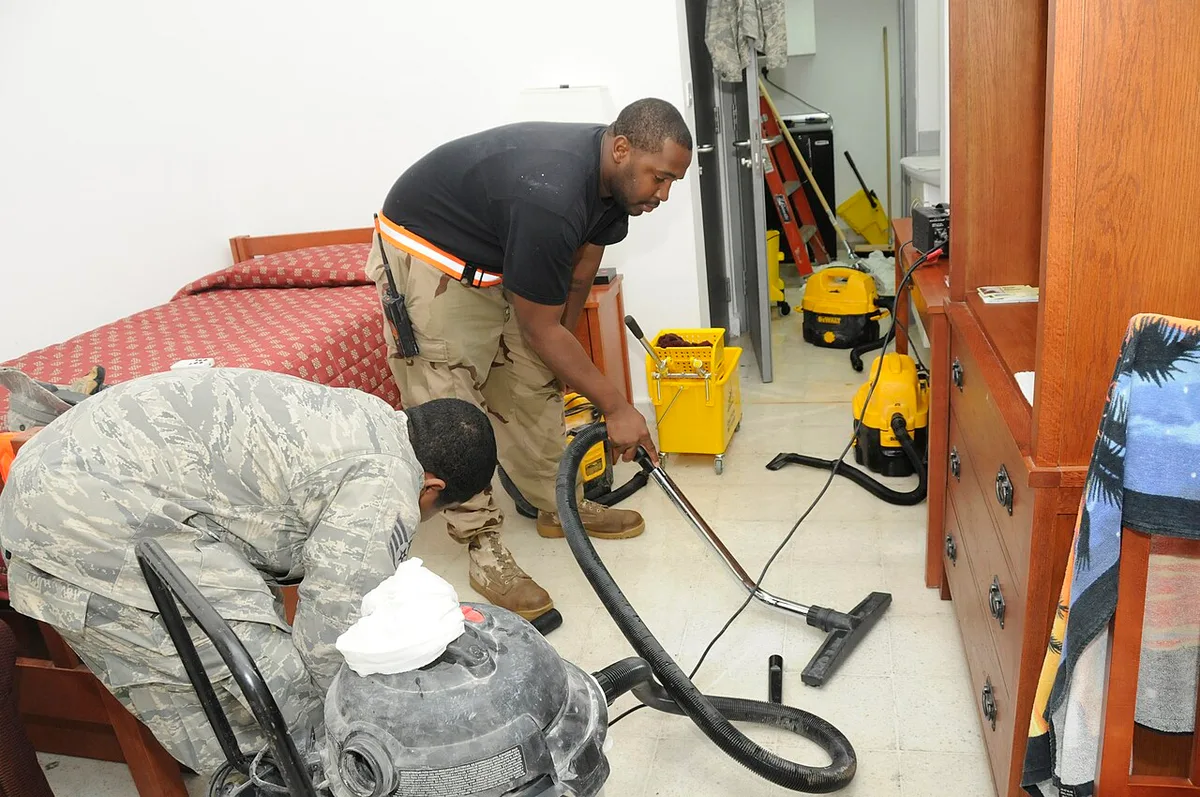
Image source: Wikimedia Commons / Staff Sgt. Darnell Cannady
Tools, Backup Options, and Cost-Effective Solutions
Having the right equipment ready makes all the difference during emergencies. Whether installing permanent backups or keeping emergency tools handy, preparation pays off.
Battery Backup Pumps vs Utility Pumps
Battery-powered backup pumps like the Basement Watchdog BW1200 install permanently in your sump basin. They typically run 8, 15 hours on a fully charged deep-cycle battery. Ideal for recurring power outages.
Utility pumps are portable and cheaper but require manual deployment each time.
Wet/Dry Vacuums and Sump Alarms
These aren’t replacements for real pumps but work well for minor seepage. Modern units handle both wet and dry messes safely. Pair them with wireless sump alarms that send alerts to your phone.
Early warnings help avoid major cleanups entirely.
Pricing Ranges and Performance Specs
Expect to pay $150, $300 for a solid utility pump capable of 1,500 GPH at 10 feet of lift. Battery backup systems range from $300, $800 depending on features. Sump alarms cost as little as $20 and prevent costly surprises.
As of 2026, manufacturers report improved efficiency ratings across most new models due to updated motor designs.
Common Mistakes, Safety Risks, and When to Call a Pro
Even experienced homeowners fall into predictable traps during flood responses. Avoiding these errors saves money and reduces danger significantly.
Electrical Hazards and Improper Pump Use
Never operate electrical devices while standing in water. Using extension cords rated insufficiently for amperage loads causes overheating and fire risks. Ensure all connections stay dry and elevated above potential flood lines.
Plug only into GFCI outlets designed for outdoor or damp locations.
Why Delaying Response Costs More in Damage
Waiting too long lets water soak into walls, carpets, and subflooring. Mold spores begin growing within 24 to 48 hours under ideal conditions. Structural warping and rusting happen even faster in steel framing or concrete surfaces exposed to moisture.
Acting within the first few hours prevents long-term remediation costs averaging $5,000 or more.
Emergency Plumber vs Flood Restoration Service
Call an emergency plumber if you suspect broken supply lines or main sewer backups. These situations involve health hazards requiring specialized containment procedures. Flood restoration specialists handle large-scale water extraction, drying, and sanitize treatments efficiently.
Know which service fits your situation beforehand.
Frequently Asked Questions
Can I use a regular shop vac to suck up basement water?
Most standard shop vacuums aren’t designed for large volumes of liquid and risk motor damage. Only use wet/dry vacs specifically labeled for water removal. Even then, limit usage to small puddles, no more than a few gallons at once.
How long does it take a utility pump to empty a flooded basement?
It depends on volume and pump capacity. A typical 1/3 HP utility pump moving 1,500 GPH can clear 1,000 gallons in roughly 40 minutes. Deeper flooding requires multiple passes or larger equipment like rental-grade pumps available at tool libraries.
Should I turn off my water heater after flooding?
Yes, if water reached the tank’s control panel or lower elements. Gas heaters pose explosion risks if submerged. Electric units short-circuit easily.
Shut off fuel or power until inspected by qualified technicians.
Is it safe to walk through floodwater in my basement?
Avoid walking through contaminated floodwater whenever possible. It often contains bacteria, chemicals, and sharp debris. If unavoidable, wear protective gear including gloves, boots, and eye protection.
Wash exposed skin thoroughly afterward.
Maintaining and Testing Your Sump Pump System
Prevent future failures before they happen. Regular maintenance keeps your system running when you need it most. Here's how to stay ahead of problems.
Clean the Inlet Screen Monthly
Debris blocks water flow and stresses your pump. Remove the sump basin lid and check the inlet screen for lint, hair, and small objects. Rinse with a hose monthly during heavy use seasons.
Replace damaged screens immediately to prevent pump burnout.
Test Float Switch Operation Quarterly
Lift the float arm manually to ensure the pump starts automatically. If it doesn't activate within a few seconds, the switch may be stuck or worn. Most replacement switches cost under $20 online.
Replace annually in high-risk flood zones.
Check Discharge Pipe for Blockages
Ice buildup in winter blocks pipes completely. Pour boiling water down the discharge line occasionally to melt obstructions. Ensure the pipe slopes upward away from your foundation by at least 1 inch per foot.
Professional Help and When to Upgrade
Some situations require expert intervention. Recognizing limitations prevents dangerous missteps.
Hire a Licensed Electrician After Major Floods
Water exposure compromises outlets, junction boxes, and breaker panels. The National Electrical Code requires inspected rewiring before restoring power. Average inspection costs range from $200 to $800 depending on damage extent.
Consider Upgrading to a Smart Sump Pump
Modern systems like the Zoeller 508 series include built-in Wi-Fi connectivity. Mobile apps send alerts directly to smartphones when water levels rise unexpectedly. Installation costs average around $1,200 but pay dividends through early warnings.
Schedule Annual Inspectations with Plumbers
Certified plumbers identify hidden issues invisible during routine checks. These visits typically uncover worn gaskets, sediment accumulation, or minor leaks before they become disasters. Budget approximately $150 annually for peace of mind.
Frequently Asked Questions
Can I run my sump pump continuously without damaging it?
Yes, but only if it's rated for continuous duty cycle operation. Check the pump label, it should explicitly say "continuous duty" rather than "intermittent." Running standard residential pumps beyond their rated cycles causes overheating and premature failure within hours.
What's the difference between a backup pump and a utility pump?
Backup pumps install permanently in your sump basin and activate automatically when primary systems fail. Utility pumps are portable units deployed manually during emergencies. Backup systems provide unattended protection at higher upfront costs, typically $300-$800 depending on features included.
How do I know if my sump pump battery backup is working?
Test the backup system weekly by unplugging the primary pump. The backup should start automatically within seconds. Most units display LED status indicators showing charge level and operational readiness.
Replace backup batteries every 3 to 5 years or sooner if alarms trigger frequently.
Should I upgrade my sump pump before selling my house?
Real estate agents report homes with modern sump systems sell faster and command higher prices. Buyers appreciate functional flood mitigation features, especially in flood-prone neighborhoods. Document recent upgrades including purchase dates and certifications for maximum resale impact.