
A screaming sump pump backup alarm demands immediate attention to prevent basement flooding. Knowing how to troubleshoot a sump pump backup alarm starts with identifying whether the alert signals real danger or sensor error.
Most alarms trigger when water rises three to six inches above normal levels per manufacturer specifications. We will walk through a safe diagnostic workflow to pinpoint the exact failure point quickly.
Is It a False Alarm or Real Flooding? The 3-Step Diagnostic Check
Verify actual water depth before touching any electrical components or resetting breakers. If water sits below the activation threshold, you likely have a sensor fault rather than a flood emergency.
Check the discharge line for ice blockages or frozen sections during winter months. A clogged pipe causes rapid water rise that triggers legitimate high-water alerts even if the pump runs continuously.
Inspect the float switch for debris, mineral scale, or physical obstruction preventing free movement. Sediment buildup frequently causes false alarms in older basements without proper pit maintenance or filtration systems.
Test battery voltage with a multimeter if the unit runs on DC backup power. Manufacturer specs indicate most sealed lead-acid batteries should read between 12.6V and 13.8V when fully charged as of 2026.
Troubleshooting Decision Tree: Matching Symptoms to Fixes
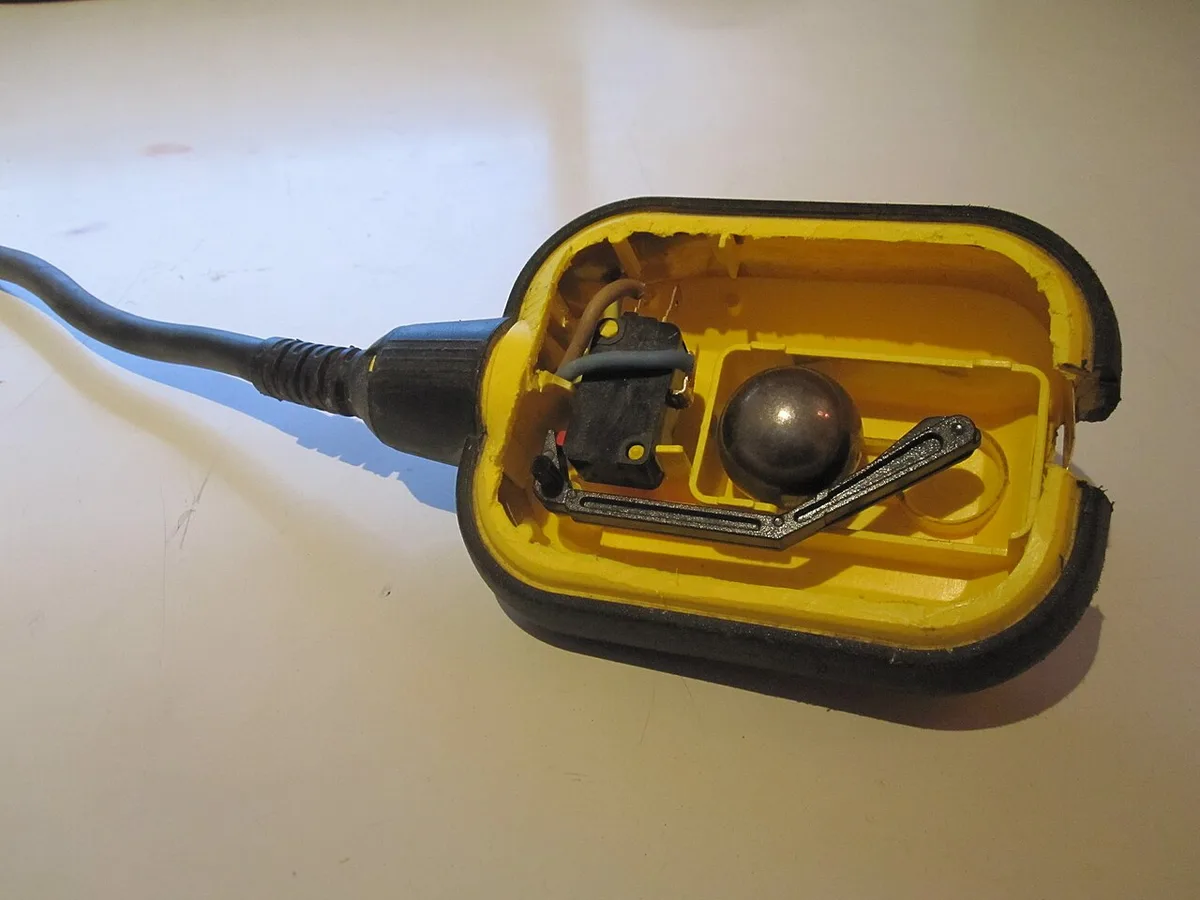
Image source: Wikimedia Commons / S.J. de Waard (CC BY)
Your next step depends entirely on what you observed during the initial diagnostic check. Follow the matching symptom below to apply the correct fix without wasting time on unrelated repairs.
Alarm Sounds But Water Level Is Normal
Clean sensor contacts with electrical contact cleaner to remove corrosion or oxidation. Debris on mechanical switches often mimics high-water conditions and triggers nuisance alerts repeatedly.
Adjust the activation height if your model allows manual calibration per the installation guide. Some electronic sensors drift over time and need recalibration to match current pit geometry.
Replace the sensor assembly if cleaning and adjustment fail to stop false triggering. Wiring damage from moisture or rodents can cause intermittent shorts that mimic flood conditions unpredictably.
Alarm Sounds And Water Is Rising Rapidly
Confirm AC power at the outlet and verify GFCI status has not tripped. Loss of primary power forces reliance on backup batteries that may lack capacity for sustained pumping.
Check the diagnostic codes on smart controllers for specific fault indicators. Many modern units display error messages that distinguish between pump failure, switch faults, and battery issues.
Clear discharge line obstructions immediately using a plumber’s snake or hot water for ice. Backflow through a failed check valve also causes rapid rise even when the pump operates correctly.
Alarm Is Silent During Known High Water Event
Test the alarm circuit manually by lifting the float switch to simulate flood conditions. Silence during this test confirms control board relay failure or complete loss of power to the unit.
Verify battery connections are clean, tight, and free of acid leakage at terminals. Corroded connections prevent charging and leave the system blind during outages when you need it most.
Replace the entire controller if manual testing shows no response despite good power. Internal electronics degrade over time and fault codes may not appear until total failure occurs.
| Symptom | Likely Cause | First Action |
|---|---|---|
| Alarm on, low water | Dirty sensor or stuck switch | Clean contacts and inspect float |
| Alarm on, rising water | Power loss or blocked discharge | Check GFCI and clear pipe |
| No alarm, high water | Dead battery or board failure | Test voltage and manual switch |
| Intermittent beeping | Low battery or loose wiring | Tighten terminals and charge |
Critical Safety Warnings and Maintenance to Prevent Future Failures
Always disconnect power at the breaker panel before handling submerged components or wiring. The National Electrical Code requires GFCI protection for all sump pump circuits to prevent electrocution hazards in wet environments.
Never test alarms during active thunderstorms due to surge risk through ground paths. Wait for stable weather conditions to avoid damaging sensitive electronics or risking personal injury from lightning strikes.
Dispose of old lead-acid batteries according to EPA universal waste rules at approved facilities. Improper disposal contaminates soil and groundwater while violating federal environmental regulations that carry significant penalties.
Schedule quarterly maintenance checks including battery load tests and sensor cleaning routines. Aggregate reviews report most preventable failures stem from neglected upkeep rather than sudden component defects or manufacturing flaws.
Consider installing a Wi-Fi enabled monitor for remote alerts if you travel frequently. Smart systems provide peace of mind and early warning that standalone audible alarms cannot deliver when you are away.
Sump Pump Alarm FAQs: Batteries, Sensors, and When to Call a Pro
How often should I replace my sump pump backup battery?
Most sealed lead-acid batteries last two to three years under normal standby conditions. Replace proactively at the two-year mark to avoid failure during critical storm events. Lithium options may last longer but cost significantly more upfront.
Can I silence the alarm temporarily while troubleshooting?
Many controllers include a mute button that silences audible alerts for eight hours. Use this only after confirming water levels are safe and you have identified the root cause. Never ignore continuous alarms without investigation.
Why does my alarm trigger after heavy rain stops?
Groundwater continues migrating toward your foundation hours after precipitation ends. This delayed response is normal in clay-heavy soils with slow drainage characteristics. Adjust sensor height if activation occurs consistently below safe thresholds.
When should I call a professional instead of DIY?
Call a licensed electrician if GFCI outlets trip repeatedly or wiring shows burn marks. Hire a plumber if discharge line clearing fails or check valve replacement requires pit excavation. Electrical and structural risks exceed typical homeowner repair scope safely.