
Knowing what to do if a sump pump overflows starts with cutting power to the basement immediately. Standing water and electricity create lethal hazards that must be addressed before any cleanup begins. You need to stop the water source and extract standing liquid fast to limit structural damage.
Quick action prevents mold growth and protects your home’s foundation from costly repairs.
Per EPA guidelines, wet materials must dry within 48 hours to prevent mold colonization. Manufacturer specifications indicate most residential pumps move 2000 to 3000 gallons per hour at peak capacity. Understanding these limits helps you decide when DIY extraction works or when professional help is necessary.
Let’s walk through the exact emergency response sequence.
what to do if a sump pump overflows
Shut off basement electricity at the breaker panel first. Identify the water source causing the overflow event. Remove standing water using a wet vacuum or utility pump.
Test the float switch and discharge line for blockages. Call a professional if mechanical failure persists after basic troubleshooting.
Stop the Water: Immediate Safety and Emergency Extraction Steps
Safety always comes before water removal in any flood scenario. You must eliminate electrical hazards before stepping into standing water. Turn off the main breaker supplying the basement area completely.
Verify power is dead using a non-contact voltage tester on outlets and switches.
Is the water safe to touch?
Assume all floodwater is contaminated until proven otherwise. Groundwater often contains bacteria, chemicals, or sewage backup. Wear rubber boots, gloves, and eye protection during extraction.
Wash exposed skin thoroughly after contact with any standing water.
If gas appliances sit in the flooded zone, shut off the gas supply valve. Water can extinguish pilot lights or damage safety controls. Ventilate the space by opening windows if outdoor conditions allow.
Never use gasoline-powered pumps indoors due to carbon monoxide risks.
Extracting water efficiently
Use a wet/dry vacuum rated for water extraction, not just dry debris. Shop vacs typically handle 5 to 10 gallons before needing emptying. For deeper flooding, a dedicated utility pump moves water much faster.
Position the discharge hose away from the foundation to prevent recirculation.
Work systematically from the deepest point toward the drain or exit. Remove saturated rugs, cardboard boxes, and furniture immediately. These items wick moisture upward into walls and subflooring.
Aggregate reviews report that delayed material removal doubles drying time significantly.
| Tool | Best For | Limitations |
|---|---|---|
| Wet/Dry Vac | Shallow water under 2 inches | Small tank requires frequent emptying |
| Utility Pump | Deep flooding over 6 inches | Requires garden hose connection |
| Mop and Bucket | Final residual moisture | Extremely slow for active flooding |
Document damage with photos before removing anything valuable. Insurance claims require visual proof of loss extent as of 2026 standards. Keep receipts for equipment rentals and replacement materials.
This documentation supports reimbursement and validates your mitigation efforts.
Diagnose the Failure: A Triage Workflow for Power, Switches, and Lines
Once immediate danger passes, identify why the system failed. Most overflows stem from three specific failure points. Electrical issues account for roughly 30% of sudden pump failures.
Mechanical jams and frozen discharge lines cause most remaining emergencies.
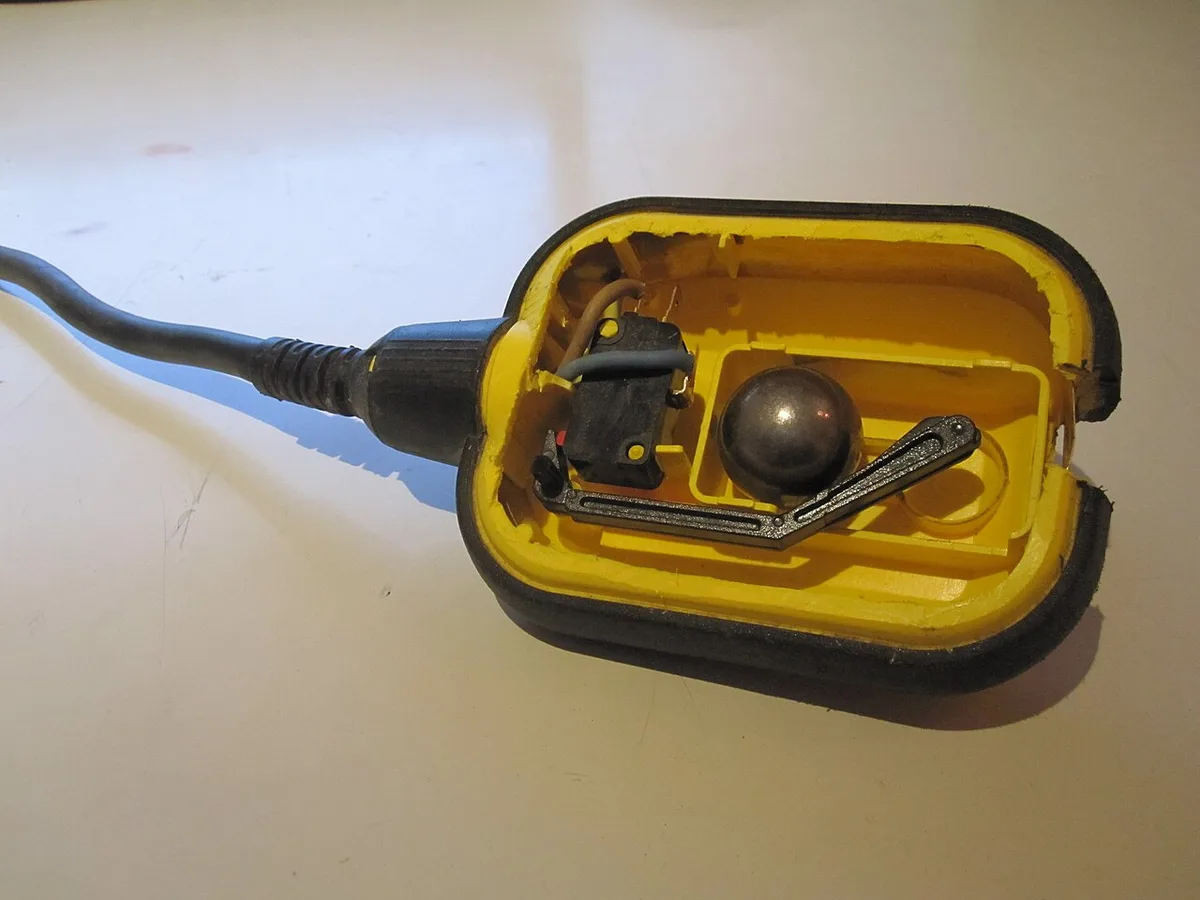
Image source: Wikimedia Commons / Martin Meise (CC BY)
Does the pump have power?
Check the GFCI outlet first since they trip easily in damp environments. Press the reset button firmly until it clicks audibly. Test the circuit breaker even if it appears untripped visually.
Breakers sometimes fail internally without showing external movement.
If power exists but the motor hums without running, the capacitor may be bad. Capacitors store energy to help motors start under load. A swollen or leaking capacitor case confirms failure definitively.
Replacing this component costs far less than a new unit.
Is the float switch stuck or obstructed?
The float switch activates the pump based on water level. Debris like gravel or roots commonly jam this mechanism. Manually lift the float arm to test free movement.
Clean the pivot point with vinegar to dissolve mineral deposits.
Tethered floats need adequate clearance around the pit walls. Vertical switches require unobstructed travel up the guide rod. Our research shows improper switch installation causes recurring nuisance trips.
Adjust positioning so activation occurs at the correct water depth.
Is the discharge line blocked or frozen?
A clogged check valve prevents water from exiting properly. Listen for gurgling sounds indicating partial obstruction. Inspect the exterior discharge point for ice dams in winter.
Frozen pipes are the leading cause of cold-weather overflows.
Install a heated cable along exposed exterior piping sections. Ensure the pipe slopes downward continuously away from the house. Air locks occur when high points trap air bubbles inside.
Drilling a small weep hole below the check valve relieves pressure.
For persistent drainage issues similar to appliance flow sensor problems, systematic diagnosis beats guesswork. Just as restricted airflow triggers dryer errors, blocked discharge lines overwhelm sump capacity. Understanding these parallel hydraulic principles improves troubleshooting accuracy across home systems.
When to Call a Pro vs. DIY Fixes and Backup System Options
Not every overflow requires professional intervention, but some absolutely do. Simple switch cleaning or breaker resets fit DIY capabilities well. Complex electrical faults or repeated failures demand expert assessment.
Knowing your limits prevents injury and avoids worsening the problem.
When professional help is mandatory
Call an electrician if breakers trip repeatedly after reset attempts. This indicates wiring faults or motor short circuits beyond simple fixes. Hire a plumber if the discharge line requires excavation or rerouting.
Frozen buried pipes need specialized thawing equipment unavailable to homeowners.
Water restoration professionals become necessary when contamination is suspected. Sewage backups require antimicrobial treatment and certified disposal protocols. Structural engineers should evaluate foundation cracks wider than 1/4 inch.
These signs suggest hydrostatic pressure exceeding design parameters.
Evaluating backup system needs
Battery backups provide 6 to 12 hours of runtime during outages. They activate automatically when primary power fails unexpectedly. Water-powered backups run indefinitely using municipal supply pressure.
These units work best where city water remains reliable during storms.
| Backup Type | Runtime | Maintenance | Best Climate |
|---|---|---|---|
| Battery | 6-12 hours | Annual battery replacement | Areas with frequent outages |
| Water-Powered | Unlimited | Monthly cycle testing | Municipal water zones only |
| Generator | Fuel-dependent | Regular engine maintenance | Rural locations with long outages |
Installing a secondary pump provides redundancy against mechanical failure. Dual-pump systems share workload during extreme weather events. High-water alarms alert you before overflow reaches critical levels.
Wi-Fi enabled models send notifications directly to your phone.
Routine maintenance prevents most emergency calls entirely. Quarterly pit cleaning removes sediment that damages impellers. Annual switch testing confirms reliable activation thresholds.
Think of this like addressing dryer error codes early before complete breakdown occurs. Preventive care extends equipment lifespan dramatically while reducing surprise failures.
Common Overflow Mistakes and Sump Pump FAQs
Avoiding common errors matters as much as taking correct actions. Well-intentioned mistakes often compound damage during stressful emergencies. Learning from others' experiences saves time and money.
Here are pitfalls our research identifies most frequently.
Never plug a sump pump into an extension cord permanently. Undersized cords cause voltage drop that burns out motors. Avoid discharging water onto neighboring properties or public sidewalks.
Local ordinances typically prohibit creating ice hazards or erosion issues. Don't ignore minor seepage hoping it resolves itself. Small leaks signal larger drainage system failures developing underground.
How long does basement drying take?
Professional-grade dehumidifiers typically achieve safe humidity in 3 to 5 days. Residential units may require 7 to 10 days for thorough drying. Monitor progress with a moisture meter rather than guessing.
Wood framing should read below 15% moisture content before rebuilding.
Can I run my sump pump continuously?
Continuous operation signals either massive inflow or switch malfunction. Pumps aren't designed for indefinite duty cycles without rest periods. Thermal overload protection will eventually shut down overheated motors.
Investigate the root cause instead of forcing extended runtime.
Why does my pump run but not move water?
This usually indicates a clogged impeller or broken shaft. Debris wrapped around the impeller prevents rotation despite motor noise. Air locks in the discharge line also stop flow completely.
Check the weep hole and verify check valve orientation.
Should I replace or repair my existing pump?
Repair makes sense for units under five years old with isolated faults. Replacement becomes economical when repair costs exceed half the unit price. Newer models offer better efficiency and integrated alarm features.
Consider upgrading during any significant service intervention.
Understanding warning signs parallels recognizing diagnostic indicators in other appliances. Early detection of performance degradation allows planned responses rather than panicked reactions. Regular inspection routines build familiarity with normal operating characteristics.
This knowledge proves invaluable when abnormalities first appear.