
Sump pumps don't just fail, they drag down your whole electrical system when they start drawing too much current or developing internal faults. If yours keeps tripping the breaker, you're not just dealing with a finicky appliance. You could be masking a real safety hazard in your basement.
The motor inside a typical 1/3-horsepower sump pump can pull 8 to 12 amps during normal operation. But when windings begin to short, or the impeller seizes, that draw spikes hard enough to pop even a 20-amp breaker. Let's walk through what's actually happening and how to tell which problem is yours.
The Most Common Causes (And Which One You're Dealing With)
Most breaker trips come down to three root causes. First, a ground fault from water getting into the motor or electrical connections. Second, an overload from a failing motor or seized bearings.
Third, a short circuit from damaged wiring or a defective component.
Water ingress and ground faults
This is the big one. A small crack in the motor housing or a loose seal lets basement moisture in. Once inside, water creates a conductive path between the windings and the grounded motor casing.
Your GFCI outlet trips because it detects that leakage current. GFCI outlet, 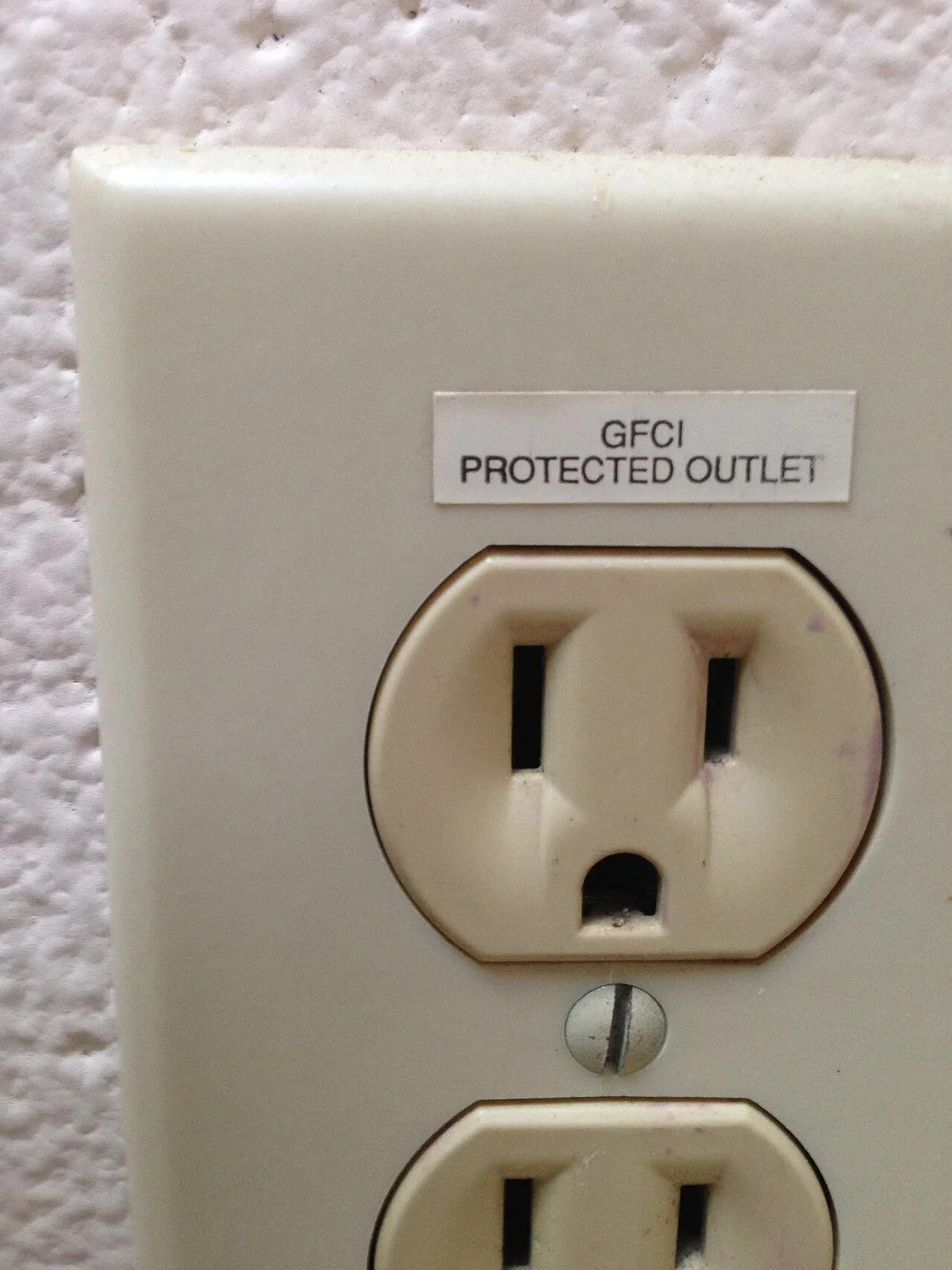 Image source: Wikimedia Commons / dankeck
If your pump is plugged into a GFCI-protected outlet and trips immediately when you reset the breaker, that's your smoking gun. Regular breakers won't catch ground faults, which is why older homes without GFCI protection are at higher risk for fire hazards. Per the National Electrical Code (NEC) Article 210.8, all basement outlets serving sump pumps must be GFCI-protected as of 2026.
Motor overload and mechanical seizure
When the impeller gets stuck on debris or the motor bearings wear out, the pump draws excessive current trying to turn. A 1/3 HP motor might normally pull 9 amps, but if it's struggling against a blockage, that number jumps to 15 or more. The breaker trips because it's doing its job, protecting the circuit from overheating wires.
Internal short circuits
Worn insulation on motor windings, a frayed power cord, or a defective start capacitor can create direct shorts between positive and negative wires. These usually produce immediate, violent trips with visible sparks when you reset the breaker. Unlike ground faults, which might let the pump run briefly before tripping, shorts often won't let the motor start at all.
Why Your Sump Pump Keeps Tripping the Breaker
Your sump pump trips the breaker due to a ground fault, motor overload, internal short circuit, or a faulty GFCI outlet. Water intrusion is the most common cause, followed by mechanical seizure from debris blocking the impeller.
A ground fault occurs when water or moisture creates an unintended path between the motor's electrical components and its grounded metal housing. This typically happens when rubber seals degrade or the motor housing develops cracks. A failing motor draws excess current when its bearings wear out or the impeller becomes jammed with debris, triggering thermal overload protection.
Internal short circuits happen when motor winding insulation breaks down, creating direct contact between energized conductors. A defective GFCI outlet itself can also trip repeatedly even when the pump operates normally. Other causes include loose wire connections, undersized electrical circuits, or a pump that draws more current than the breaker can handle during startup.
How to Diagnose It Yourself in 5 Steps
Before touching anything electrical, pull the breaker and unplug the pump. Water and electricity don't mix, and a soaked motor can deliver a nasty shock even when switched off. Here's how to narrow down the problem safely.
Step 1: Test the outlet independently
Plug a different appliance like a radio or lamp into the same GFCI outlet. Press the GFCI's test button and reset it. If the outlet trips without your pump connected, the outlet itself needs replacing.
If it holds, move on.
Step 2: Check for visible water or debris
Remove the pump from the pit if you can do so safely. Look for water inside the motor housing, corrosion on electrical connections, or debris wrapped around the impeller. A seized impeller that won't spin by hand points directly to a mechanical problem.
 Image source: Wikimedia Commons / Palagiri
Step 3: Bypass the GFCI temporarily
Plug the pump directly into a standard grounded outlet (not GFCI protected) for one quick test. If the breaker stays on and the pump runs normally, your GFCI outlet is the problem. If it still trips, the pump has an internal fault.
Step 4: Measure amp draw
Use a clamp-on ammeter around the pump's power cord while it's running. A healthy 1/3 HP pump should draw 6 to 12 amps. Anything consistently above 15 amps indicates the motor is working too hard, usually from bearing wear or impeller binding.
Step 5: Inspect the float switch mechanism
A stuck or failing float switch can cause the pump to cycle rapidly. Remove it from its bracket and shake it gently. You should hear a small metal ball bearing rattling inside.
No sound means the switch needs replacement.
When to Call a Pro vs. Fix It Yourself
Simple outlet or GFCI outlet failures are usually safe DIY fixes. Replacing a standard GFCI takes about 15 minutes and costs $15 to $25 for the part. Testing with a multimeter is straightforward if you follow basic electrical safety rules.
But internal pump repairs get complicated fast. Working inside the motor housing requires specialized tools and risks voiding warranties. More importantly, incorrect rewiring can create fire hazards or leave you with a pump that fails during the next storm.
If you're uncomfortable around electrical panels or high-amperage circuits, that's a clear sign to call a licensed electrician.
Motor bearing replacement, seal repairs, and capacitor testing are best left to professionals. A qualified plumber or pump technician can bench-test your unit and often rebuild it for a fraction of replacement cost. As of 2026, most manufacturers recommend factory-service-only repairs for motors over 1/2 HP to maintain warranty coverage.
For persistent issues affecting multiple circuits or recurring trips after pump replacement, you likely have deeper problems. Old wiring, undersized circuits, or panel deficiencies require a licensed electrician to resolve safely. Don't gamble with repeated failures, they indicate underlying issues that won't fix themselves.
Frequently Asked Questions
Why does my sump pump only trip the GFCI outlet and not the main breaker?
GFCI outlets monitor the difference between incoming and outgoing current. When water creates a leakage path to ground, the outlet detects this imbalance and trips before the main breaker ever sees enough current to react.
Can a bad check valve cause breaker trips?
Indirectly, yes. A failed check valve allows water to flow back into the pit continuously. The pump cycles on and off rapidly trying to keep up, which can overheat the motor and trigger thermal overload protection in the breaker.
What's the difference between GFCI and AFCI protection for sump pumps?
GFCI protects against ground faults by detecting current leakage. AFCI protects against arc faults by detecting dangerous electrical arcs in damaged wiring. Most jurisdictions require GFCI protection for basement outlets, but some now mandate combination GFCI/AFCI protection for added safety.
How often should I test my sump pump's GFCI outlet?
Press the test and reset buttons monthly. If it doesn't trip when you press test, or won't reset afterward, replace the outlet immediately. This simple routine prevents silent failures that leave your basement vulnerable to flooding.