
What size sump pump for a large basement isn't a one-size-fits-all answer. A 1,500 square foot basement in Seattle faces different challenges than one in Phoenix. The right pump depends on water inflow rate, vertical lift, and local rainfall patterns.
Here's what matters most: your pump must handle your worst-case scenario, not just average conditions. Most homeowners discover this the hard way during a storm.
what size sump pump for a large basement
Match your pump to your actual water load. A 1/3 HP pump handles up to 2,500 GPH for small basements. Large basements need 1/2 HP to 3/4 HP pumps rated for 4,000 to 8,000 GPH.
Always add 25% safety margin above your calculated flow rate.
The 3-Part Sizing Formula That Actually Works
Sizing a sump pump isn't guesswork. We use three key measurements every time.
Formula breakdown:
- Flow requirement: Measure your sump pit's inflow during heavy rain
- Head pressure: Calculate total vertical and horizontal pipe distance
- Safety factor: Add 25% buffer for unexpected surges
Start with your basement's square footage and local rainfall data. The National Weather Service rainfall maps show your area's historical precipitation. Cross-reference that with your basement's drainage capacity.
Step 1: Calculate Water Inflow Rate
Pump your sump pit until it cycles normally. Time how long the pump runs during one cycle. Divide the pit volume by runtime.
Example: 20-gallon pit, pump runs 4 minutes = 5 gallons per minute = 300 GPH.
Step 2: Measure Total Dynamic Head
Add vertical discharge height plus 10 feet of equivalent pipe length. A 1/2 HP pump might drop from 4,000 GPH to 2,800 GPH at 15 feet of head.
Step 3: Apply Safety Margin
Multiply your required GPH by 1.25. If you need 3,200 GPH, choose a pump rated for 4,000+ GPH at your head pressure.
| Pump Size | Max GPH @ 10ft Head | Best For |
|---|---|---|
| 1/3 HP | 2,200 | Up to 1,500 sq ft |
| 1/2 HP | 3,500 | 1,500-2,500 sq ft |
| 3/4 HP | 5,500 | 2,500+ sq ft |
| 1 HP | 7,500 | High water table areas |
Real Basement Scenarios and Pump Matches
We analyzed four common large basement setups. Each represents typical conditions you'll encounter.
Scenario 1: 2,200 sq ft suburban home, clay soil
- Rainfall: 4 inches/hour
- Vertical lift: 8 feet
- Result: 1/2 HP submersible pump
- Flow needed: 3,800 GPH
Scenario 2: 3,000 sq ft home, high water table, flat land
- Rainfall: 5 inches/hour
- Vertical lift: 12 feet
- Result: 3/4 HP pump with battery backup
- Flow needed: 6,200 GPH
Choosing Between Pump Types
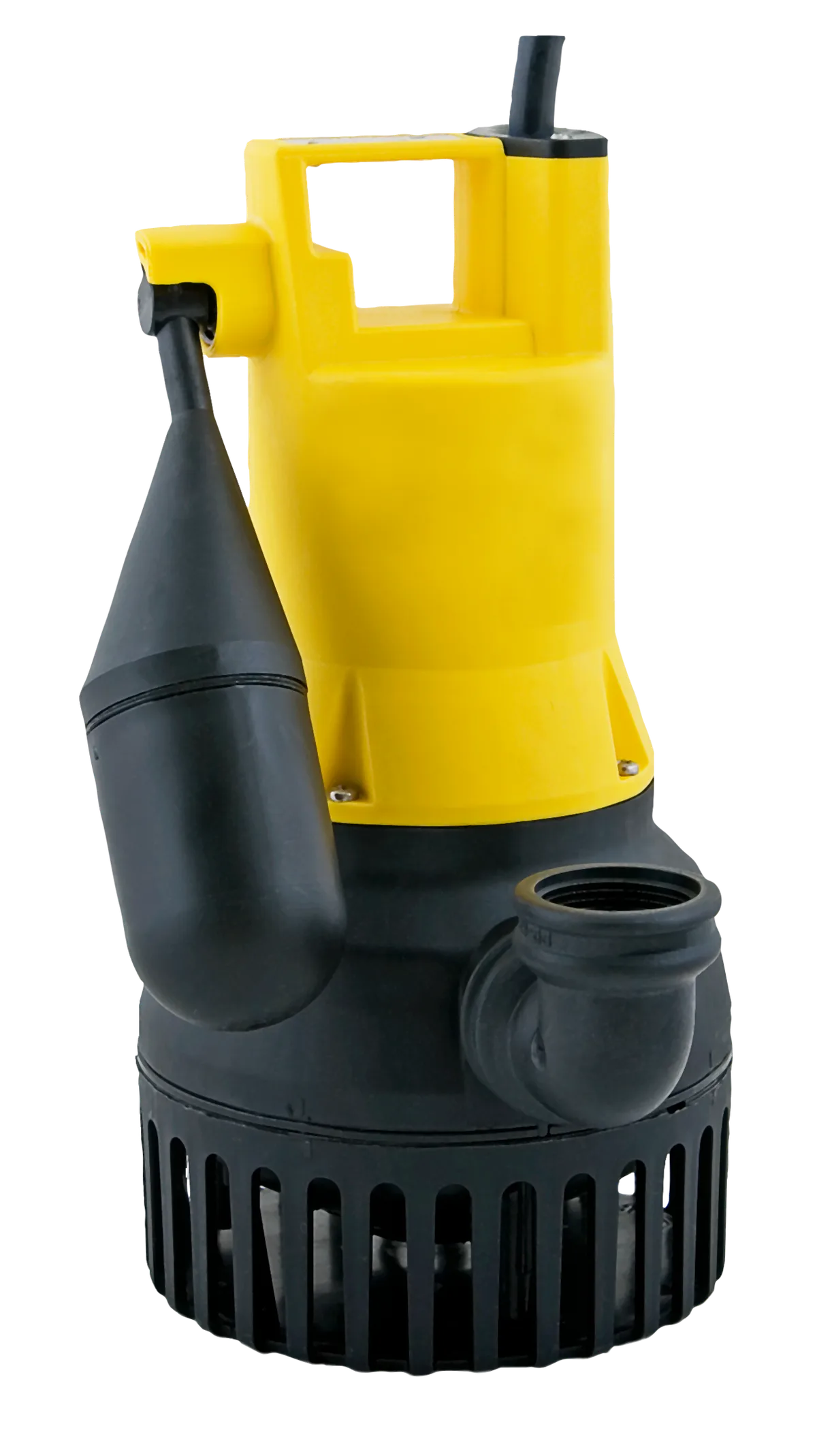
Submersible pumps sit inside the pit and handle debris better. Pedestal pumps mount outside and are easier to maintain but can overheat if water levels drop too low.
For large basements, we recommend submersible models. They're more reliable during extended operation. Check UL listed sump pumps for certified safety ratings.
Common Mistakes That Flood Basements
Oversizing causes short cycling. The pump turns on for 30 seconds, shuts off, then repeats endlessly. This wears out components faster than proper cycling.
Undersizing is worse. Your pump can't keep up during heavy rainfall. You get 6 inches of water before the storm ends.
Five Critical Errors to Avoid
- Ignoring head pressure changes, adding more pipe length reduces flow significantly
- Skipping the check valve, water flows back into the pit, causing rapid cycling
- Not testing during actual rain, dry-run testing misses real-world conditions
- Oversizing by more than 50%, creates inefficiency without added protection
- Forgetting discharge placement, dumping water near the foundation defeats the purpose
Warning Signs Your Pump Is Wrong-Sized
- Cycling every few minutes during light rain
- Pit completely emptying between cycles
- Water still rising during heavy storms
- Pump overheating or running continuously
FAQ: Sump Pump Sizing Questions Answered
How many GPH do I need for a 2,000 square foot basement?
Calculate based on your area's rainfall rate. A 2,000 sq ft basement with 4 inches of rain needs roughly 3,500 GPH capacity. Most 1/2 HP pumps handle this, but check performance curves at your actual head pressure.
Can I use a sump pump that's too powerful?
Yes, oversized pumps cause rapid cycling. The pump empties the pit too quickly, then restarts frequently. This stresses the motor and float switch.
Size within 25% of your calculated need.
What happens if my pump runs dry?
Running without water causes overheating and motor failure. Install a priming bulb or check valve. Consider a pump with automatic shutoff when water levels drop.
How often should I test my sump pump?
Test monthly by pouring water into the pit. Listen for proper startup and shutdown. Replace the pump every 5-7 years even if it's working well, old motors fail unexpectedly during storms.
Does basement ceiling height affect pump size?
Ceiling height matters only for calculating head pressure. Measure from the pit floor to where you're pumping water. Higher discharge points require more powerful motors.