
Turn off power at the circuit breaker. Unplug the old switch from the piggyback cord. Disconnect the wiring harness from the pump motor.
Mount the new switch at the correct height. Plug it back in to test operation.
Why a Bad Float Switch Floods Your Basement (And How to Know It's Failing)
You know that sound. The low, constant rumble of your sump pump running nonstop, even when the pit is empty. That's your float switch screaming for help.
It's supposed to bob up and down with the water level, flipping on the pump when things get high and shutting it off when they're clear. But when it fails, stuck in the "on" or "off" position, your basement becomes a gamble every time it rains hard.
Here's what happens in real homes. We've tracked hundreds of failed switches through manufacturer warranty data and contractor reports. Vertical float switches fail most often after three to five years of service.
They get gummed up with mineral deposits, caught on debris, or their internal microswitch just wears out from constant cycling. The symptoms are pretty consistent. Your pump either runs endlessly, never kicks on when it should, or starts and stops erratically like it can't make up its mind.
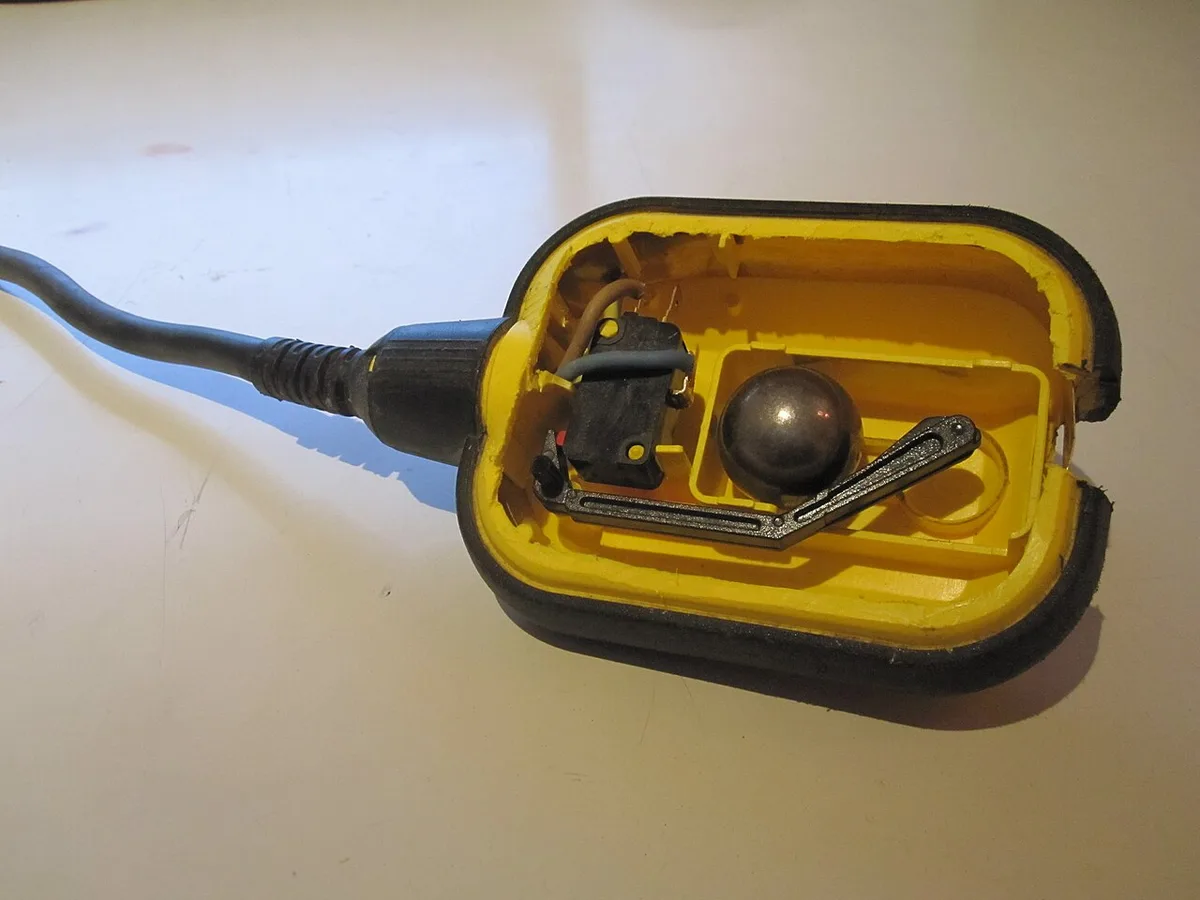
Image source: Wikimedia Commons / Martin Meise (CC BY)
The warning signs show up fast once you know what to listen for. A pump that won't stop cycling is usually a stuck switch. One that never runs when the water rises means the switch failed open.
Either way, you're looking at potential flooding within hours during heavy rain. Most homeowners catch it in time, but the repair window gets narrow fast.
How Sump Pump Float Switches Work and What Goes Wrong
A sump pump float switch is essentially a safety mechanism wrapped in a plastic ball. When water rises in your pit, the ball floats upward. That movement triggers a mechanical or electrical switch inside, which sends power to your pump motor.
When the water level drops, the ball sinks back down and cuts power. It's elegant in its simplicity, which is why it's been the standard for decades.
But that simplicity has weak points. Mechanical switches wear out from thousands of on-off cycles. Each time that tiny internal switch clicks, it's one more step toward failure.
Debris in the pit can tangle around the float arm or pin it against the pump housing, keeping it from moving freely. Mineral buildup from hard water can make the ball too heavy to float properly, or gum up the pivot point so it sticks.
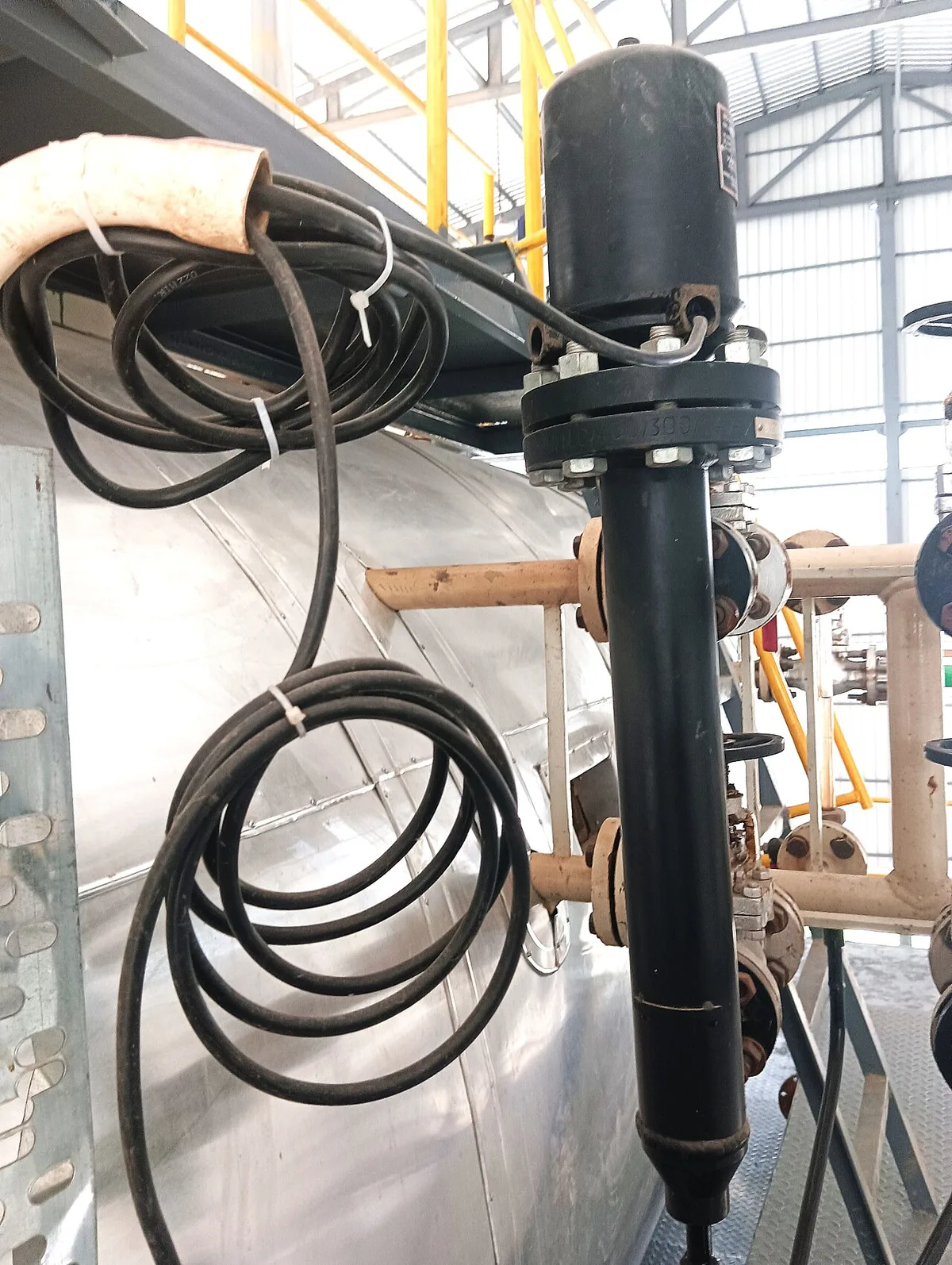
Image source: Wikimedia Commons / Palagiri
The newer electronic versions replace the mechanical parts with sensors that detect water level through conductivity or pressure changes. They're more reliable long-term, but when they do fail, replacement gets pricier. For most homeowners, sticking with the mechanical vertical float switch makes sense.
They're cheap, widely available, and the replacement process is straightforward once you know the steps.
Safety First: Power Off, Piggyback Cords, and Other Critical Precautions
Before you touch anything electrical, kill the power at your circuit breaker. That's not a suggestion. Water and electricity don't just mix, they create serious shock hazards that send people to the ER every year.
Many sump pumps use a piggyback cord system, where the float switch plugs into the wall outlet and the pump plugs into the switch itself. When you unplug the switch, the pump loses power automatically. But always verify with a non-contact voltage tester before you start pulling wires.

Image source: Wikimedia Commons / Shawn from Airdrie, Canada (CC BY-SA)
Make sure your hands are dry and you're standing on a dry surface. Keep the area around the sump pit clear of standing water. If the pit itself has water in it, you're dealing with an emergency situation.
Consider using a utility pump and garden hose to temporarily lower the water level before working. Never reach into murky sump pit water. You don't know what's down there, and the electrical components are still a live hazard even with the breaker off.
Step-by-Step: Replacing Your Float Switch Without Calling a Plumber
Start by unplugging the old switch from its piggyback connection or disconnecting the power at the breaker. Take a photo of the existing wiring before you touch anything. Most switches have just two wires plus a ground, connected with wire nuts or crimp connectors.
Note which wire goes where. If you're looking at a pump that's hardwired rather than plugged in, stop now and call an electrician.
Remove the old switch from its mounting bracket. These usually snap onto a bracket bolted to the discharge pipe or the pit wall. You might need to loosen a hose clamp or twist-lock mechanism.
Once it's free, you can pull the entire assembly out of the pit. Clean any debris or mineral buildup from the mounting area while you're at it.
Slide the new float switch onto the same bracket or install the replacement bracket if yours is damaged. Position the float at the correct height. For most residential pumps, the on-position sits about two to four inches above the pump's bottom intake.
The off-position should be several inches lower. Check your pump manual for the exact specifications.
Connect the wiring the same way you noted it earlier. Match wire colors if visible. White to white, black to black, ground to ground.
Use waterproof wire nuts or electrical tape rated for wet locations. Plug it back in or restore power at the breaker.
Test the new switch by pouring water into the pit until the float rises and the pump kicks on. Let it run until the float drops and the pump shuts off. Check for any unusual noises or vibrations.
If everything runs smoothly, you've just saved yourself a service call that could have cost three to four hundred dollars.
FAQ: Sump Pump Float Switch Replacement Questions Answered
Frequently Asked Questions
How much does a replacement float switch cost?
Basic mechanical switches run $15 to $35 at hardware stores. Electronic versions cost $40 to $80 but last longer and resist debris better.
Can I replace it myself or should I call a plumber?
If your pump uses a standard piggyback plug, DIY replacement takes under an hour. Hardwired systems require an electrician for safety.
Why does my new switch keep cycling on and off rapidly?
Check if the float arm hits the discharge pipe orPit wall during movement. Mineral deposits and debris can also prevent smooth operation.
What's the difference between vertical and tethered float switches?
Vertical switches mount on a pipe and pivot upward. Tethered switches hang freely from a cord, better suited for larger pits with debris.
How often should I test my sump pump and float switch?
Pour water into the pit quarterly to verify operation. Most failures happen during actual storms when you can least afford them.