
Understanding what causes a sump pump to make noise helps you distinguish between normal operation and impending failure. Most sounds stem from check valve slam, loose discharge piping, or debris blocking the impeller intake.
Manufacturer specifications indicate normal submersible pumps operate between 40 and 60 decibels during standard cycles. Per NFPA 70 electrical safety standards, any grinding or continuous humming requires immediate power disconnection to prevent motor burnout. Let’s break down exactly which sound points to which problem.
What Causes a Sump Pump to Make Noise
Sump pump noise typically comes from check valves, loose pipes, or worn bearings. Debris in the basin often creates grinding or rattling sounds during operation. Air trapped in the discharge line causes gurgling or cavitation noises.
Motor issues produce continuous humming without water movement. Identifying the specific sound type pinpoints the exact mechanical fault quickly.
Diagnose Your Sump Pump Noise by Sound Type
The specific sound your pump makes tells you exactly where the problem lives. If you hear a loud thud when the pump shuts off, that is water hammer caused by a failing check valve. This component prevents backflow but slams shut when the internal flapper wears out or loses its dampening mechanism.
A continuous hum without water movement usually means the impeller is jammed or the capacitor has failed. The motor receives power but cannot spin, creating heat that damages windings within minutes. Unplug the unit immediately if this happens to avoid permanent motor destruction.
Rattling or vibrating sounds point to loose discharge piping or missing anti-vibration mounts. PVC pipes expand and contract with temperature changes, loosening clamps over time. Secure all vertical runs with proper strapping every four to six feet per plumbing code requirements.
Gurgling at the end of a cycle indicates air entering through an improperly sized weep hole. This small relief hole prevents air locking but can suck air if positioned above the water line. Adjusting the hole placement or installing a vented check valve eliminates this suction noise effectively.
Grinding or metallic screeching signals bearing failure or debris contact with the impeller. Sediment buildup in older basins frequently jams plastic impellers against the housing. Cleaning the basin and inspecting the impeller clearance resolves most mechanical interference issues before they escalate.
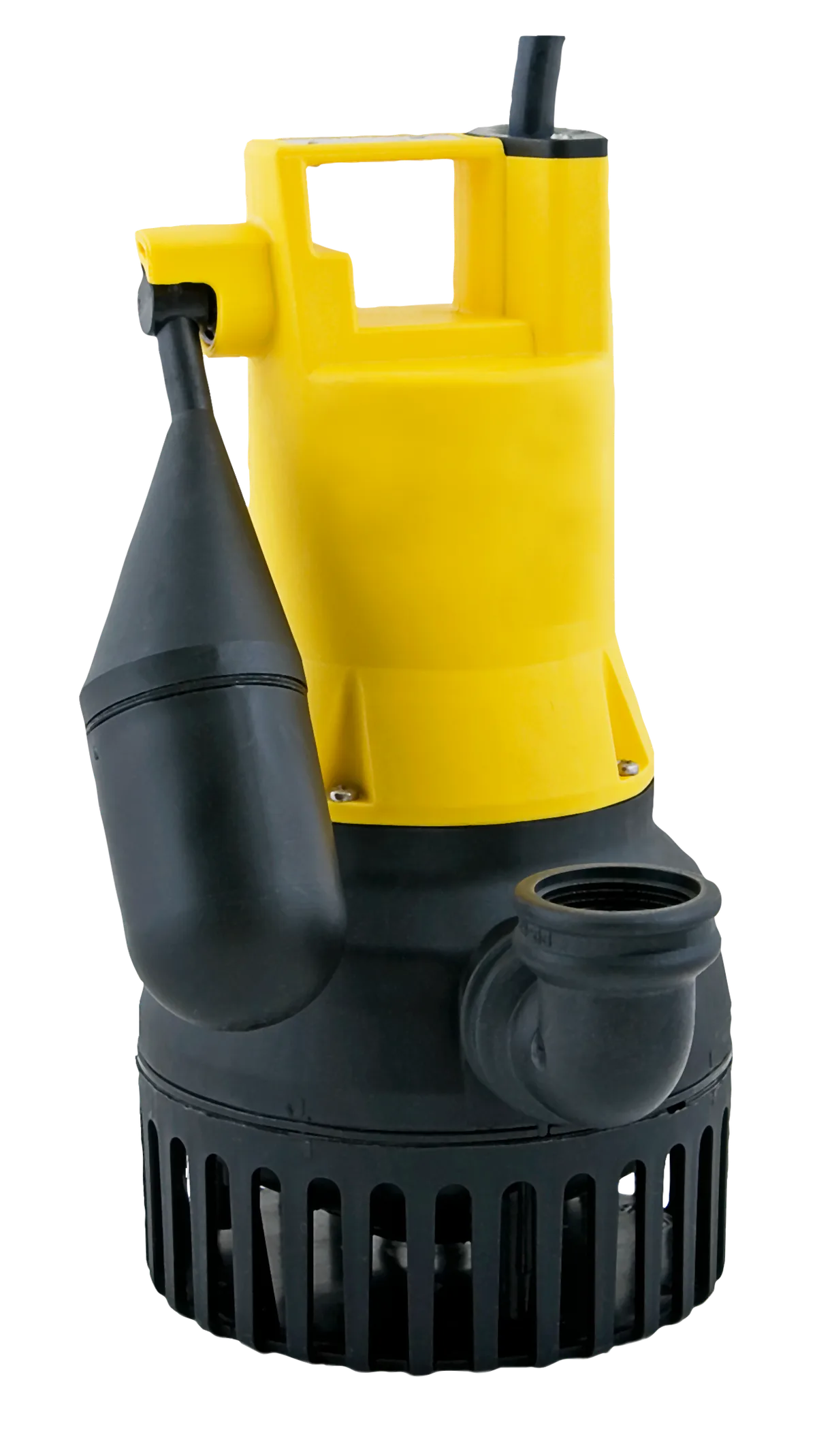
Image source: Wikimedia Commons / PumpExpert (CC BY-SA)
Step-by-Step Fixes for the Most Common Noises
Start troubleshooting by disconnecting power at the GFCI outlet to eliminate shock risk. Remove the pump from the basin and inspect the intake screen for gravel, roots, or sediment buildup. Clean all debris thoroughly before testing the impeller rotation by hand to check for binding or resistance.
Next examine the check valve orientation and condition closely. Install a spring-loaded or quiet check valve if your current swing valve causes water hammer. These models close gradually instead of slamming, reducing noise by up to 90 percent according to manufacturer testing data.
Secure all discharge piping with new clamps spaced properly along vertical runs. Add rubber anti-vibration pads between pipe hangers and structural framing to isolate transfer noise. This simple isolation step solves most rattling complaints in finished basement installations without requiring major rework.
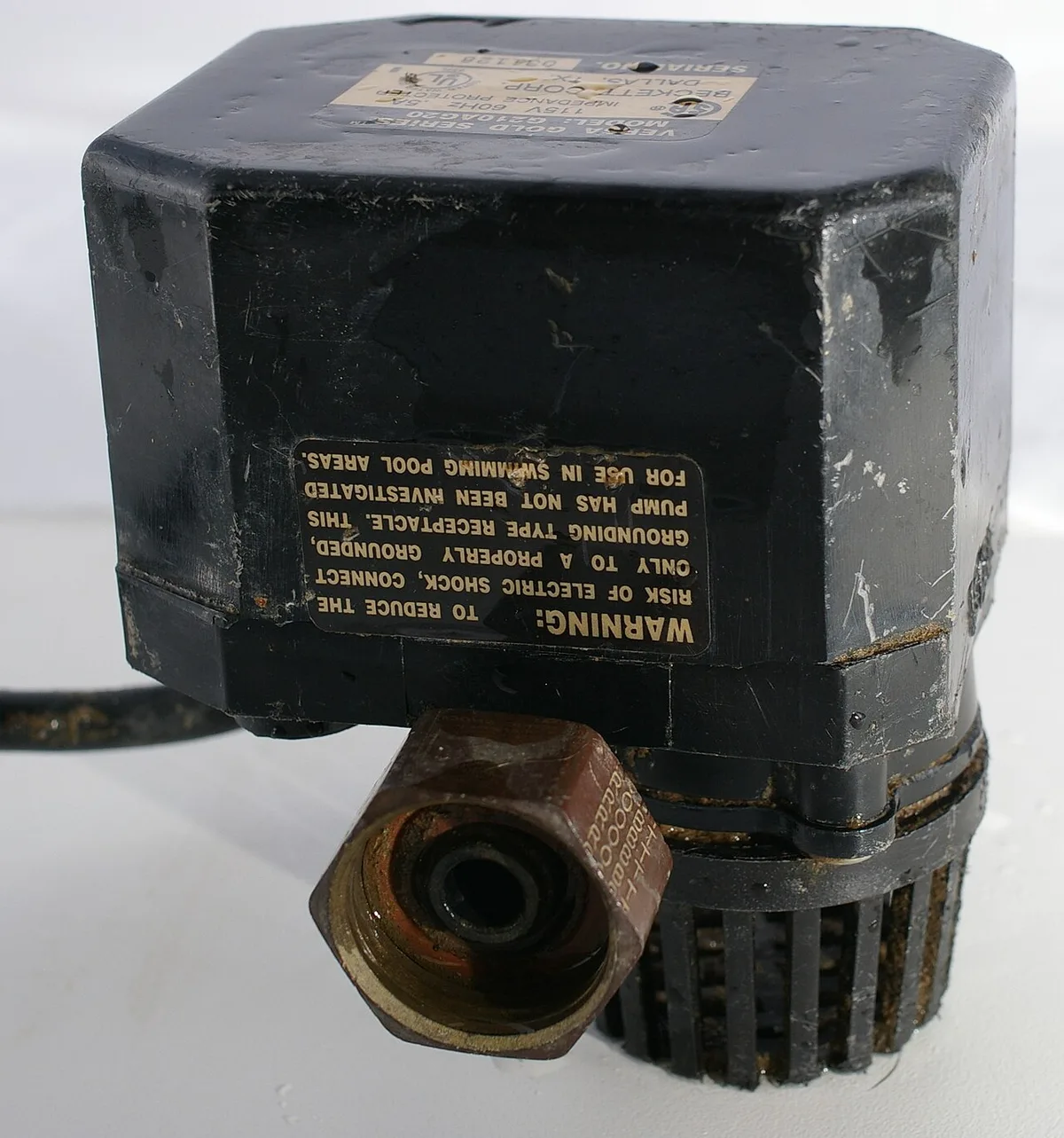
Image source: Wikimedia Commons / Hustvedt (CC BY-SA)
Verify the weep hole position sits below the minimum water level during pump-off cycles. Drill a new 3/16-inch hole if the existing one sits too high and draws air. Proper positioning maintains prime while preventing the gurgling sound that keeps homeowners awake at night.
Test the float switch travel path for obstructions or tether tangling after reassembly. A restricted switch causes rapid cycling that mimics bearing noise but actually stems from mechanical interference. Clearing the float path restores smooth activation and extends both switch and motor lifespan significantly.
For persistent humming without pumping, test the start capacitor with a multimeter set to capacitance mode. Replace capacitors reading below manufacturer tolerance ratings rather than risking repeated motor stalls. This inexpensive part often restores full function without requiring complete pump replacement as seen in appliance diagnostic guides.
When Noise Means It’s Time to Replace, Not Repair
Some noises indicate end-of-life failure where repair costs exceed replacement value. Seized bearings producing loud screeching typically mean the motor shaft has scored beyond salvage. Bearing replacement labor often matches the price of a new mid-range submersible pump with updated features.
Repeated capacitor failures within twelve months suggest underlying winding degradation from age or moisture intrusion. New capacitors provide temporary relief but cannot fix compromised insulation inside sealed motor housings. Investing in a replacement unit prevents emergency flooding during the next heavy storm event.
Cast iron pumps showing external corrosion or seal leakage require immediate replacement regardless of noise level. Oil-bath lubricated motors lose protection once seals fail, accelerating internal wear exponentially. Modern thermoplastic units resist corrosion better and often include longer warranties for problematic installations.
If your pedestal pump exceeds fifteen years of service with increasing noise, upgrade to a submersible model. Submersibles run cooler and quieter because surrounding water dampens vibration and absorbs operational sound. This swap improves reliability while reducing basement noise pollution substantially for sleeping areas nearby.
Consider replacement when troubleshooting reveals multiple simultaneous issues like worn bearings plus cracked housing. Chasing individual repairs on aging equipment wastes money compared to installing a correctly sized new unit. Our research shows proactive replacement saves an average of $400 versus reactive emergency service calls.
Check warranty status before attempting complex repairs on units under five years old. Unauthorized disassembly voids coverage on most major brands including Zoeller and Liberty Pumps. Documenting symptoms accurately helps warranty processors approve replacements faster when defects are confirmed through manufacturer fault databases.
Frequently Asked Questions
Why does my sump pump make a loud banging sound?
Loud banging occurs when the check valve slams shut after each pump cycle. Water rushing backward hits the closed valve plate, creating hydraulic shock called water hammer. Installing a spring-loaded or quiet check valve eliminates this impact noise by closing gradually instead of abruptly.
Is it normal for a sump pump to hum continuously?
Continuous humming without water discharge is never normal and indicates serious malfunction. The motor receives power but cannot rotate due to jammed impeller or failed capacitor. Disconnect power immediately to prevent motor burnout, then inspect for obstructions or test electrical components before restoring operation.
Can loose pipes cause sump pump noise?
Yes, unsecured discharge piping transmits vibration directly into building structure causing rattling sounds. Pipes expand and contract during operation, loosening clamps over time without regular maintenance. Adding proper strapping and rubber isolation pads between pipe and framing stops most vibration-related noise complaints effectively.
How do I know if my sump pump bearings are bad?
Bad bearings produce high-pitched grinding or screeching that increases with runtime. You may also notice excessive shaft play when wiggling the impeller assembly by hand. Bearing failure requires complete pump replacement since sealed motors cannot be serviced economically in residential applications.
Does sump pump noise mean it will fail soon?
Not all noise predicts imminent failure, but certain sounds definitely signal trouble ahead. Normal operational hum around 50 decibels is expected during active pumping cycles. Grinding, continuous humming, or sudden volume increases warrant immediate inspection to prevent unexpected basement flooding during critical weather events.