
Figuring out how to choose a sump pump battery backup starts with matching capacity to your specific flood risk. You need a system that handles your pump’s amperage draw during realistic outage durations. Getting this wrong means waking up to a flooded basement despite having backup power installed.
Manufacturer specifications indicate most residential backups require 75 to 100 amp-hours for adequate storm coverage. The National Electrical Code mandates proper sizing to prevent dangerous overheating during extended discharge cycles. Let’s walk through the exact decision points that determine which system actually protects your home.
how to choose a sump pump battery backup
Choose a backup by calculating your pump’s hourly amp draw first. Match battery amp-hours to your longest expected outage duration. Select AGM chemistry for maintenance-free reliability or LiFePO4 for longer lifespan.
Verify charger compatibility with your chosen battery type before purchasing. Always include a dedicated DC pump for true redundancy.
Quick Sizing Check: Match Battery Capacity to Your Pump and Outage Risk
Your battery must sustain your pump’s actual current draw, not just its horsepower rating. Manufacturer specs often list peak amps rather than continuous running amps. Check the nameplate on your existing pump or use a clamp meter to measure real-world draw.
A typical 1/3 HP pump pulls 3 to 5 amps continuously while running.
Next, estimate your worst-case outage length based on local storm history. Multiply your pump’s continuous amps by those expected hours. That gives you the minimum usable capacity needed.
Remember that deep cycle batteries shouldn’t discharge below 50% depth of discharge regularly. Double your calculated number to get the true amp-hour rating required.
| Pump Size | Avg Continuous Amps | 8-Hour Need | Recommended Ah |
|---|---|---|---|
| 1/3 HP | 3.5A | 28Ah | 75Ah |
| 1/2 HP | 5.0A | 40Ah | 100Ah |
| 3/4 HP | 7.5A | 60Ah | 125Ah |
Undersizing is the most common failure point we see in aggregate reviews. A battery that barely meets minimum specs will degrade rapidly from deep discharges. Oversizing slightly extends both runtime and overall battery lifespan significantly.
This buffer also accounts for increased pump cycling during heavy saturation events.
Choosing the Right Chemistry: AGM vs. LiFePO4 vs. Flooded Lead-Acid
Battery chemistry determines maintenance needs, lifespan, and total cost of ownership. Absorbent Glass Mat (AGM) batteries remain the most popular choice for sump applications. They’re sealed, spill-proof, and handle vibration better than flooded options.
Most AGM units deliver 300 to 800 cycles at 50% depth of discharge.
Lithium Iron Phosphate (LiFePO4) offers superior longevity with 2,000 to 5,000 cycles. They weigh roughly half as much as equivalent AGM batteries and charge faster. The upfront cost runs two to three times higher, but replacement intervals stretch to seven or ten years.
Per IEEE Standard 1188-2005 testing protocols, LiFePO4 maintains stable voltage throughout discharge.
Flooded lead-acid batteries cost less initially but demand monthly water checks and ventilation. Hydrogen off-gassing requires installation away from ignition sources per NEC Article 680. These units typically last only 200 to 400 cycles before capacity drops noticeably.
We’ve found most homeowners prefer AGM or LiFePO4 despite higher sticker prices because they eliminate maintenance headaches entirely.
Critical Installation and Maintenance Steps That Prevent Failure
Proper installation matters as much as correct sizing for reliable operation. Always install a check valve on the discharge line to prevent backflow. Without it, water drains back into the pit and triggers unnecessary pump cycling.
This parasitic drain kills batteries faster than actual storm events.
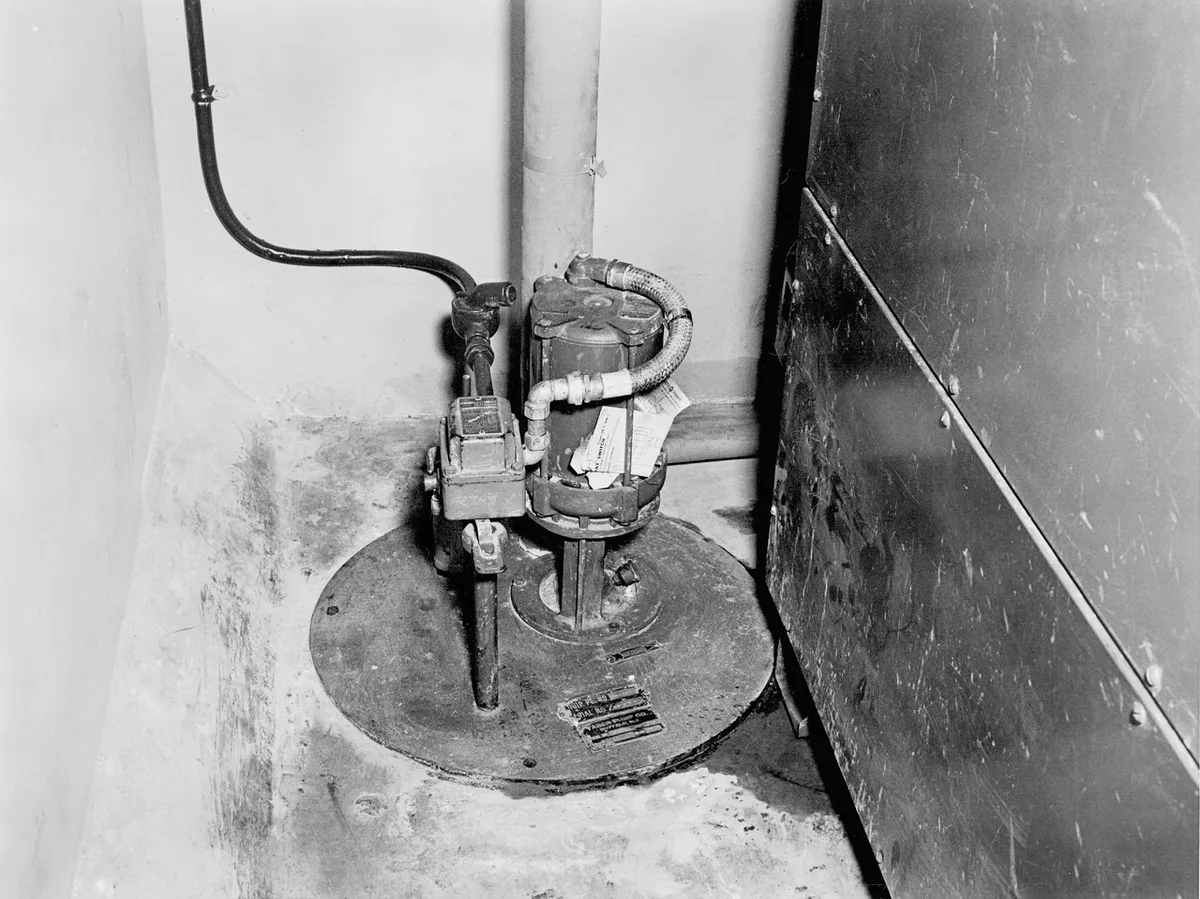
Image source: Wikimedia Commons / United States Department of Energy
Drill a 3/16-inch weep hole between the pump outlet and check valve. This prevents air locking that stops the pump from priming after dry periods. Position the hole inside the pit so spray doesn’t damage components.
Regular upkeep keeps your system ready when storms hit. Understanding diagnostic codes helps troubleshoot electrical issues quickly.
Test the system monthly by unplugging the primary AC pump. Verify the backup activates immediately and moves water effectively. Clean battery terminals quarterly to prevent corrosion-related voltage drops.
Tighten all connections since vibration loosens them over time. Consistent routine upkeep catches small problems before they become catastrophic failures during emergencies.
Common Sump Backup Mistakes and Frequently Asked Questions
Many homeowners confuse starting batteries with deep cycle models. Automotive batteries fail within weeks under sump pump loads because they lack reserve capacity. Only use batteries rated specifically for deep discharge cycling.
Another frequent error involves undersized chargers that can’t replenish capacity between storms.
Ignoring manufacturer charging profiles voids warranties and damages cells prematurely. Each chemistry requires specific voltage thresholds and absorption times. Using a generic charger risks sulfation in AGM units or cell imbalance in lithium packs.
Proper troubleshooting steps help identify charger mismatches early. Always verify compatibility before connecting any new battery to existing equipment.
Can I use a car battery for my sump pump backup?
No, automotive starting batteries cannot handle repeated deep discharges. They’re designed for short high-current bursts, not sustained low draws. Deep cycle marine or RV batteries have thicker plates built for this purpose.
Using a car battery will likely fail within one or two storm cycles. Stick to AGM or LiFePO4 units rated for standby service.
How long should a sump backup battery last?
Runtime depends entirely on pump draw and battery capacity. A properly sized 100Ah AGM battery typically runs a 1/2 HP pump for six to eight hours. LiFePO4 systems often extend that to twelve hours or more due to flatter discharge curves.
Calculate your specific needs using continuous amp ratings rather than horsepower alone.
Do I need a separate pump or just a battery?
Dedicated DC backup pumps provide true redundancy against mechanical failure. Systems that only add battery power to your existing AC pump leave you vulnerable if that pump dies. Combo units integrate both functions but cost more upfront.
Standalone DC pumps activate automatically via independent float switches. This dual-system approach offers maximum protection during extended outages.
What size battery do I need for a 1/2 HP sump pump?
Most 1/2 HP pumps draw around five amps continuously during operation. For eight hours of runtime, you need forty usable amp-hours at minimum. Since AGM batteries shouldn’t drop below 50% discharge, choose a 100Ah unit.
This provides adequate buffer for heavier cycling during severe weather. Always confirm actual amp draw on your specific pump model.