
Understanding how does a dual sump pump system work prevents costly basement flooding during severe storms. This setup uses two independent pumps to provide mechanical redundancy when primary power or equipment fails.
Per SSPMA testing standards, proper dual systems must handle specific vertical head heights without cavitation. Manufacturer specifications indicate that separate discharge lines significantly reduce backflow risks compared to shared piping configurations. Let’s look at the mechanics.
How Does a Dual Sump Pump System Work
A dual sump pump system uses two independent pumps in one basin. The primary AC pump handles normal groundwater intrusion. A secondary backup pump activates only during power loss or primary failure.
Each unit operates on separate electrical circuits or power sources. This redundancy ensures continuous water removal during emergencies.
The Two Main Configurations: Separate Pumps vs Combination Units
Separate pump systems use distinct primary and backup units sharing a single basin. The primary AC submersible pump sits at the bottom for daily dewatering. A battery backup or water-powered unit mounts higher on the discharge pipe.
Aggregate reviews report this configuration offers superior serviceability since you can replace one pump without disturbing the other. Independent float switches prevent simultaneous activation unless water levels rise critically high.
Combination units integrate both pumps into a single pre-assembled housing. These all-in-one systems save installation time but limit future upgrade options. Our research shows combination units often share internal check valves, creating a single point of failure.
Separate systems allow mixing different technologies like AC primary with hydraulic backup. You gain flexibility to match each pump’s capacity to your specific water table conditions.
| Feature | Separate Pumps | Combination Unit |
|---|---|---|
| Serviceability | High (individual replacement) | Low (full unit swap) |
| Failure Points | Distributed | Centralized |
| Installation Time | Longer | Faster |
| Technology Mixing | Flexible | Limited |
| Basin Space Needed | More | Less |
Critical Installation Details That Determine Success or Failure
Proper check valve placement prevents discharged water from flowing back into the pit. Install swing-type valves vertically above each pump’s discharge outlet. Per International Residential Code Section P3206, every sump discharge requires an approved backwater valve.
Missing this component forces pumps to re-move the same water repeatedly. This short cycling burns out motors prematurely and wastes energy.
Discharge line separation matters more than most homeowners realize. Shared discharge pipes create backpressure that can overwhelm weaker backup pumps. We recommend dedicated exterior routing for each pump whenever possible.
If sharing is unavoidable, install individual check valves before the junction point. Always drill a weep hole between the pump and check valve to prevent air locking.
Basin diameter directly affects dual system performance and longevity. Standard 18-inch pits rarely accommodate two full-size submersibles safely. Manufacturer specs confirm 24-inch minimum width for separate pump installations.
Wider basins reduce sediment buildup around intake screens. They also provide adequate space for tethered floats to move without obstruction.
Common Setup Mistakes and Maintenance Checklist
Incorrect float switch positioning causes premature activation or dangerous delays. Tethered floats need enough clearance to rise freely without hitting pipes or walls. Debris accumulation frequently jams mechanical switches in narrow basins.
Regular inspection prevents silent failures during critical storm events.
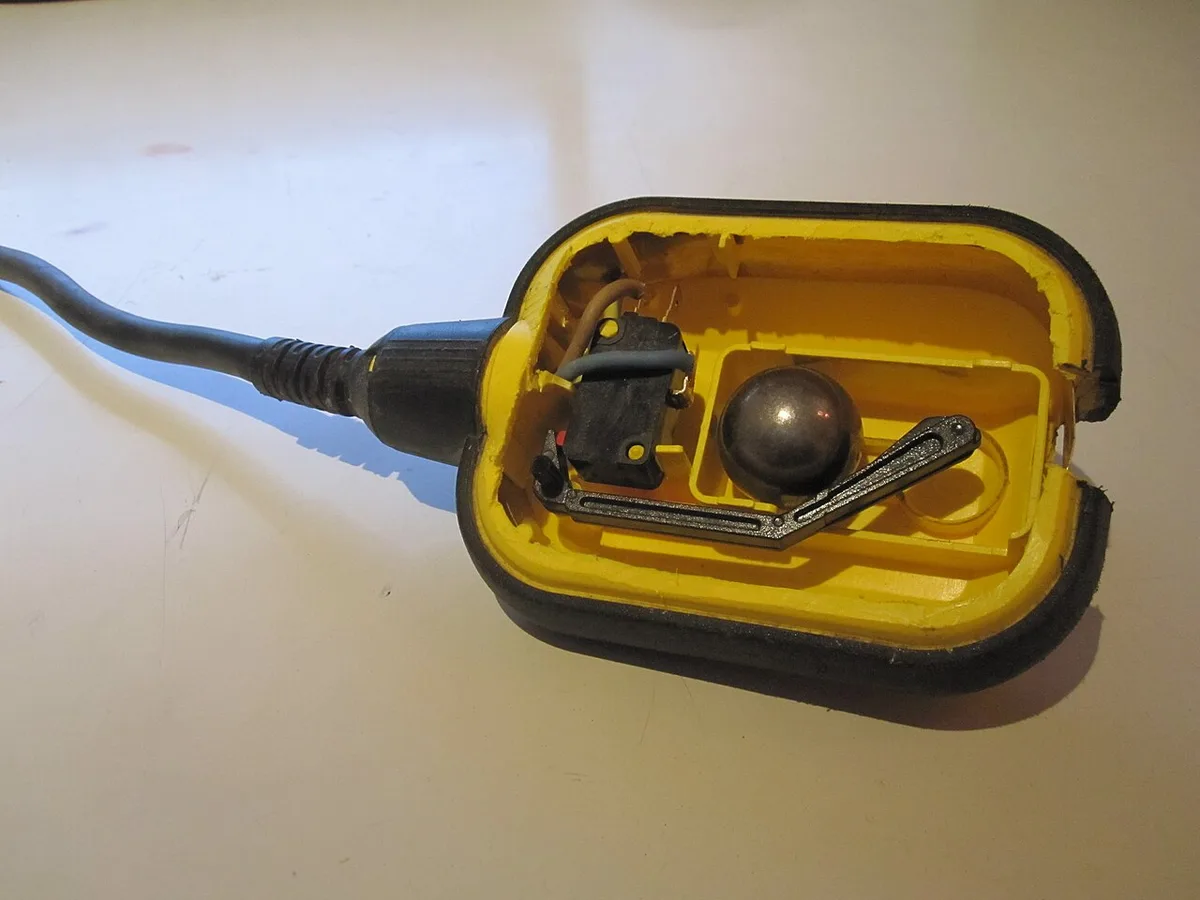
Image source: Wikimedia Commons / Martin Meise (CC BY)
Neglecting battery maintenance defeats the purpose of backup systems. Sealed lead-acid batteries typically last three to five years under ideal conditions. Load test annually rather than relying solely on indicator lights.
Corroded terminals cause voltage drops that prevent startup when needed most. Lithium-ion alternatives offer longer lifespan but cost significantly more upfront.
Frozen discharge lines render even perfect dual systems useless in winter. Exterior pipe sections require heat tracing or proper burial below frost line. Insulation alone won’t prevent freezing during extended power outages.
Consider interior routing through conditioned spaces where local codes permit. This simple step protects your investment against cold climate failures.
Testing should simulate actual failure conditions, not just button presses. Unplug the primary pump and pour water to trigger the backup manually. Verify the alarm sounds and discharge flows properly outside.
Document runtime duration to establish baseline performance metrics. Schedule this verification biannually as part of routine upkeep similar to appliance diagnostic checks you perform elsewhere in the home.
Frequently Asked Questions
Can I add a backup pump to my existing single sump system?
Yes, most standard basins can accommodate a secondary backup pump mounted higher on the discharge pipe. Ensure your basin has adequate width for safe float movement. You may need to upgrade the lid to accommodate additional wiring and plumbing penetrations.
Professional assessment confirms structural compatibility before purchase.
Do both pumps run simultaneously during heavy rain?
Typically no, because backup pumps activate only at higher water levels or during primary failure. Simultaneous operation indicates either extreme inflow exceeding primary capacity or incorrect float calibration. Properly staged systems preserve backup battery life for true emergencies.
Adjust tether lengths if both engage too frequently during normal storms.
How long will a battery backup sump pump run?
Runtime depends entirely on battery amp-hour rating and pumping frequency. A typical 75Ah deep-cycle battery provides four to eight hours of intermittent operation. Continuous heavy inflow drains reserves much faster.
Manufacturer specifications list exact runtime estimates at various head heights for precise planning.
Is a water-powered backup better than battery backup?
Water-powered backups excel in areas with reliable municipal pressure and unlimited runtime needs. They require minimum 40 PSI and produce significant wastewater during operation. Battery systems work independently of water supply but have finite runtime.
Your choice depends on local utility reliability and personal risk tolerance.