
What does a sump pump float switch do? It's the automatic sensor that turns your pump on when water rises and off when the pit is empty. Without it, your basement stays unprotected the moment you leave the house.
Most failures happen because people forget the switch exists until it's too late. Manufacturer specs show float switches cycle hundreds of times per year. Let's cover how to keep yours working.
what does a sump pump float switch do
A sump pump float switch is an automatic sensor that starts and stops your pump based on water level. When water rises, a buoyant component lifts. This triggers an internal mechanism that powers the pump on.
When water drops, the float falls back down and shuts the pump off.
It replaces manual checking with automatic protection. Most homes never flood because this device works silently in the background.
How a Sump Pump Float Switch Actually Works
The switch operates on a simple buoyancy principle. A hollow float ball or bulb rides up and down on a vertical rod or tether. As water fills the pit, the float rises.
At a preset height, the float closes an electrical contact that starts the pump.
When the water drops back down, the float descends. This opens the electrical circuit and stops the pump. The cycle repeats automatically throughout the day and night.
There are three main types you'll encounter:
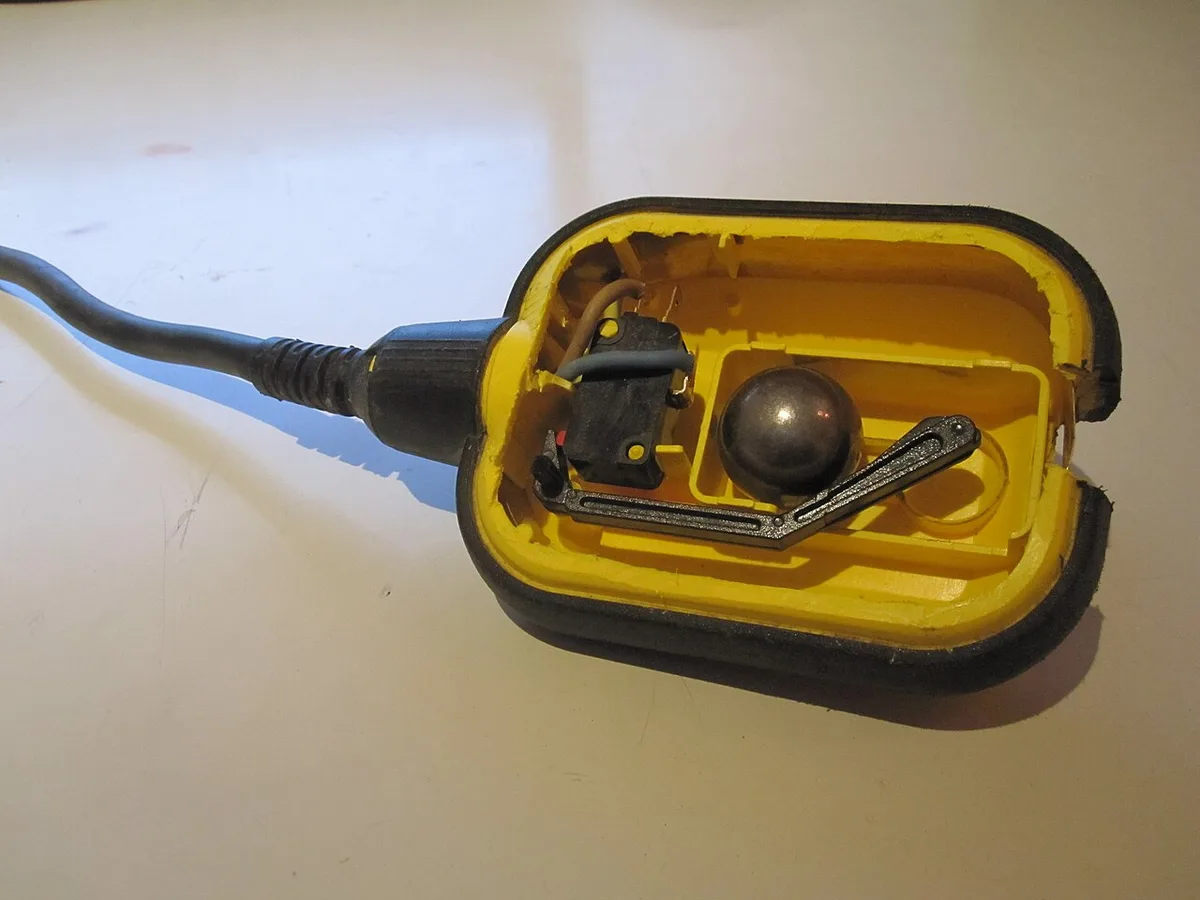
Image source: Wikimedia Commons / Martin Meise (CC BY)
| Type | How It Works | Pros | Cons |
|---|---|---|---|
| Vertical Float | Rides on a guide rod | Simple, reliable | Can jam if rod bends |
| Horizontal/Pivot | Tilts on a hinge point | Self-cleaning action | More moving parts |
| Electronic | Uses sensors, no moving parts | Won't stick or jam | More expensive upfront |
Vertical float switches dominate residential installations. They cost less and have fewer failure points. Electronic switches eliminate mechanical wear entirely.
But they cost twice as much and need power to operate.
Common Problems and How to Fix Them
The most frequent issue is a stuck switch. Mineral deposits, debris, or a twisted tether can prevent the float from moving freely. If your pump runs continuously or won't start, the float is likely stuck in one position.
Here's how to diagnose it quickly:
- Pump runs nonstop: Float is stuck in the up position. Unplug the pump immediately to avoid burning out the motor.
- Pump won't start: Float is stuck down or disconnected. Check if the tether is tangled around the discharge pipe.
- Pump short-cycles: Water level is too low or the pit is too small. The float drops and rises too quickly.
To fix a stuck float, first unplug the pump. Remove any debris blocking the float's path. Gently move the float by hand to free it up.
If mineral buildup is the culprit, clean it with white vinegar and a soft brush.
Replacement units cost between $20 and $60. Most connect via a standard 3-prong piggyback plug. If your switch is hardwired, you'll need basic electrical skills or a licensed electrician.
Testing, Replacing, and Maintaining Your Float Switch
Test your switch monthly by lifting the float manually. The pump should start when you raise it and stop when you let it drop. If it doesn't respond, the switch needs attention.
Follow these steps annually:
- Turn off power at the breaker for safety
- Lift the float to confirm pump activation
- Check the tether for twists or obstructions
- Clean mineral deposits from the float and guide rod
- Inspect the cord for cuts or fraying
- Reinstall and test the system
Replacement is straightforward if you have a piggyback plug setup. Unplug the old switch, disconnect the old pump cord, connect the new switch, and plug everything back in. The whole process takes about 15 minutes.
For hardwired switches, it's more complex. You'll need to match wire colors correctly and use waterproof wire nuts. If you're not comfortable working with electrical connections, hiring a professional is the safest choice.
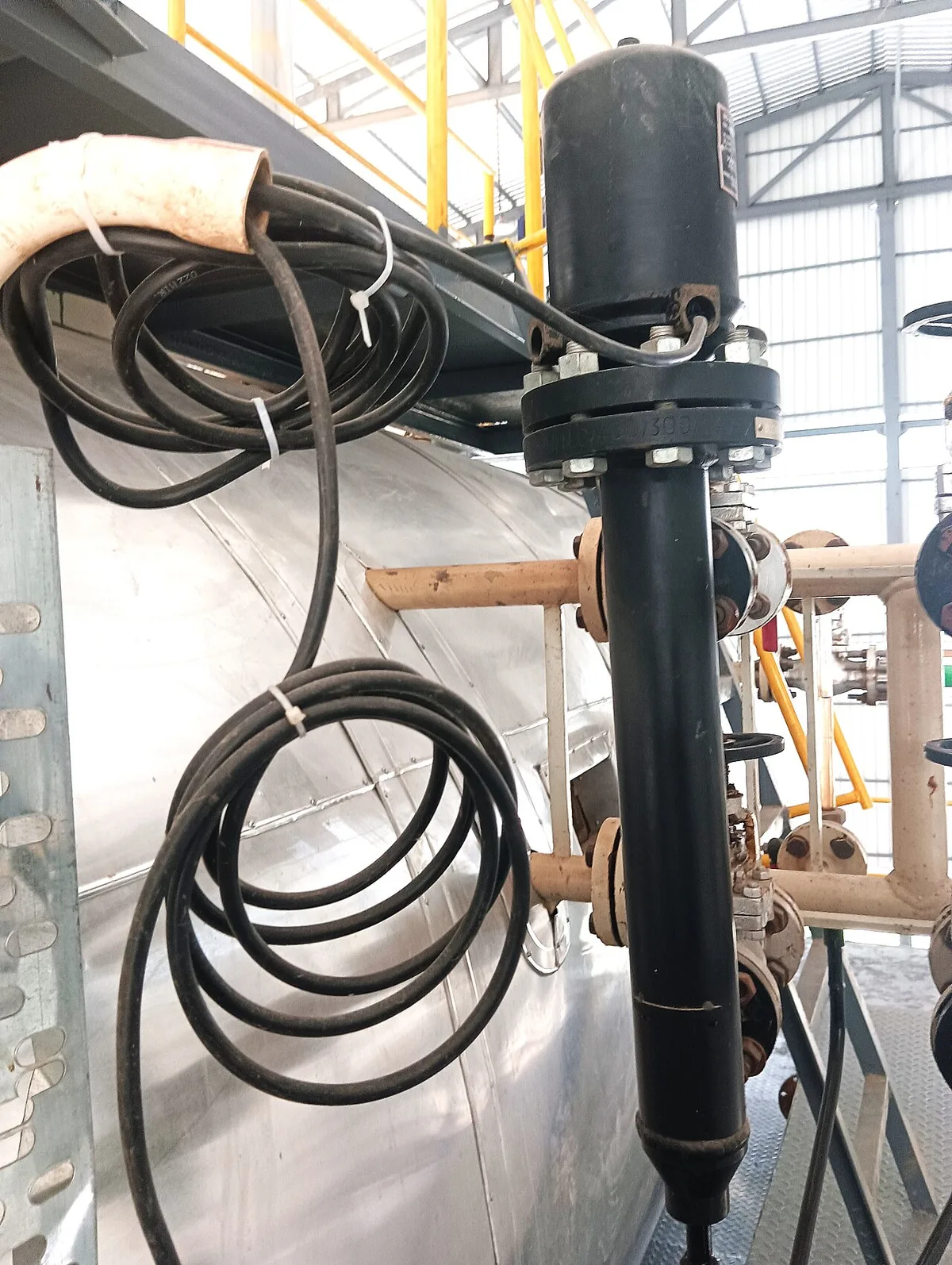
Image source: Wikimedia Commons / Palagiri
Frequently Asked Questions
What's the difference between a float switch and a check valve?
A float switch controls when the pump turns on and off. A check valve prevents water from flowing back into the pit after the pump shuts down. Both protect your basement but serve completely different functions.
How often should I replace my sump pump float switch?
Replace it every three to five years as preventive maintenance. If you experience frequent failures, mineral buildup, or stuck floats, consider replacing it sooner.
Can I install a float switch myself?
Yes, if your system uses a piggyback plug connection. Hardwired installations require electrical knowledge. Always turn off power at the breaker before working.