
Most sump pumps need 800 to 1,500 starting watts.
A typical 1/3 HP model draws around 800.
Larger 3/4 HP units can spike to 1,500+.
Always check the nameplate for exact specs.
Add 25% buffer for generator safety.
Your sump pump probably sits silent most days. But when the power fails during a storm, that's exactly when you need it running. So figuring out how much starting wattage does a sump pump require isn't just academic, miss the number, and your basement floods.
Per NEMA MG-1 motor standards, single-phase induction motors draw 3, 7 times their running current at startup. That surge lasts a fraction of a second, but it's enough to trip an undersized generator or blow a weak circuit. A nameplate reading 8 amps at 120V equals roughly 960 running watts.
Starting load jumps to 2,000, 2,800 watts for that brief moment.
With that surge in mind, let's size your backup plan correctly.
Why Starting Wattage Matters More Than You Think
Generators list both running and starting (surge) wattage ratings. The starting number tells you how much power the engine can produce for a few seconds, enough to handle motor startup spikes. If your generator's surge rating falls below your pump's startup draw, it will stall or refuse to start entirely.
Consider this mismatch scenario: Your 1/2 HP pump needs 1,200 surge watts, but your portable generator only delivers 1,000 surge watts. Even though continuous output covers normal operation, the startup overload kills performance precisely when reliability counts most.
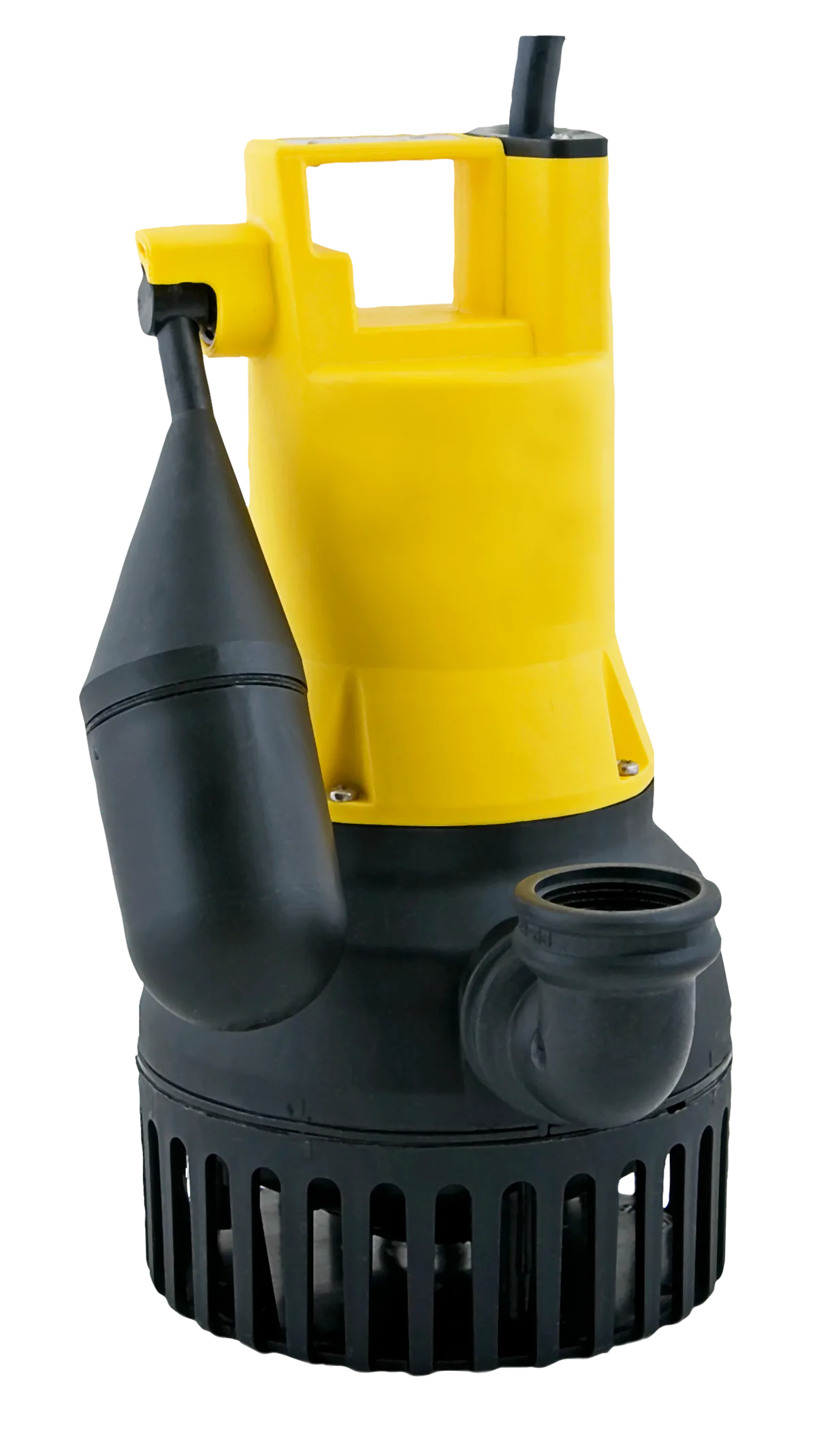
Image source: Wikimedia Commons / PumpExpert (CC BY-SA)
Here's how to read those specs correctly every time.
Step-by-Step: Calculate Your Sump Pump's Starting Wattage
Start with the pump's nameplate data. Look for horsepower (HP), voltage (V), and amperage (A). Multiply volts by amps to get running watts.
Then multiply that result by 3 to estimate starting watts.
For example: A 1/2 HP pump rated at 8A × 120V = 960 running watts. The estimated starting requirement becomes 960 × 3 = 2,880 surge watts.
If the nameplate is missing or unreadable, use general benchmarks by HP size:
| HP Size | Running Watts | Starting Watts |
|---|---|---|
| 1/4 | 200–400 | 600–1,200 |
| 1/3 | 400–600 | 1,200–1,800 |
| 1/2 | 600–800 | 1,800–2,400 |
| 3/4 | 800–1,000 | 2,400–3,000 |
| 1 | 1,000–1,200 | 3,000–3,600 |
These values assume standard NEMA Design B motors, according to NFPA 70 electrical code guidelines for residential pump applications.
Real-world variables affect accuracy too. Older pumps may draw higher current due to worn windings. Cold temperatures increase starting torque demands.
Soft start kits reduce initial load by up to 40%, easing strain on both pump and generator.
Generator Sizing Guide: What Size Do You Actually Need?
Match your generator's surge capacity, not just running watts, to your pump's startup needs. Add a 25% safety margin to account for aging equipment and voltage drops.
This means pairing a 1/3 HP pump (requiring ~1,200 surge watts) with at least a 1,500-watt generator. That setup handles the spike safely without overloading components.
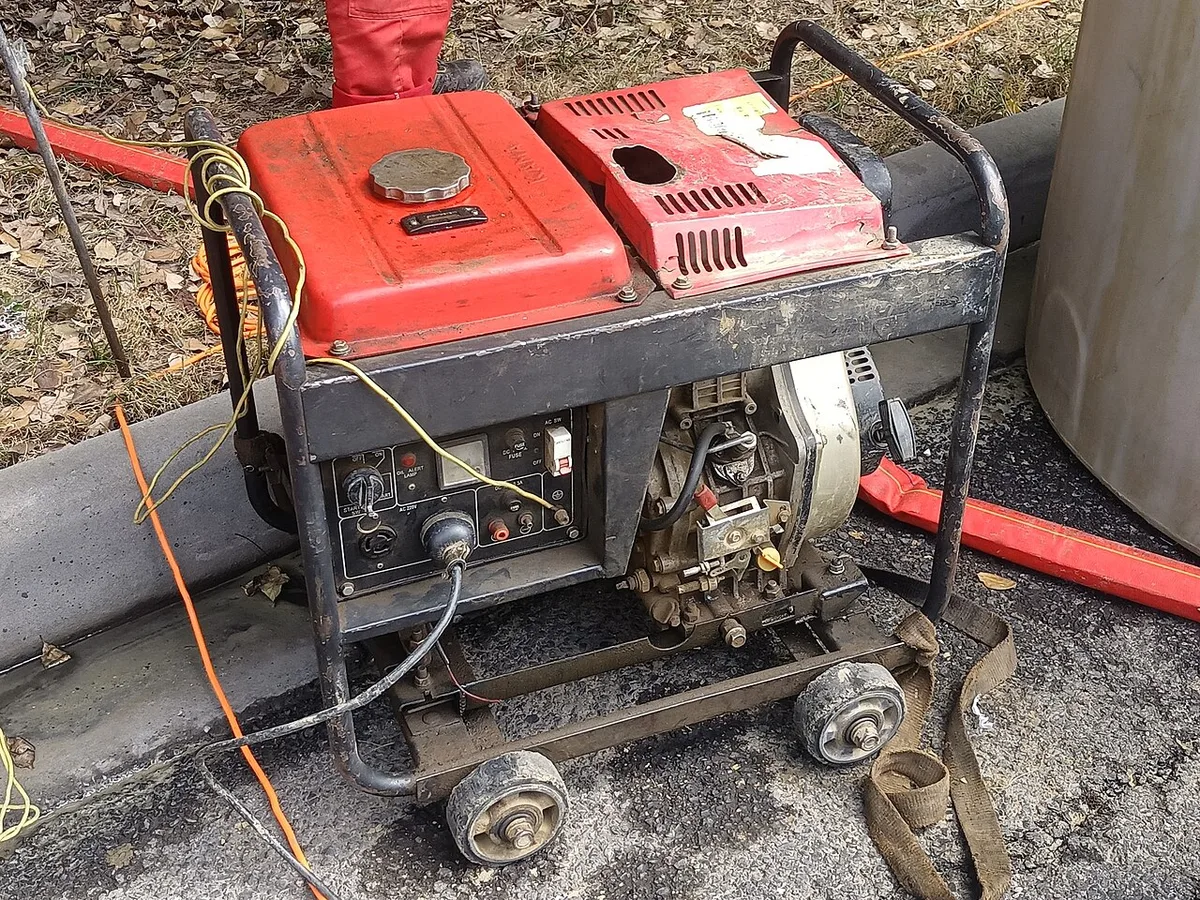
Image source: Wikimedia Commons / Fumikas Sagisavas
Battery backups offer an alternative for short outages. Most units support pumps drawing up to 1,200 surge watts for 8, 24 hours depending on battery capacity. Always verify compatibility with your specific pump model.
Inverter generators provide cleaner power for sensitive electronics. However, their lower surge-to-running ratio makes them less ideal for high-draw appliances like sump pumps unless properly derated.
Frequently Asked Questions
Do I need a 2,000-watt generator for my sump pump?
Check your pump's nameplate first. Many 1/2 HP pumps require only 1,800 surge watts. Use the step-by-step method above rather than guessing.
Can I run a sump pump on a portable generator?
Yes, if the generator's surge rating matches or exceeds the pump's starting watts. Always test before relying on backup power during emergencies.
What's the difference between running and starting wattage?
Running wattage is power used continuously. Starting wattage includes the brief spike during startup. Generators must handle both simultaneously.
Should I add a soft starter to my sump pump?
Soft starters cut startup current significantly. They help smaller generators start larger pumps reliably, especially in older homes with weaker electrical systems.
How do I test my generator with a sump pump?
Run the test weekly under actual pump load. Listen for engine strain or breaker trips. Document performance trends over time to catch issues early.