
Learning how to install a water powered backup sump pump starts with verifying local plumbing codes before buying any parts. Many municipalities restrict these systems due to cross-connection risks, so confirming legality prevents costly rework or fines later.
Manufacturer specifications indicate most units require at least 40 PSI of continuous municipal pressure to function during emergencies. Per the Uniform Plumbing Code, you must install an approved backflow preventer to protect potable water from contamination. Let’s cover the safety checks that determine if this system is even viable for your home.
Before You Install: Code Compliance, Pressure Requirements, and Safety Risks
Water-powered pumps are illegal in some jurisdictions because they create a direct physical link between your sump pit and drinking water supply. The International Plumbing Code Section 608 strictly regulates these connections to prevent back-siphonage of contaminated groundwater into city mains. Always contact your local water authority first to verify approval and specific backflow device requirements as of 2026.
Insufficient water pressure is the most common cause of installation failure. These pumps rely entirely on municipal supply pressure, which can drop significantly during widespread storms when power outages occur. If your static pressure falls below 40 PSI at the tap nearest the sump pit, the unit will not generate enough suction to move floodwater effectively.
You also need adequate flow volume beyond just pressure. A standard 3/4-inch supply line typically delivers only 8 to 10 gallons per minute under residential conditions. This limits pumping capacity to roughly 600 GPH at best, which may be insufficient for severe flooding events.
Undersized piping guarantees poor performance regardless of pump quality.
Cross-connection violations carry serious health and legal consequences. Installing an unapproved valve or skipping the required dual check assembly exposes neighbors to biological hazards. Water utilities can issue stop-work orders, demand removal, or levy substantial fines for non-compliant installations.
Professional inspection ensures your setup meets current ASSE 1013 standards for backflow prevention.
How Water-Powered Backup Pumps Actually Work (And When They Fail)
These devices use the Venturi effect to convert municipal water pressure into suction without electricity or batteries. Pressurized water flows through a narrow nozzle inside the ejector assembly, creating a vacuum that pulls sump water upward. The two streams mix and discharge through a shared outlet pipe using pure hydraulic energy.
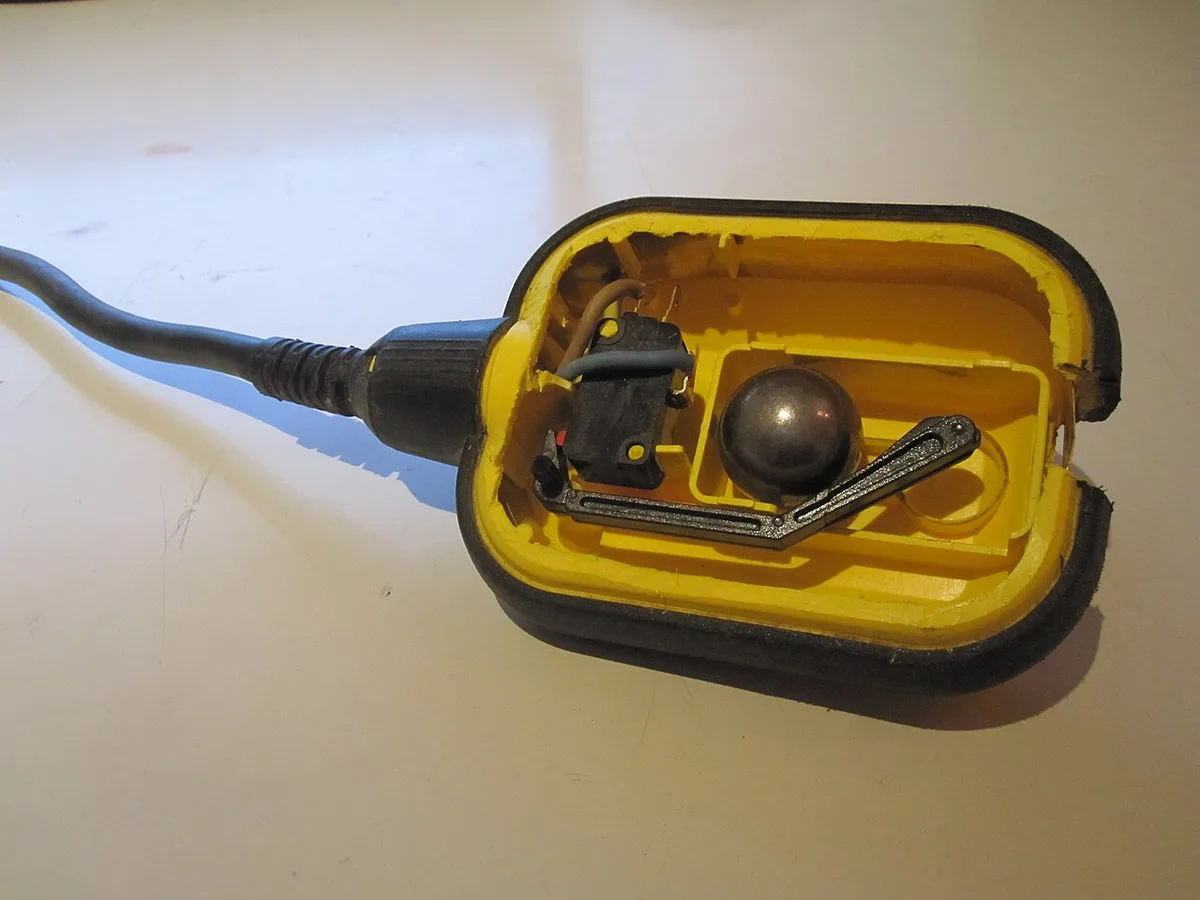
Image source: Wikimedia Commons / Martin Meise (CC BY)
Activation happens mechanically via a float valve mounted above the normal water line. Rising floodwater lifts the float, opening the control valve to allow pressurized supply water into the ejector. When water recedes, gravity closes the valve automatically to stop flow.
This simple mechanism eliminates electrical components but depends entirely on consistent water pressure.
Failure occurs most often when municipal pressure drops during regional emergencies. Storms that knock out power frequently strain water treatment plants simultaneously, reducing available pressure exactly when you need it most. Units rated for 60 PSI minimum may stall completely if supply falls to 35 PSI during peak demand.
Mineral buildup and sediment also degrade performance over time. Hard water deposits narrow the Venturi nozzle gradually, reducing suction efficiency without obvious warning signs. Annual testing reveals this decline before catastrophic failure occurs.
Unlike battery backups that give low-voltage alerts, water-powered units fail silently until floodwater rises unchecked.
Critical Installation Steps and Common Mistakes That Cause Flooding
Proper installation begins with pressure testing at the intended connection point. Attach a gauge to the cold water line nearest the sump pit and record readings during peak household usage. Readings below 40 PSI mean you should consider a battery backup system instead.
Skipping this test wastes money on equipment that cannot perform when needed.
Installing the correct backflow preventer is non-negotiable for safety and code compliance. Use only ASSE 1013 certified dual check valves designed specifically for sump pump applications. Standard irrigation backflow devices do not provide adequate protection against sump water contamination.
Mount the assembly vertically with shutoff valves on both sides for maintenance access.
Supply line sizing directly determines maximum pumping capacity. Never use tubing smaller than the manufacturer’s specified minimum diameter, typically 3/4 inch copper or PEX. Longer runs require upsizing to compensate for friction loss over distance.
Each additional 10 feet of horizontal pipe reduces effective flow by approximately 5 percent.
The ejector must mount securely above the highest expected water level. Submerging the venturi assembly causes immediate failure and potential backflow contamination. Secure all discharge piping independently to prevent vibration damage during operation.
Test the complete system annually by manually lifting the float while monitoring discharge flow rate.
| Component | Minimum Specification | Common Error |
|---|---|---|
| Supply Line | 3/4" Copper or PEX | Using 1/2" tubing |
| Backflow Device | ASSE 1013 Dual Check | Irrigation-grade valve |
| Operating Pressure | 40 PSI Static | Testing at off-peak hours |
| Ejector Mount Height | Above Flood Line | Partial submersion |
Frequently Asked Questions About Water-Powered Sump Pump Installation
Can I install this myself without a plumber?
Most jurisdictions require licensed plumbers for any work involving potable water connections and backflow prevention. DIY installation risks code violations, contamination hazards, and voided insurance coverage if flooding occurs. Even where legal, improper setup compromises flood protection reliability.
Professional installation ensures compliance and proper pressure verification.
How much does professional installation cost?
Expect $450 to $850 total including labor, permits, and materials as of 2026. Complex retrofits requiring new supply lines or extensive pipe routing push costs toward the higher end. Backflow device certification and inspection fees add $75 to $150 separately.
Obtain itemized quotes specifying exact backflow model numbers to verify code compliance.
Will it work during a city-wide water main break?
No, these pumps become completely useless when municipal supply pressure drops below operating thresholds. Main breaks, treatment plant failures, or firefighting demands can reduce pressure precisely during storm emergencies. Battery or generator backups provide more reliable protection during infrastructure failures.
Water-powered units serve only as secondary redundancy where primary electric pumps exist.
How often should I test the system?
Cycle the pump manually every six months by lifting the float switch and observing discharge flow. Document flow rate and activation response time to track performance degradation. Replace backflow preventer assemblies every five years regardless of apparent condition.
Annual professional inspection verifies continued code compliance and identifies hidden wear before failure occurs.
What maintenance does it require beyond testing?
Flush the supply line annually to remove sediment that clogs the venturi nozzle. Inspect all fittings for corrosion or mineral deposits that restrict flow. Verify float movement remains unobstructed by debris or ice in unconditioned spaces.
Unlike troubleshooting appliance error codes like those found when diagnosing dryer faults, water pump maintenance is purely mechanical and visual.