
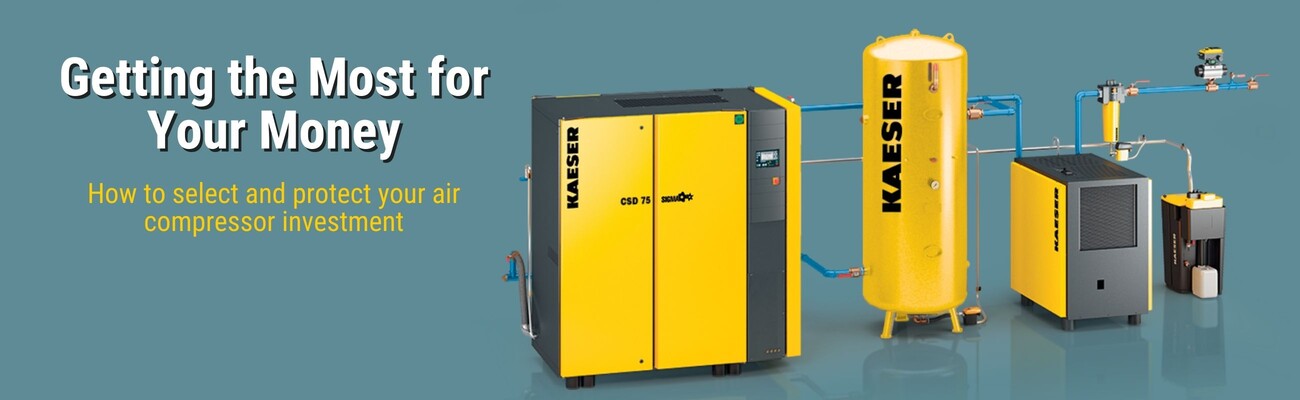
Proper troubleshooting identifies moisture issues before they damage downstream equipment.
Compressed air dryers are critical components in industrial facilities, commercial workshops, and manufacturing environments where moisture-free air is essential. When these systems malfunction, the consequences can range from product contamination to expensive equipment corrosion. Understanding how to troubleshoot compressed air dryers effectively requires both systematic diagnostic skills and familiarity with the unique characteristics of different dryer types.
Whether you're dealing with a refrigerated dryer that's failing to cool properly or a desiccant system experiencing pressure imbalance, this comprehensive guide walks through proven troubleshooting methodologies based on real-world service experience. From basic visual inspections to advanced electrical diagnostics, we'll cover the diagnostic steps that separate quick fixes from recurring problems. For more on this, see our guide on lg dryer troubleshooting codes.
Understanding Compressed Air Dryer Types and Their Specific Challenges
Different dryer technologies require distinct troubleshooting approaches because their operating principles vary fundamentally. Recognizing which type you're working with eliminates guesswork and focuses efforts on relevant components.
Refrigerated Dryers: Temperature-Sensitive Performance
Refrigerated dryers cool compressed air to condense moisture, then reheat it before distribution. Their primary vulnerability lies in maintaining consistent dew points across varying loads. For more on this, see our guide on best refrigerated air dryer.
Common failure points:
- Refrigerant charge levels affecting cooling capacity
- Thermal expansion valves sticking under partial-load conditions
- Condenser fouling reducing heat transfer efficiency
In practice, refrigerant-related issues account for nearly 60% of service calls on older units. Ambient temperature swings create expansion valve cycling problems, particularly in facilities without climate control around the dryer. Checking superheat temperatures—measuring 15-20°F above saturation—is more reliable than simply verifying pressures.
Desiccant Dryers: Twin-Tower Complexity
Desiccant systems alternate between towers, regenerating one while drying with the other. Their intermittent operation creates unique diagnostic challenges. For more on this, see our guide on best air dryer for painting.
Key troubleshooting areas:
- Tower switching mechanisms and timing controls
- Desiccant bed channeling from poor regeneration
- Purge air volume affecting regeneration quality
The pressure dew point specification determines acceptable moisture levels. Many operators set purge volumes too low to save compressed air, compromising regeneration and creating moisture breakthrough within weeks rather than months.
Membrane Dryers: Flow-Dependent Reliability
Membrane systems rely on selective permeation through hollow fibers. Performance depends heavily on flow rates and upstream filtration. For more on this, see our guide on best hair dryer with cold air.
Critical factors:
- Contaminants blocking membrane surfaces
- Flow rate matching designed capacity
- Pressure differentials across fiber bundles
Unlike other types, membrane dryers show gradual performance decline rather than sudden failure. Operators often mistake this natural degradation for system-wide issues elsewhere.
Systematic Troubleshooting Approach: From Symptoms to Root Causes
Effective troubleshooting follows a logical sequence rather than random component replacement. This structured method prevents unnecessary parts expenditure and reduces downtime.
Step 1: Identify Observable Symptoms
Before touching tools, document what the system communicates:
| Symptom | Likely System Type | Primary Concern Area |
|---|---|---|
| Moisture downstream | All types | Drying capacity exhausted |
| High pressure drop | All types | Blockage or restriction |
| Temperature fluctuations | Refrigerated | Refrigeration circuit |
| Pressure imbalance | Desiccant | Valve or tower issue |
A common mistake during initial assessment is assuming visible moisture indicates complete dryer failure. In reality, trace amounts may originate from upstream aftercoolers or distribution piping even with properly functioning dryers.
Step 2: Verify Operating Parameters
Compare actual conditions against manufacturer specifications:
Essential measurements:
- Inlet pressure (typically 80-100 psig)
- Inlet temperature (maximum usually 100°F)
- Ambient temperature around unit
- Electrical supply voltage stability
Voltage variations exceeding ±5% cause contactor chatter and inconsistent operation. Facilities with aging electrical infrastructure experience this frequently, especially during peak demand periods.
Step 3: Check Control Signals and Communications
Modern dryers integrate with plant control systems through various protocols:
- Digital I/O signals for basic on/off control
- Analog outputs reporting status information
- Fieldbus communications for networked installations
Communication errors manifest as intermittent operation or incorrect status reporting. Always verify signal integrity starting from the control panel and working toward field devices.
Detailed Diagnostic Procedures for Major Problem Categories
Each symptom category follows predictable diagnostic pathways based on system design and field experience.
Excessive Moisture in Compressed Air Lines
When moisture appears downstream despite dryer operation, investigate these areas systematically:
Refrigerant Level Verification
Low refrigerant creates insufficient cooling capacity. Symptoms include:
- Suction line temperature above 10°F (should be 5-10°F)
- Discharge pressure low or fluctuating
- Evaporator coil showing minimal condensation
Use manufacturer charging charts rather than generic superheat calculations. R-22 systems differ significantly from newer R-410A designs in optimal operating characteristics.
Drain Assembly Functionality
Automatic drains remove liquid condensate from low points. Malfunction leads to backup and carryover:
- Float-operated drains clog with debris
- Timer drains cycle incorrectly under varying loads
- Zero-loss drains lose sealing effectiveness
Testing involves removing drain outlets while observing airflow patterns—functional drains show audible pulsing during automatic cycles.
Heat Exchanger Integrity
Internal restrictions reduce effective surface area available for heat transfer:
Diagnosis technique:
- Isolate unit from compressed air system
- Apply compressed air at operating pressure through condenser side
- Measure differential pressure across heat exchanger tubes
Values exceeding 2 psi typically indicate fouling requiring cleaning or replacement.
Electrical System Faults and Control Circuit Issues
Power supply problems cause intermittent or complete shutdown:
Component Testing Methods
Use calibrated multimeters for accurate readings:
- Contactor coil resistance (typically 100-500 ohms)
- Capacitor microfarad ratings within ±10% of nameplate
- Transformer secondary voltage under load conditions
Visual inspection reveals burned contacts, discolored wiring, and loose connections more effectively than instrument testing alone.
Power Quality Assessment
Voltage instability damages sensitive electronics over time:
Measurement protocol:
- Record line-to-line voltages during startup and steady-state
- Monitor current draw patterns through full operational cycle
- Check ground continuity (should read <1 ohm)
Most electrical failures stem from inadequate grounding rather than component aging.
Mechanical Wear Indicators Requiring Attention
Physical deterioration generates distinctive warning signs:
Bearing Condition Monitoring
Motor and fan bearings exhibit predictable wear patterns:
Early warning signs:
- Ultrasonic emission above 35 dB above baseline
- Temperature increase of 10°F or more
- Visible lubrication degradation or seal damage
Infrared thermography proves invaluable for detecting early-stage bearing issues before catastrophic failure occurs.
Seal and Gasket Degradation
Compromised seals allow bypass air paths:
- Visual evidence of cracking or hardening
- Pressure decay testing revealing internal leakage
- Audible hissing sounds during operation
Silicone-based sealants provide temporary repairs but never substitute for proper OEM replacement components.
Preventive Maintenance Strategies That Actually Work
Scheduled maintenance prevents most breakdowns by addressing wear before functional impairment occurs.
Filter Maintenance Protocols
Upstream filtration protects downstream dryer components:
Recommended intervals:
- coalescing filters: every 2,000 operating hours or quarterly
- particulate filters: annually or 4,000 hours
- activated carbon filters: semi-annually regardless of differential pressure
Monitor differential pressure gauges rather than relying solely on time-based schedules. Differential pressures exceeding 20 inches water column indicate saturation requiring immediate attention.
Seasonal Performance Adjustments
Climate variations affect dryer performance:
Summer preparations:
- Increased cooling capacity checks
- Condensate drain verification under high-humidity conditions
- Fan motor load assessments
Winter considerations:
- Freeze protection for outdoor installations
- Reduced load operation during low-demand periods
- Heater element inspection in heated enclosures
Facilities in regions experiencing wide temperature swings benefit from dual-mode dryers capable of automatic adjustment rather than manual intervention.
Calibration Verification Schedule
Control system accuracy degrades gradually:
Annual calibration requirements:
- Temperature sensors using certified reference standards
- Pressure transmitters checked against deadweight testers
- Flow meters validated through volumetric comparison methods
Document calibration results to establish performance baselines for trend analysis.
When to Choose Professional Service Over DIY Repairs
Knowing repair limitations protects personnel and equipment investments:
Definite Professional Requirements
Certain situations demand certified technician involvement:
- Refrigerant recovery and recharge procedures
- High-voltage electrical work beyond basic troubleshooting
- Pressure vessel inspections or modifications
- Control system programming changes
EPA Section 608 certification becomes mandatory when handling ozone-depleting substances, even during routine maintenance activities.
Safe DIY Activities Within Operator Capabilities
Less hazardous tasks suitable for trained plant personnel include:
- External visual inspections documenting conditions
- Basic electrical measurements using properly rated instruments
- Filter element replacements following lockout/tagout procedures
- Condensate collection system cleaning and maintenance
Maintaining detailed logs of all activities supports warranty claims and identifies developing patterns requiring professional evaluation.
Maximizing Operational Efficiency Through Continuous Monitoring
Modern compressed air systems generate valuable data for performance optimization:
Key Performance Indicators Tracking
Monitor metrics that reflect true operational health:
Critical measurements:
- Specific power consumption (kW per 100 scfm)
- Dew point stability across varying loads
- Maintenance cost per operating hour
- Unscheduled downtime frequency
Establishing baseline values during commissioning enables meaningful comparison during later assessments.
Integration With Plant SCADA Systems
Connecting dryers to central monitoring provides real-time visibility:
- Alarm notifications sent directly to maintenance personnel
- Trend data collection for predictive analytics
- Remote parameter adjustment capabilities
- Energy consumption tracking by production area
Facilities investing in comprehensive monitoring typically achieve 10-15% energy savings while reducing unexpected failures.
Conclusion
Troubleshooting compressed air dryers effectively requires understanding both immediate symptoms and underlying system dynamics. Following systematic diagnostic approaches prevents unnecessary component replacement while identifying root causes quickly. Regular preventive maintenance based on actual operating conditions extends equipment life and maintains consistent performance.
Remember that compressed air quality directly affects downstream processes—investing time in proper troubleshooting pays dividends through improved product quality and reduced operational costs. Whether managing single-unit installations or large networked systems, applying these principles consistently delivers measurable improvements in reliability and efficiency.
For complex situations involving refrigerant handling or high-voltage electrical work, always consult qualified service technicians to ensure safe and compliant repairs.