
Learning how to install a sump pump without breaking concrete starts with understanding your specific slab conditions. You cannot simply dig through finished flooring without risking structural damage or hitting hidden utilities beneath the surface.
Manufacturer specifications indicate most residential basements have four-inch nominal slabs that require precise core drilling rather than demolition. The International Residential Code mandates proper discharge routing and basin sizing for any retrofit installation. Let us walk through the exact decision framework professionals use to assess feasibility safely.
how to install a sump pump without breaking concrete
You install a sump pump without breaking concrete by using a diamond core drill. This tool cuts a clean circular hole through the slab. You then excavate soil manually below the opening.
A preformed basin drops into the cored access point. Hydraulic cement seals the perimeter gap permanently.
Can You Actually Install a Sump Pump Without Breaking Concrete?
Yes, but only if your slab lacks post-tension cables and has adequate depth for basin placement. Core drilling creates a precise opening without shattering surrounding concrete or compromising structural integrity. This method preserves finished flooring while avoiding messy jackhammer demolition work entirely.
Not every basement qualifies for this non-destructive approach though. Aggregate reviews report that homes with radiant heat tubing or embedded rebar grids often require alternative waterproofing strategies. You must verify subsurface conditions before committing to any cutting plan.
The key is proper site assessment before picking up tools. If your slab is too thin or contains tensioned steel, surface-mounted drainage systems become the safer choice. Always confirm clearance requirements match your selected basin dimensions first.
The Decision Tree: Choosing Your Non-Destructive Installation Path
Your installation path depends entirely on three variables: slab thickness, utility locations, and water table depth. If your concrete exceeds six inches and contains no embedded utilities, core drilling remains viable for standard eighteen-inch basins. Thinner slabs or obstructed areas demand different solutions.
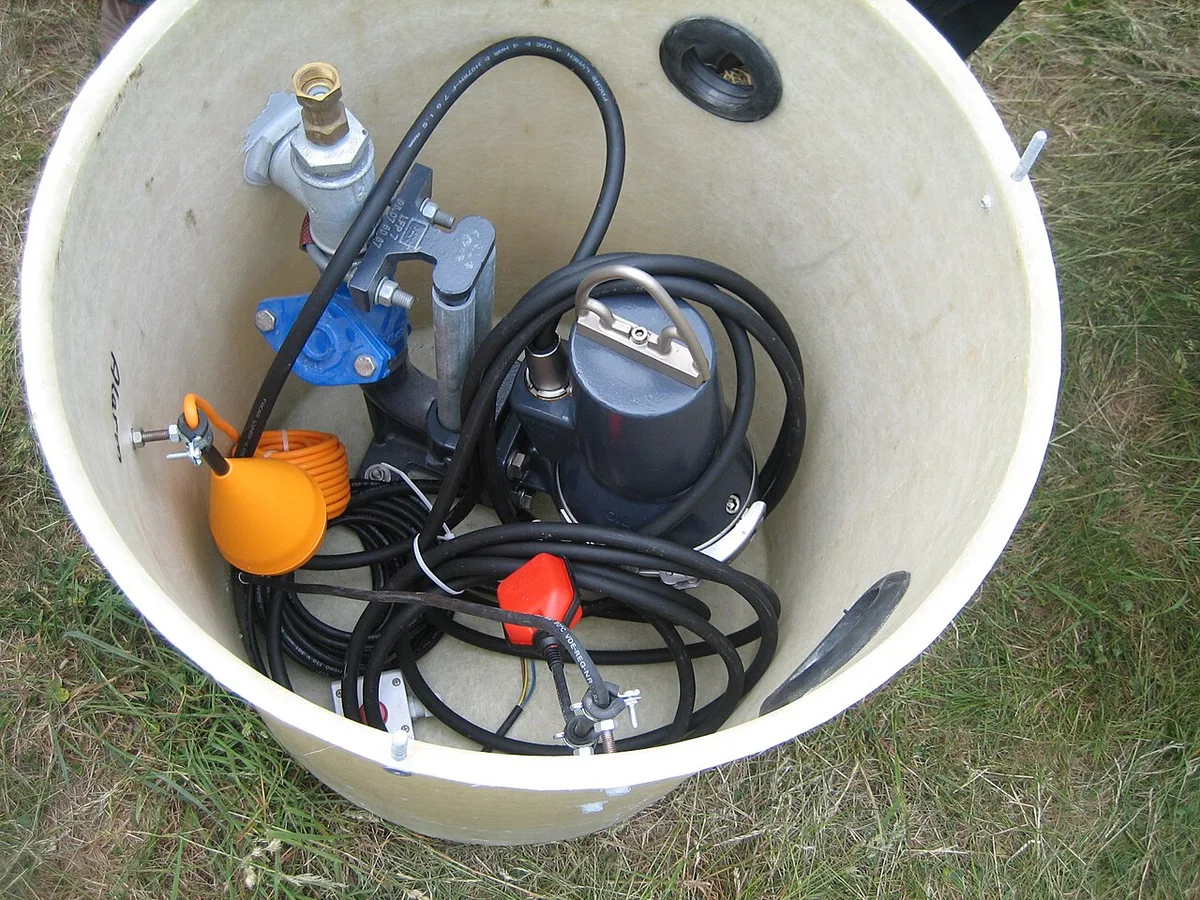
Image source: Wikimedia Commons / SuSanA Secretariat (CC BY)
If you discover post-tension cables during scanning, stop immediately and consult a structural engineer. These cables carry immense load-bearing forces and cutting them causes catastrophic failure. Surface-mounted pedestal pumps or exterior French drains become your only safe options here.
When utilities block your ideal pit location, relocate the basin to an unobstructed zone nearby. Discharge piping can route horizontally beneath floor coverings to reach vertical risers. This flexibility lets you avoid electrical conduits while maintaining effective water collection at low points.
For high water tables requiring deeper pits, consider stacking multiple core-drilled sections vertically. Each segment gets sealed independently before proceeding downward. This staged excavation prevents blowouts and maintains sidewall stability throughout the process.
| Condition | Recommended Method | Key Constraint |
|---|---|---|
| Standard 4" slab, clear scan | Diamond core drill + preformed basin | Minimum 24" depth clearance |
| Post-tension cables present | Surface pedestal or exterior system | Zero slab penetration allowed |
| Embedded utilities in path | Relocate basin + horizontal pipe run | Maintain 6" buffer from lines |
| High water table, deep pit needed | Staged vertical coring | Seal each section before continuing |
Critical Safety Checks and Common Retrofit Mistakes
Always call utility locating services before marking any cut lines on your basement floor. Hitting buried gas lines or electrical conduit causes injury and expensive repairs. Per OSHA guidelines, silica dust exposure during dry cutting requires respirators and wet suppression methods to protect your lungs.
Never assume your slab thickness matches building plans or neighbor anecdotes. Actual pours vary significantly due to settling or previous renovations. Measure directly at multiple points using test holes or ground-penetrating radar before selecting drill bit sizes.
Skipping the check valve installation invites backflow that overwhelms newly installed pumps. Water hammer from unchecked discharge also damages pipe joints over time. Threaded PVC fittings provide reliable sealing compared to slip-joint alternatives in retrofit scenarios where space is tight.
Many DIYers underestimate the importance of proper slope in horizontal discharge runs. Standing water in flat pipes freezes during winter and blocks flow completely. Maintain one-quarter inch per foot minimum grade toward your exterior exit point to prevent seasonal failures.
Electrical safety demands GFCI protection on all basement outlets near water sources. As of 2026, updated codes require dedicated circuits for sump pumps to prevent tripping during storms. Never share outlets with freezers or laundry equipment that could overload the circuit during peak operation.
Frequently Asked Questions About No-Break Sump Installs
How much does core drilling cost versus jackhammering?
Core drilling typically costs three hundred to six hundred dollars for a single basin opening. Jackhammer demolition runs eight hundred to two thousand dollars plus extensive patching labor. The precision method saves money while preserving finished flooring and reducing cleanup time significantly.
Can I rent a diamond core drill myself?
Yes, equipment rental shops offer wet core drills suitable for residential concrete work. Expect daily rates around seventy-five to one hundred fifty dollars depending on bit size. Practice on scrap material first since these tools require steady pressure and water feed management to prevent binding.
What basin size fits through a cored opening?
Standard eighteen-inch diameter basins require twenty-inch core bits for proper clearance. Smaller twelve-inch crocks fit through fourteen-inch holes but hold less water volume. Match basin capacity to your calculated inflow rate rather than choosing based solely on available access dimensions.
Do I need a permit for retrofit sump installation?
Most municipalities require plumbing permits for permanent sump pump installations regardless of method. Inspectors verify discharge routing, electrical connections, and backflow prevention compliance. Skipping permits risks insurance claim denials if water damage occurs later from improper workmanship or code violations.