
Learning how to read a sump pump specification label prevents costly electrical mismatches and premature motor failure. That small metal or plastic tag holds the exact data you need to verify compatibility before installation.
Manufacturer specifications indicate most residential pumps require dedicated 15-amp circuits per NEC Article 680 standards as of 2026. Misinterpreting these values risks tripped breakers or voided warranties, so let’s break down exactly what each marking means.
How to Read a Sump Pump Specification Label
Read the nameplate to find voltage, amperage, head height, and flow rate. Verify UL or ETL certification marks for safety compliance. Match electrical specs to your existing circuit capacity.
Confirm discharge size fits your current plumbing setup. Cross-reference model numbers for accurate replacement parts.
Decoding the Nameplate: Where to Look and What Each Symbol Means
The specification label typically sits on the motor housing side or top cap. Some manufacturers place critical data on a separate cord tag instead. Always photograph this label before removing an old unit or installing a new one.
Key Visual Identifiers
Voltage ratings appear prominently as 115V or 230V for residential units. Full Load Amps (FLA) show running current draw under normal conditions. Locked Rotor Amps (LRA) indicate startup surge, often three to six times higher than FLA.
Horsepower ratings can mislead buyers who assume higher numbers mean better performance. Flow rate in gallons per minute matters far more than HP alone. Maximum head height tells you the vertical lift limit before flow stops completely.
Certification marks like UL Listed or ETL confirm independent safety testing. NEMA enclosure ratings indicate water and dust protection levels. IP codes provide similar ingress protection information using international standards.
Missing these marks suggests the pump lacks verified safety compliance.
Thermal overload protector markings show built-in motor protection. Service factor reveals true durability beyond nominal horsepower. Insulation class indicates heat tolerance for deep pit installations.
These details separate builder-grade units from professional-duty equipment.
Matching Electrical Specs to Your Circuit Without Guessing
Your circuit breaker must handle both running amps and startup surge. Full Load Amps determine minimum wire gauge and breaker size. Locked Rotor Amps reveal the momentary draw during motor startup.
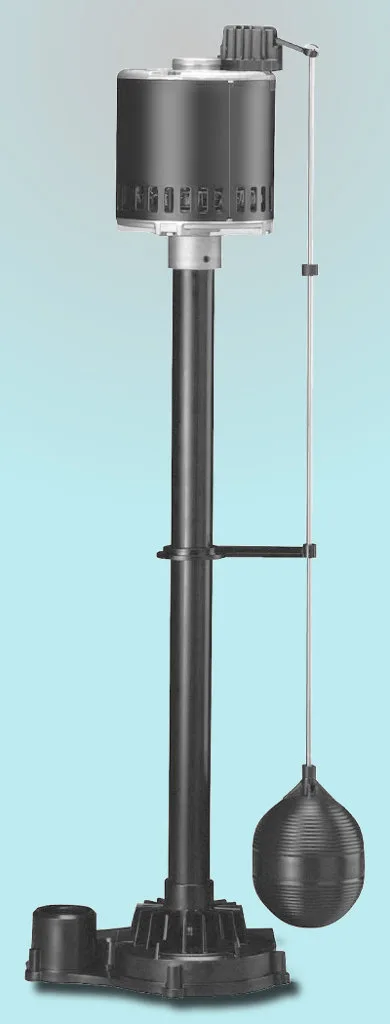
Image source: Wikimedia Commons / Own work (CC BY-SA)
Electrical Compatibility Checklist
Verify voltage matches your outlet exactly before plugging anything in. A 230V pump connected to 115V will fail immediately. Check that dedicated circuit requirements match the pump’s FLA rating plus twenty percent headroom.
Cord gauge and length affect voltage drop over distance. Thinner cords on long runs cause motors to overheat. Manufacturer specs list approved cord lengths for each model.
Exceeding these limits voids warranties and creates fire hazards.
Phase identification prevents three-phase motor installation errors. Residential units are almost always single-phase. Commercial applications may require three-phase power verification.
Confusing these causes instant motor destruction upon energizing.
Grounding prong integrity is non-negotiable for basement safety. Never use adapters that bypass the ground pin. GFCI protection is mandatory per electrical code for wet locations.
Proper grounding combined with GFCI prevents fatal shock hazards during maintenance.
Reading Flow and Head Ratings So You Don’t Buy the Wrong Pump
Maximum head height is not your optimal operating point. It represents the absolute vertical limit where flow reaches zero. Your actual vertical lift should stay well below this ceiling for reliable operation.
Understanding Performance Curves
Flow rate decreases as vertical lift increases toward maximum head. A pump rated 40 GPM at zero feet might deliver only 15 GPM at fifteen feet. Manufacturer performance curves show this relationship visually across the operating range.
Discharge port size must match your existing check valve and piping. Common residential sizes include 1-1/4 inch, 1-1/2 inch, and 2 inch NPT threads. Mismatched connections cause leaks or require expensive adapter fittings.
Duty cycle ratings distinguish continuous from intermittent use. Continuous-duty motors handle constant operation without overheating. Intermittent models need rest periods between cycles.
Installing an intermittent pump in a high-water-table area guarantees premature burnout.
Impeller type affects solids handling capability. Vortex impellers pass debris without clogging. Closed impellers offer higher efficiency but jam easily.
Semi-open designs balance both concerns for typical basement applications. Choose based on your specific water quality conditions.
Critical Safety Marks and Common Label Misreads
Safety certifications protect you legally and physically. UL Listing confirms compliance with NFPA 70 electrical standards. ETL marks carry equivalent weight through Intertek testing.
CSA certification applies to Canadian installations specifically.
Mistakes That Cause Real Problems
Confusing locked rotor amps with running amps leads to oversized breakers. This defeats overload protection and creates fire risk. Always size breakers using FLA plus appropriate safety margin.
LRA only matters for momentary startup validation.
Ignoring duty cycle limitations voids warranties quickly. Manufacturers track run hours through service calls. Continuous operation on intermittent-rated units shows clear evidence.
Warranty claims get denied when usage patterns exceed label specifications.
Overlooking NEMA or IP ratings causes water intrusion failures. Submersible pumps need proper sealing verification. Pedestal pumps have different environmental tolerances.
Using the wrong enclosure type in wet pits destroys motors rapidly.
Assuming higher horsepower equals better performance wastes money. Undersized pumps with correct flow curves outperform oversized ones. Excess HP draws unnecessary current and shortens lifespan.
Match flow and head to actual site conditions instead.
Missing thermal overload reset instructions leads to unnecessary replacements. Many motors have manual reset buttons hidden on the label. Automatic resets exist but require cooldown periods.
Knowing which type you have saves diagnostic time and replacement costs.
Frequently Asked Questions
What if my sump pump label is completely illegible?
Search the manufacturer website using visible model fragments or casting numbers. Contact their technical support with photos of any remaining markings. Measure discharge size and approximate dimensions as backup identifiers.
Never guess electrical specs without verified documentation.
Can I use a higher amperage pump on my existing circuit?
Only if full load amps stay within eighty percent of breaker rating. Startup surge must also remain below instantaneous trip thresholds. Upgrading wiring and breakers costs less than replacing burned motors.
Verify complete electrical compatibility before installation.
Does horsepower matter more than gallons per minute?
Flow rate at your specific head height determines actual performance. Horsepower indicates energy consumption rather than pumping capacity. Two half-horsepower pumps can have vastly different flow curves.
Always prioritize GPM ratings matched to your measured vertical lift.
Where do I find the manufacturing date code?
Date codes appear as stamped numbers or letter combinations on labels. Formats vary significantly between manufacturers and production years. Serial numbers sometimes encode production dates within their sequence.
Technical support can decode ambiguous markings using serial number databases.
Are all UL-listed sump pumps safe for basement use?
UL listing confirms electrical safety but not application suitability. Verify NEMA enclosure ratings match your pit environment. Some listed pumps suit only dry pedestal installations.
Submersible applications require specific wet-location certifications beyond basic electrical approval.