
An overflowing condensate pump usually means water is backing up faster than the unit can remove it. If you are asking why does an air conditioner condensate pump overflow, the answer typically involves a blockage or mechanical failure. Ignoring this issue risks significant water damage to your home and HVAC system.
Most residential pumps handle 80 to 150 gallons per hour with a maximum lift of 20 feet. Per International Mechanical Code standards, proper drainage requires specific sizing and safety interlocks to prevent failures. Let us walk through the exact diagnostic steps to identify your problem safely.
Why Does an Air Conditioner Condensate Pump Overflow
An air conditioner condensate pump overflows when discharge lines clog or float switches fail. Algae and mineral scale frequently block narrow tubing to stop water flow. Mechanical floats also stick due to corrosion or debris buildup inside the reservoir.
Electrical motor failures prevent pumping even when the tank fills completely.
Quick Diagnosis: Why Your Condensate Pump Is Overflowing Right Now
Water pooling around your AC unit signals an immediate drainage failure that needs attention. The most common culprit is a clogged discharge line filled with biological slime. This sludge builds up over months and eventually blocks the 3/8-inch vinyl tubing entirely.
You might hear the pump humming without moving any water out.
A stuck float switch is another frequent cause of sudden overflow issues. Mineral deposits or algae growth can physically jam the mechanical arm in the down position. The pump never receives the signal to activate even as the reservoir fills past capacity.
Electronic optical sensors can also fail if coated in grime.
Check the check valve if the pump cycles but water returns to the tank. A failed valve allows discharged water to flow backward into the reservoir after each cycle. This backflow refills the basin faster than the pump can empty it during runtime.
Replacing this small component often solves intermittent overflow problems.
Electrical issues like burnt capacitors or seized motors cause silent failures too. The pump may have power but lack the torque to push water against head pressure. Verify voltage at the unit before assuming the plumbing is clear.
Safety always comes first when troubleshooting electrical HVAC components.
The 4-Step Troubleshooting Workflow to Find the Exact Cause
Start by visually inspecting the reservoir water level and float movement. Manually lift the float switch to see if the pump activates immediately. If nothing happens, test continuity with a multimeter or check for voltage at the outlet.
A working switch with no motor response points to electrical failure.
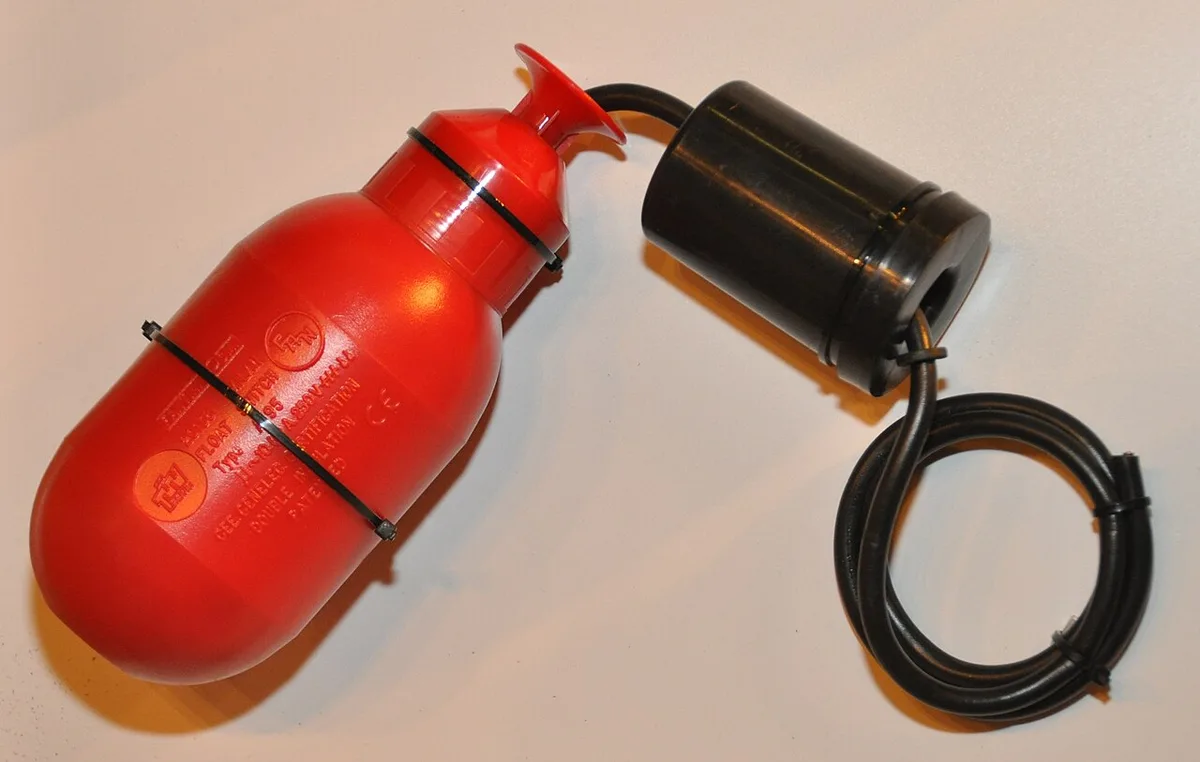
Image source: Wikimedia Commons / S.J. de Waard (CC BY)
Next, disconnect the discharge tubing and inspect for kinks or internal blockages. Run water through the tube separately to verify it flows freely without restriction. Flush the line with distilled white vinegar to dissolve mineral scale and biofilm buildup.
Reattach securely to prevent air leaks that reduce pumping efficiency.
Verify the check valve orientation and function during your inspection process. Water should only flow outward from the pump toward the drain point. Replace the valve if you notice backflow or resistance when blowing through it.
Proper installation prevents recycled water from overwhelming the reservoir capacity.
Finally, measure your total vertical lift and horizontal run distance against pump specifications. Exceeding the rated head pressure causes premature failure and chronic overflow issues. Manufacturer data shows performance drops significantly near maximum lift ratings.
Upsizing the pump or reducing tubing length may be necessary for reliable operation.
| Symptom | Likely Cause | First Action |
|---|---|---|
| Humming but no water | Clogged line or seized impeller | Flush tubing with vinegar |
| Silent with full tank | Failed switch or no power | Test float continuity |
| Water returns after cycle | Bad check valve | Inspect valve orientation |
| Intermittent overflow | Undersized pump or sagging tube | Measure lift and reroute |
When to Repair vs. Replace: Sizing, Safety Switches, and Code Compliance
Repair makes sense when the issue is isolated to consumable parts like tubing or valves. Cleaning a clogged line or replacing a twenty-dollar float switch costs very little. These fixes restore function without requiring a full system replacement or professional service call.
Simple maintenance extends equipment life significantly in many cases.
Replacement becomes necessary when the motor burns out or the housing cracks. Pumps typically last three to seven years depending on runtime and water quality. As of 2026, newer models offer better seals and corrosion-resistant materials worth upgrading to.
Investing in a higher-capacity unit prevents repeat failures in demanding applications.
Proper sizing prevents future overflow regardless of whether you repair or replace. Calculate total dynamic head including vertical lift plus friction loss from horizontal runs. Select a pump rated at least 20% above your actual requirements for reliability margin.
Undersized units struggle continuously and fail prematurely under constant strain.
Safety compliance protects your home from catastrophic water damage during pump failures. The International Mechanical Code requires secondary drain pans with independent sensors for attic installations. Wiring a wet switch to interrupt the 24V thermostat circuit stops cooling before overflow occurs.
This simple safeguard prevents thousands of dollars in structural repairs.
Common Condensate Pump Overflow FAQs
Can I clean my condensate pump instead of replacing it?
Yes, cleaning often resolves overflow caused by biological growth or mineral deposits. Disconnect power and remove the reservoir to scrub away slime and scale. Flush discharge lines with vinegar to restore proper flow through narrow tubing.
Regular annual cleaning prevents most common clogs and extends pump lifespan considerably.
How do I know if my float switch is bad?
A failed float switch typically shows no continuity change when manually lifted. Use a multimeter set to ohms to test across the switch terminals while moving the arm. Infinite resistance in both positions indicates internal contact failure.
Sticking or sluggish movement also suggests replacement is needed soon.
What size condensate pump do I actually need?
Residential units generally require 80 to 150 GPH capacity with 15 to 20 feet of head pressure. Measure your vertical lift and add equivalent feet for horizontal tubing friction. Choose a pump exceeding your calculated total head by at least 20%.
Oversizing slightly ensures reliable operation during peak humidity conditions.
Is a secondary safety pan really required by code?
Yes, the International Mechanical Code mandates secondary pans for units located above finished spaces. These pans must include independent drain lines or water-level detection switches. The sensor should interrupt equipment operation before water spills into living areas.
Skipping this protection violates code and risks severe property damage liability.