
What happens if a sump pump fails during a storm feels like a simple question until you're standing in three feet of water wondering why the motor stopped. It’s happened to enough homeowners that insurance adjusters can recite the claim numbers from memory. The failure usually isn’t dramatic.
The pump just stops cycling, and suddenly the basement is filling faster than a garden hose can keep up.
Most residential pumps are rated between 1,500 and 6,000 gallons per hour (GPH). During a severe storm, groundwater inflow can exceed that capacity by multiples, especially if the discharge line freezes or the impeller clogs with debris. That gap between inflow and pumping rate is exactly where basements drown.
What Happens If a Sump Pump Fails During a Storm
When a sump pump fails, water rises faster than it can escape. Here is what follows in most cases:
- The sump basin overflows within minutes under heavy rainfall.
- Groundwater seeps through foundation cracks and joints.
- Water spreads across the basement floor, reaching electrical outlets and HVAC units.
- Without a backup system, flooding can reach depths of 6 inches to several feet depending on soil and rainfall intensity.
- Structural damage, mold growth, and electrical hazards begin within hours if unchecked.
Failure modes vary. Some pumps burn out when forced to run continuously. Others fail because the float switch jams or the check valve sticks open.
Power outages are equally common, especially during the storms that drive the highest water tables.
Why Sump Pump Failures Are One of the Most Costly Home Emergencies
Sump pump failure isn’t just an inconvenience. It is one of the leading preventable causes of residential water damage claims, second only to burst pipes in frequency.
Average costs when a sump pump fails during a storm:
| Damage Type | Average Cost Range |
|---|---|
| Cleanup and extraction | $2,000 to $5,000 |
| Water damage repairs | $3,000 to $7,500 |
| Electrical and HVAC restoration | $1,500 to $4,000 |
| Mold remediation (if delayed >48 hours) | $2,000 to $6,000 |
According to the National Association of Insurance Commissioners, basement flooding from sump pump failure accounts for roughly 33 percent of all water damage claims in flood-prone ZIP codes. That is a higher rate than most homeowners expect.
The risks escalate quickly when combined with storm-related power outages. Per the National Electrical Code (NEC NFPA 70), any electrical panel or outlet submerged in water must be inspected by a licensed electrician before power is restored. Skipping that step isn’t just dangerous.
It can invalidate homeowners insurance claims entirely.
Immediate Response Steps to Minimize Water Damage
If you suspect your sump pump has failed during a storm, the priority shifts from repair to damage control. These steps should begin within the first 30 minutes, before the situation spirals.
- Cut power to affected areas. Turn off electricity at the breaker for the basement or lowest level. Do not step into standing water if outlets or appliances are submerged.
- Move valuables above floor level. Even furniture on cinder blocks can survive if lifted quickly enough.
- Activate a backup pump or wet/dry vacuum. Battery-powered utility pumps can move 1,500 to 3,000 GPH, enough to keep up briefly while you arrange professional help.
- Document everything for insurance. Photograph and video the scene before moving anything. Water extraction companies often recommend this step within the first hour.
- Call for help. Contact your insurer immediately. Many offer 24-hour emergency response lines and prefer to dispatch approved contractors.
A high-water alarm near the sump basin can detect failure within minutes, giving you that crucial window. As of 2026, smart sump monitoring systems like those from Basement Defender report real-time alerts to your phone, which is how many homeowners discover the problem before major flooding occurs.
How to Prevent Sump Pump Failure Before the Next Storm
Prevention is cheaper than repair. Most sump pump failures happen because of predictable issues that routine maintenance could catch.
- Clean the inlet screen and basin quarterly. Debris like leaves and sediment is the leading cause of impeller clogs, which force the motor to overheat and shut down.
- Test the float switch manually. Lift it with a stick or screwdriver once a month. If the pump does not start, the switch may be stuck or failed.
- Inspect the check valve annually. A stuck or missing check valve allows water to backflow into the basin, causing short-cycling and eventual burnout.
- Verify the discharge pipe is clear and sloped away from the foundation. Ice dams and sagging pipes are common winter culprits, especially in northern climates.
- Install a backup battery system if you don’t have one. AGM or lithium-ion backups rated for continuous duty will keep pumping during outages.
- Consider a secondary pump on a separate circuit. This provides redundancy if the primary pump’s thermal overload trips.
Professional installation of primary and backup systems costs between $1,200 and $3,500, depending on basin depth and local labor rates. That investment is recouped after a single storm that would otherwise dump thousands in water damage onto your insurance deductible.
Frequently Asked Questions
How do I know if my sump pump is failing during a storm?
Signs include rapid basin overflow, continuous running without shutoff, or no sound at all when water levels rise. A high-water alarm or smart monitor will alert you immediately via audible buzzer or smartphone notification.
Can a frozen discharge pipe cause sump pump failure?
Yes. If the pipe outlet ices over, backpressure builds and the pump may overheat and shut down permanently. Insulating the pipe or using a heated discharge line prevents this in cold climates.
Do sump pumps automatically restart after a power outage?
Most do, but not always safely. Some motors seize up from overheating during extended dry-firing. After an outage, the pump should be tested manually before relying on it again.
What is the difference between a backup pump and a battery backup?
A backup pump is a second pump activated when the primary fails. A battery backup powers the existing pump during an outage. Many homeowners install both for complete protection.
Is sump pump failure covered by homeowners insurance?
Coverage depends on your policy. Standard HO-3 policies typically cover sudden and accidental failures but exclude gradual deterioration or lack of maintenance. Check with your insurer to confirm your specific terms.
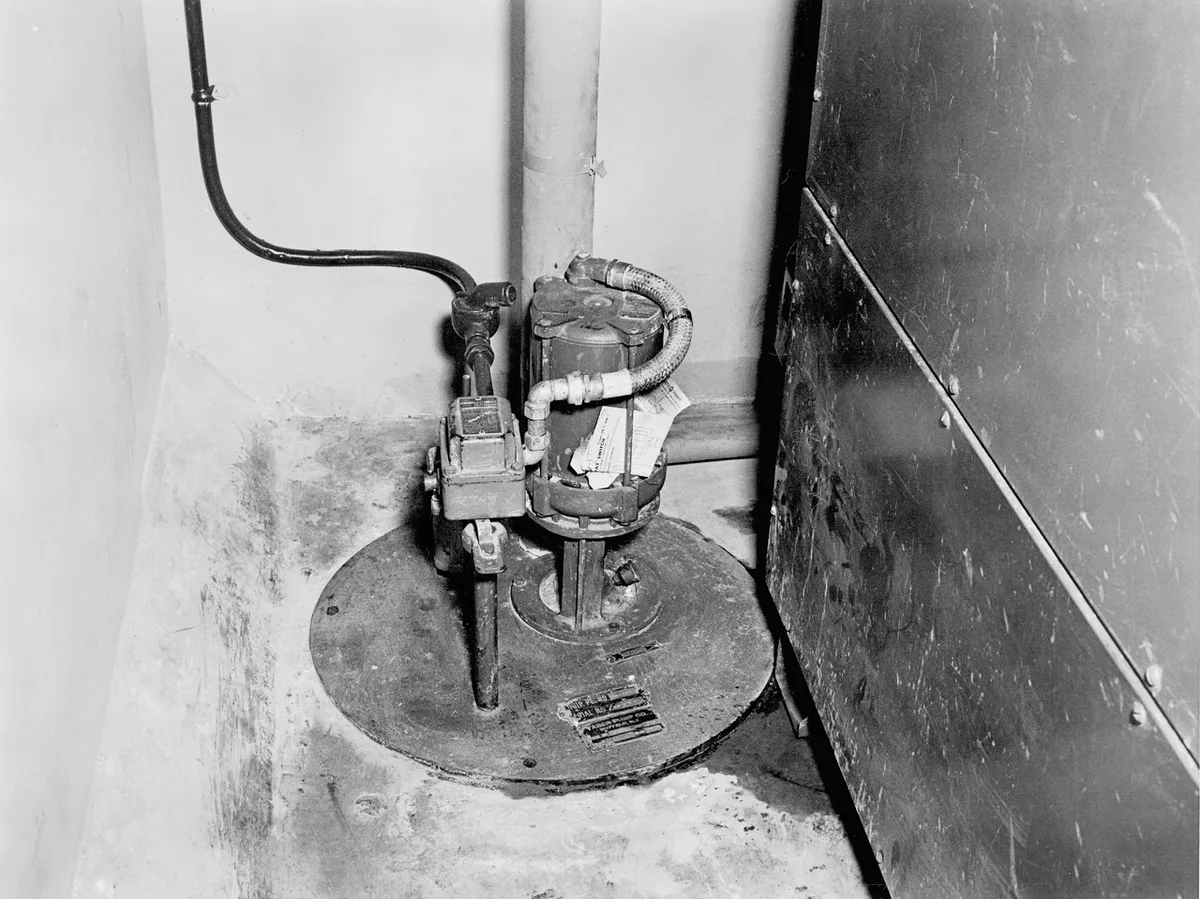
Image source: Wikimedia Commons / United States Department of Energy
Should I hire a pro or fix my sump pump myself?
Simple tasks like clearing debris or replacing a switch can be DIY-friendly. But motor replacement, electrical work, or backup system installation should be handled by a licensed plumber or electrician to meet National Electrical Code requirements and maintain warranty coverage.