
If you are asking what does gph mean on a sump pump, you have likely noticed the big number printed on the box. GPH stands for Gallons Per Hour and measures the maximum volume of water a pump can move under ideal laboratory conditions. This rating assumes zero vertical lift and no friction from discharge piping.
Real basements rarely match these perfect testing environments.
Manufacturer specifications indicate that actual flow drops significantly once you add vertical head height to the system. Per Hydraulic Institute standards, a pump rated at 3,000 GPH might only deliver 1,800 GPH at ten feet of lift. Understanding this gap between marketing numbers and real performance prevents costly flooding mistakes.
Let us break down exactly how to read these specs correctly.
What GPH Actually Means (And Why the Box Lies)
GPH represents the theoretical maximum flow rate at zero head pressure. Manufacturers test pumps in open tanks with no discharge pipe resistance. Your basement setup creates backpressure that reduces actual output immediately.
That shiny 4,000 GPH sticker is essentially a best-case scenario that never happens in practice.
Total Dynamic Head combines vertical lift and friction loss into one measurement. Every foot of vertical rise reduces flow capacity based on the pump’s specific curve. Horizontal pipe runs, elbows, and check valves add equivalent friction feet to your total head calculation.
You must account for both factors to find your true operating GPH.
Performance curves show the real relationship between head height and flow rate. These charts reveal that flow decreases non-linearly as resistance increases. A pump moving 2,500 GPH at five feet might drop to 900 GPH at fifteen feet.
Always cross-reference the box number with the manufacturer’s published performance data.
The Sizing Workflow: Matching GPH to Your Vertical Lift and Pipe Run
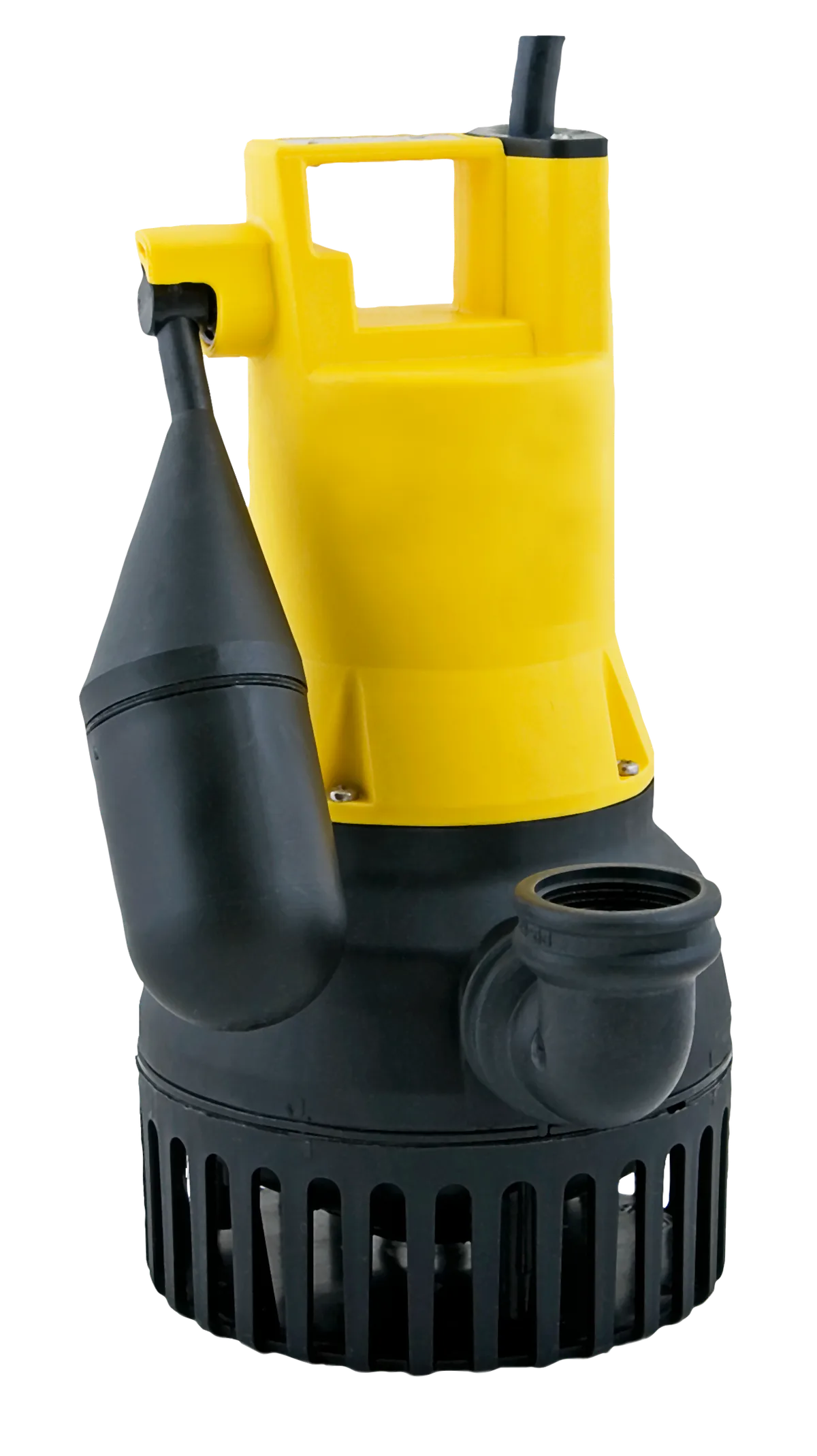
Image source: Wikimedia Commons / PumpExpert (CC BY-SA)
Start by measuring your exact vertical lift from the basin bottom to the discharge point. Measure straight up to where the pipe exits the foundation wall or reaches its highest peak. This static head number forms the baseline for all flow calculations.
Guessing here leads to undersized equipment failures during heavy storms.
Calculate friction loss using pipe diameter, length, and fitting count. Each 90-degree elbow adds roughly three equivalent feet of pipe resistance. Check valves contribute another five to eight feet depending on design and age.
Use standard friction loss tables to convert your entire run into total dynamic head.
Match your calculated TDH against manufacturer performance curves rather than horsepower ratings. Find where your specific head height intersects the flow line on the chart. This intersection point reveals your actual expected GPH under real conditions.
If that number falls below your estimated groundwater inflow, select the next size up.
| Vertical Lift | Estimated Actual Flow (1/3 HP) | Estimated Actual Flow (1/2 HP) |
|---|---|---|
| 5 Feet | 2,200 GPH | 3,100 GPH |
| 10 Feet | 1,600 GPH | 2,400 GPH |
| 15 Feet | 900 GPH | 1,700 GPH |
| 20 Feet | 200 GPH | 950 GPH |
Common GPH Mistakes That Burn Out Pumps Or Flood Basements
Confusing maximum GPH with operating capacity tops the list of expensive errors. Homeowners often buy pumps based solely on the box number without checking curves. The unit runs continuously trying to reach impossible flow targets.
Motors overheat and fail precisely when you need them most during storms.
Oversizing causes equally destructive short cycling problems. A pump that empties the basin in thirty seconds turns on and off repeatedly. This rapid cycling destroys float switches and burns out starter capacitors prematurely.
Proper sizing means the pump should run for at least two minutes per cycle under normal conditions.
Ignoring horizontal pipe friction catches many DIY installers off guard. Long runs through crawl spaces or across yards add massive hidden resistance. A fifty-foot horizontal run can reduce flow as much as five vertical feet.
Always include every inch of piping in your total dynamic head math before purchasing.
Neglecting discharge pipe diameter compatibility strangles performance unnecessarily. Connecting a high-capacity pump to undersized tubing creates artificial bottlenecks. The pump works harder while delivering less water than designed.
Verify that your existing pipe matches the new pump’s recommended outlet size exactly.
Frequently Asked Questions About Sump Pump Flow Rates
Is higher GPH always better for basement protection?
Higher GPH only helps if your system can actually support that flow rate. Oversized pumps cause destructive short cycling that damages components quickly. Match the pump to your calculated total dynamic head instead of chasing maximum numbers.
Properly sized equipment protects better than an oversized unit fighting itself constantly.
How do I convert GPM to GPH for comparison?
Multiply gallons per minute by sixty to get hourly flow rates. Most technical specifications use GPM while retail packaging displays GPH. A pump flowing 30 GPM equals 1,800 GPH mathematically.
Always verify which unit the manufacturer uses before comparing different models side by side.
Does horsepower directly determine GPH output?
Horsepower indicates motor strength but not actual water delivery capacity. Impeller design and volute geometry matter more than raw power ratings. Two half-horsepower pumps can have vastly different flow curves at identical head heights.
Trust performance charts over horsepower labels when making selection decisions for your home.
Why does my pump flow less than the box claims?
Your installation creates resistance that laboratory testing does not simulate. Vertical lift, pipe friction, and fittings all reduce real-world output significantly. The box shows ideal zero-head performance that exists only in controlled environments.
Consult the performance curve to find your actual expected flow at your specific head height.